Life on the Mississippi
1883

Life on the Mississippi
1883
Before Huck Finn, before Tom Sawyer, there was a young apprentice pilot learning to read the most changeable river in America. Mark Twain spent four years mastering the Mississippi, and this memoir is the astonishing result: a book that captures the river as few writers have ever captured any landscape. The waterway here is not mere setting but a living presence, capri cious and murderous, beautiful beyond language. Twain recalls his apprenticeship with tender precision: the drudgery of learning the thousand-foot depth marks, the terror of near-collisions, the hier archy of officers and crew, and the strange fraternity of men who entrusted their lives to a river that could shift its banks overnight. But this is also a book about time's passage. Twain returned to the Mississippi decades after the Civil War and found a transformed world. The old steamboats were dying, the old pilots were fading. What emerged was both a love letter to a vanished America and an elegy for the young man he used to be. Funny, raucous, and surprisingly melancholy, it is the book that made America see Twain as something more than a humorist.
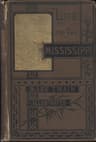
Editions
X-Ray
“Now and then we had a hope that if we lived and were good, God would permit us to be pirates.””
— Mark Twain
“There is something fascinating about science. One gets such wholesale returns of conjecture out of such a trifling investment of fact.””
— Mark Twain
“You cannot surprise an individual more than twice with the same marvel””
— Mark Twain
“Whoo-oop! I'm the old original iron-jawed, brass-mounted, copper-bellied corpse-maker from the wilds of Arkansaw!”
— Mark Twain
“Good books, good friends and a sleepy conscience:this is the ideal life.””
— Mark Twain
“The Mississippi River towns are comely, clean, well built, and pleasing to the eye, and cheering to the spirit. The Mississippi Valley is as reposeful as a dreamland, nothing worldly about it . . . nothing to hang a fret or a worry upon.””
— Mark Twain
“One who knows the Mississippi will promptly aver”
— Mark Twain
“Unquestionably the discovery of the Mississippi is a datable fact which considerably mellows and modifies the shiny newness of our country, and gives her a most respectable outside-aspect of rustiness and antiquity.””
— Mark Twain
“A humorous treatment of the rigid uniformitarian view came from Mark Twain. Although the shortening of the Mississippi River he referred to was the result of engineering projects eliminating many of the bends in the river, it is a thought-provoking spoof:The Mississippi between Cairo and New Orleans was twelve hundred and fifteen miles long one hundred and seventy-six years ago. . . . Its length is only nine hundred and seventy-three miles at present.Now, if I wanted to be one of those ponderous scientific people, and “let on” to prove what had occurred in the remote past by what had occurred in a given time in the recent past . . . what an opportunity is here! Geology never had such a chance, nor such exact data to argue from! . . .In the space of one hundred and seventy-six years the Lower Mississippi has shortened itself two hundred and forty-two miles. That is an average of a trifle over one mile and a third per year. Therefore, any calm person, who is not blind or idiotic, can see that in the Old Oolitic Silurian Period, just a million years ago next November, the Lower Mississippi River was upwards of one million three hundred thousand miles long, and stuck out over the Gulf of Mexico like a fishing-rod. And by the same token any person can see that seven hundred and forty-two years from now the lower Mississippi will be only a mile and three-quarters long. . . . There is something fascinating about science. One gets such wholesale returns of conjecture out of such a trifling investment of fact.””
— Mark Twain
Link to this book
Add a free, dofollow link to Lex on your blog, forum, syllabus, or reading list.

<a href="https://lex-books.com/book/life-on-the-mississippi-b385f930-4b98-4c2c-bbe8-ab1b56315d85"><img src="https://lex-books.com/badges/read-on-lex.svg" alt="Read Life on the Mississippi by Mark Twain free on Lex" width="160" height="40"></a>[](https://lex-books.com/book/life-on-the-mississippi-b385f930-4b98-4c2c-bbe8-ab1b56315d85)[url=https://lex-books.com/book/life-on-the-mississippi-b385f930-4b98-4c2c-bbe8-ab1b56315d85][img]https://lex-books.com/badges/read-on-lex.svg[/img][/url]Read Life on the Mississippi by Mark Twain free on Lex: https://lex-books.com/book/life-on-the-mississippi-b385f930-4b98-4c2c-bbe8-ab1b56315d85Cite this book
Reading this edition for a paper or guide? Copy a citation.
Twain, Mark. Life on the Mississippi. Lex, lex-books.com/book/life-on-the-mississippi-b385f930-4b98-4c2c-bbe8-ab1b56315d85.Twain, M. (1883). Life on the Mississippi. Lex. https://lex-books.com/book/life-on-the-mississippi-b385f930-4b98-4c2c-bbe8-ab1b56315d85Twain, Mark. Life on the Mississippi. Lex. https://lex-books.com/book/life-on-the-mississippi-b385f930-4b98-4c2c-bbe8-ab1b56315d85.