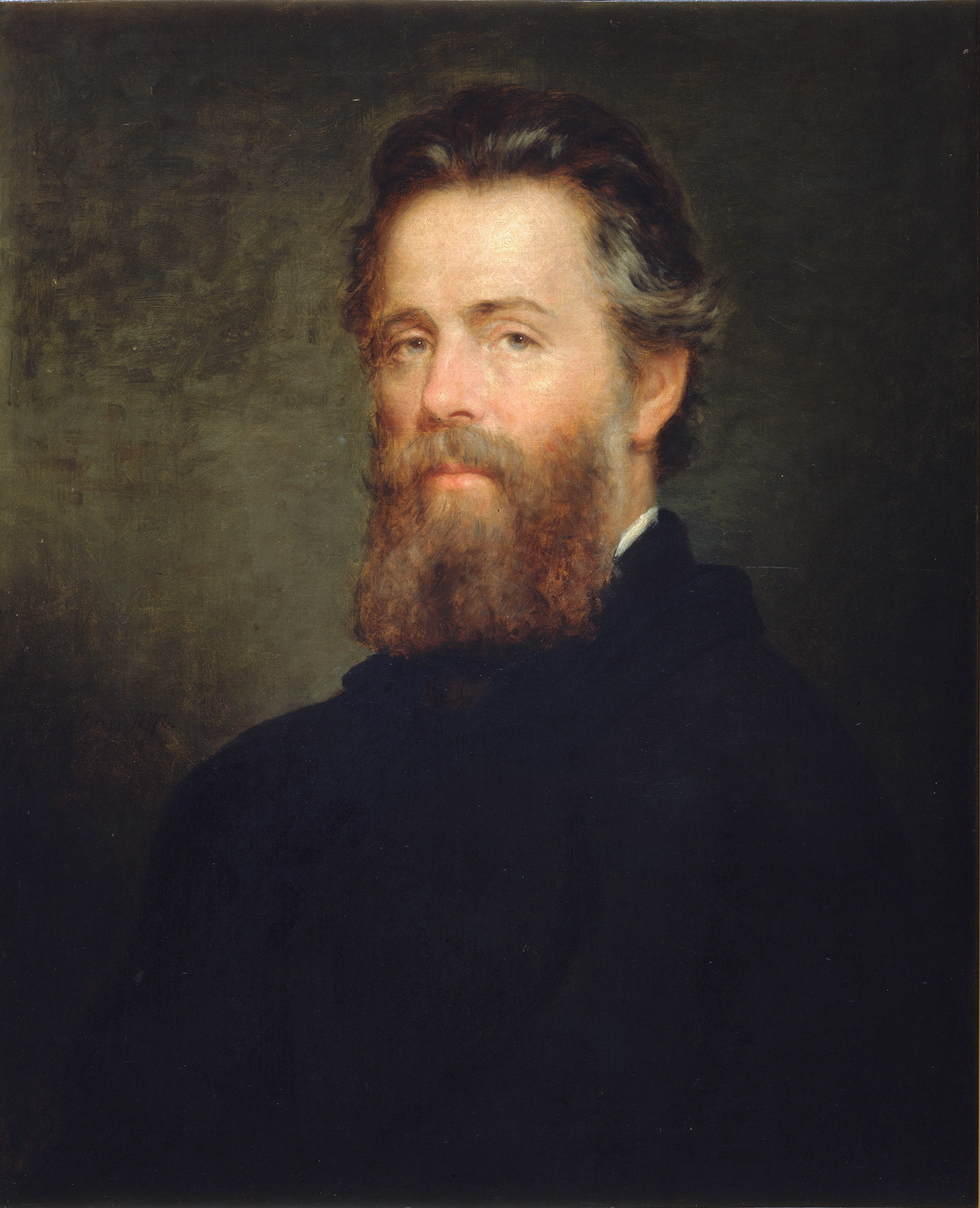
The Piazza Tales
1856
Melville's 1856 collection contains some of the most unsettling and philosophically charged short fiction in American literature, tales that feel startlingly modern despite their age. At its heart lies "Bartleby, the Scrivener," the unforgettable story of a law copyist who responds to every request with "I would prefer not to", a passive, inexplicable refusal to participate in the machinery of work and society that reads as both absurdist comedy and existential cri de cœur. Then there's "Benito Cereno," a slow-burning novella about a mutiny aboard a slave ship, narrated by an American sea captain who perceives the horror before him but cannot bring himself to understand it. "The Encantadas" offers ten sketches of the Galápagos Islands as a barren, allegorical landscape where tortoises outlive empires and nothing quite belongs. These are stories about being trapped, about refusing without fighting, about standing outside the world's demands. They endure because Melville understood something essential about alienation, about the way institutions crush the individual, about the violence hidden beneath polite surfaces. This is not comfortable reading. It is necessary reading.
Editions
X-Ray
“More terrible, to see how feline Fate will sometimes dally with a human soul, and by a nameless magic make it repulse a sane despair with a hope which is but mad. Unwittingly I imp this cat-like thing, sporting with the heart of him who reads; for if he feel not he reads in vain.””
— Herman Melville
“if some books are deemed most baneful and their sale forbid, how, then, with deadlier facts, not dreams of doting men? those whom books will hurt will not be proof against events. events, not books, should be forbid.””
— Herman Melville
“With fairest flowers, Whilst summer lasts, and I live here, Fidele”
— Herman Melville
“truth comes in with darkness.””
— Herman Melville
“When I removed into the country, it was to occupy an old-fashioned farm-house, which had no piazza - a deficiency the more regretted, because not only did I like piazzas, as somehow combining the coziness of in-doors with the freedom of out-doors, and it is so pleasant to inspect your thermometer there, but the country round about was such a picture, that in berry time no boy climbs hill or crosses vale without coming upon easels planted in every nook, and sunburnt painters painting there.””
— Herman Melville
“Thinking, thinking”
— Herman Melville
“A practical materialist, what Bannadonna had aimed at was to have been reached, not by logic, not by crucible, not by conjuration, not by altars; but by plain vice-bench and hammer. In short, to solve nature, to steal into her, to intrigue beyond her, to procure someone else to bind her to his hand; - these, one and all, had not been his objects; but, asking no favors from any element or any being, of himself, to rival her, outstrip her, and rule her. He stooped to conquer. With him, common sense was theurgy; machinery, miracle; Prometheus, the heroic name for machinist; man, the true God.””
— Herman Melville
“Is it, thought Captain Delano, that this hapless man is one of those paper captains I've known, who by policy wink at what by power they cannot put down? I know no sadder sight than a commander who has little of command but the name.””
— Herman Melville
“In armies, navies, cities, or families, in nature herself, nothing more relaxes good order than misery.””
— Herman Melville
Link to this book
Add a free, dofollow link to Lex on your blog, forum, syllabus, or reading list.

<a href="https://lex-books.com/book/the-piazza-tales-014891c0-e13b-4b2a-8289-97d94377abad"><img src="https://lex-books.com/badges/read-on-lex.svg" alt="Read The Piazza Tales by Herman Melville free on Lex" width="160" height="40"></a>[](https://lex-books.com/book/the-piazza-tales-014891c0-e13b-4b2a-8289-97d94377abad)[url=https://lex-books.com/book/the-piazza-tales-014891c0-e13b-4b2a-8289-97d94377abad][img]https://lex-books.com/badges/read-on-lex.svg[/img][/url]Read The Piazza Tales by Herman Melville free on Lex: https://lex-books.com/book/the-piazza-tales-014891c0-e13b-4b2a-8289-97d94377abadCite this book
Reading this edition for a paper or guide? Copy a citation.
Melville, Herman. The Piazza Tales. Lex, lex-books.com/book/the-piazza-tales-014891c0-e13b-4b2a-8289-97d94377abad.Melville, H. (1856). The Piazza Tales. Lex. https://lex-books.com/book/the-piazza-tales-014891c0-e13b-4b2a-8289-97d94377abadMelville, Herman. The Piazza Tales. Lex. https://lex-books.com/book/the-piazza-tales-014891c0-e13b-4b2a-8289-97d94377abad.