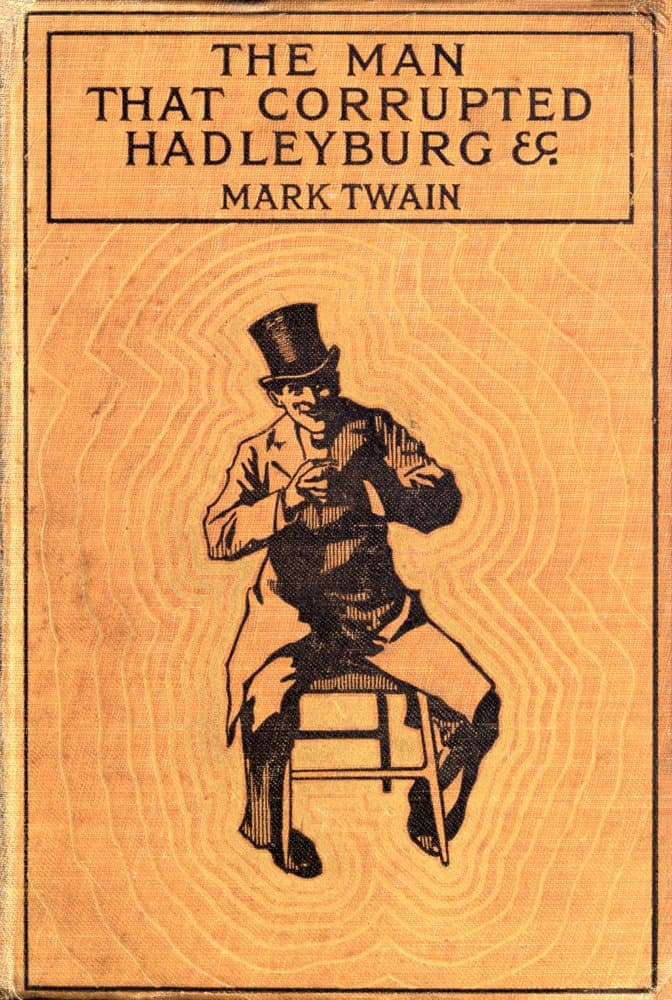
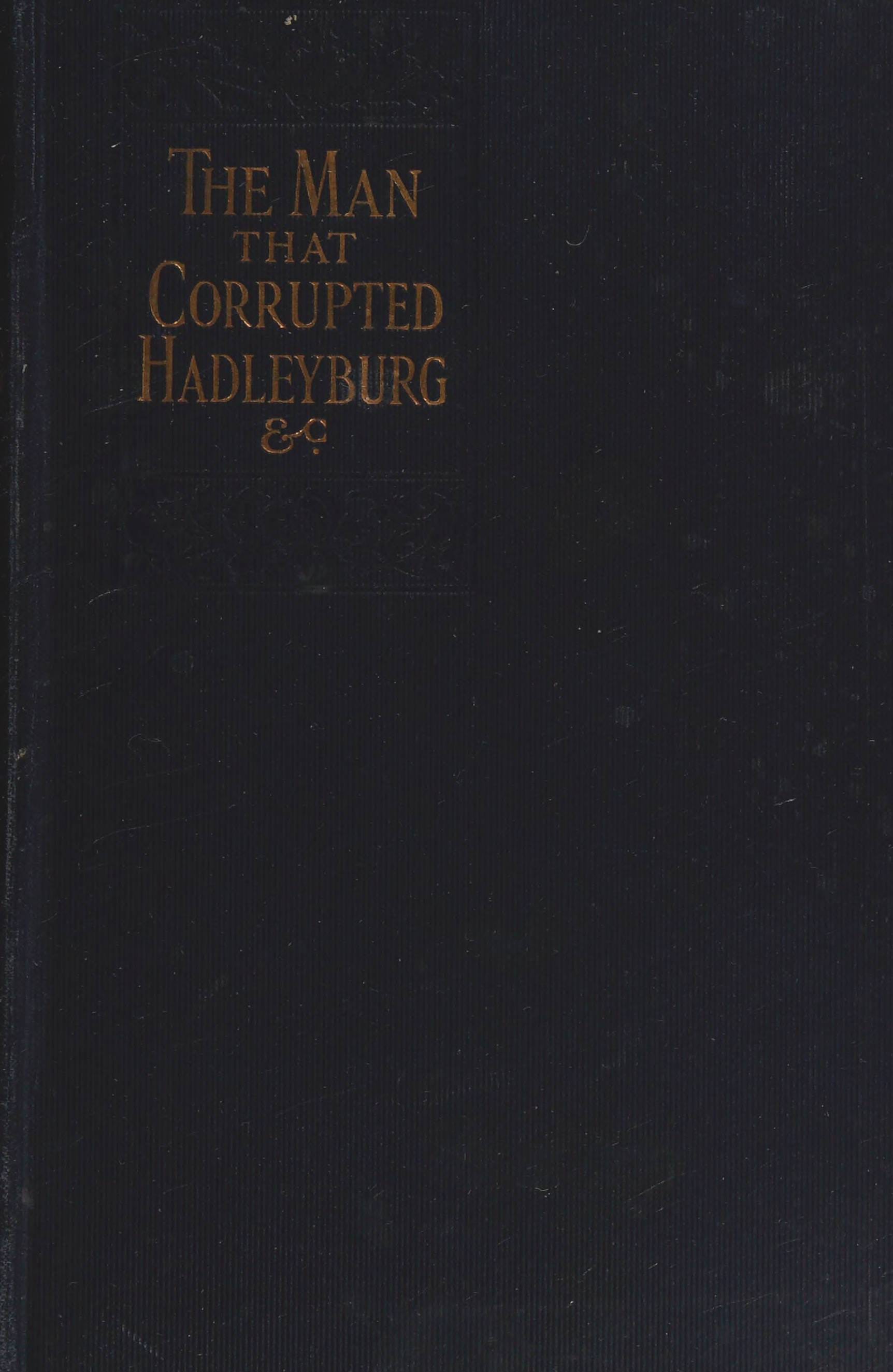
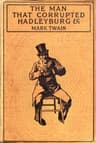
The Man That Corrupted Hadleyburg
1899
The town of Hadleyburg has spent a century building an immaculate reputation: the most honest community in America, a place where no man has ever been tempted, because temptation was never offered. Then a stranger arrives with a sack of gold and a simple test - reward the man who once showed him kindness - and the entire social order collapses into lies and shame. Nineteen of the town's most respected couples step forward with fabricated tales of helpfulness, their desperate greed laying bare everything the founding fathers pretended not to know about human nature. Written in the bitter twilight of Mark Twain's career, during exile in Europe and soon after burying his daughter, this novella burns with a cold, precise fury. The stranger remains throughout either Satan or a crusader for truth - Twain refuses to resolve the ambiguity, and the reader is left to wonder whether Hadleyburg was destroyed or finally freed. The wit is surgical, the social satire withering, and the ending offers no comfort: virtue that has never been tested is merely weakness waiting to be discovered.
Editions
X-Ray
“The weakest of all weak things is a virtue which has not been tested in the fire.””
— Mark Twain
“As regards his health--and the rest of the things--the average man is what his environment and his superstitions have made him; and their function is to make him an ass. He can't add up three or four new circumstances together and perceive what they mean; it is beyond him. He is not capable of observing for himself; he has to get everything at second-hand. If what are miscalled the lower animals were as silly as man is, they would all perish from the earth in a year.””
— Mark Twain
“A proof once established is better left so.””
— Mark Twain
“God knows I never had shade nor shadow of a doubt of my petrified and indestructible honesty until now”
— Mark Twain
“After much reflection”
— Mark Twain
“Why, you simple creatures, the weakest of all weak things is a virtue which has not been tested in the fire.””
— Mark Twain
Link to this book
Add a free, dofollow link to Lex on your blog, forum, syllabus, or reading list.

<a href="https://lex-books.com/book/the-man-that-corrupted-hadleyburg-fce53284-1ab5-4d81-8bea-e984f9ef0c84"><img src="https://lex-books.com/badges/read-on-lex.svg" alt="Read The Man That Corrupted Hadleyburg by Mark Twain free on Lex" width="160" height="40"></a>[](https://lex-books.com/book/the-man-that-corrupted-hadleyburg-fce53284-1ab5-4d81-8bea-e984f9ef0c84)[url=https://lex-books.com/book/the-man-that-corrupted-hadleyburg-fce53284-1ab5-4d81-8bea-e984f9ef0c84][img]https://lex-books.com/badges/read-on-lex.svg[/img][/url]Read The Man That Corrupted Hadleyburg by Mark Twain free on Lex: https://lex-books.com/book/the-man-that-corrupted-hadleyburg-fce53284-1ab5-4d81-8bea-e984f9ef0c84Cite this book
Reading this edition for a paper or guide? Copy a citation.
Twain, Mark. The Man That Corrupted Hadleyburg. Lex, lex-books.com/book/the-man-that-corrupted-hadleyburg-fce53284-1ab5-4d81-8bea-e984f9ef0c84.Twain, M. (1899). The Man That Corrupted Hadleyburg. Lex. https://lex-books.com/book/the-man-that-corrupted-hadleyburg-fce53284-1ab5-4d81-8bea-e984f9ef0c84Twain, Mark. The Man That Corrupted Hadleyburg. Lex. https://lex-books.com/book/the-man-that-corrupted-hadleyburg-fce53284-1ab5-4d81-8bea-e984f9ef0c84.