A Tramp Abroad — Volume 04
1880

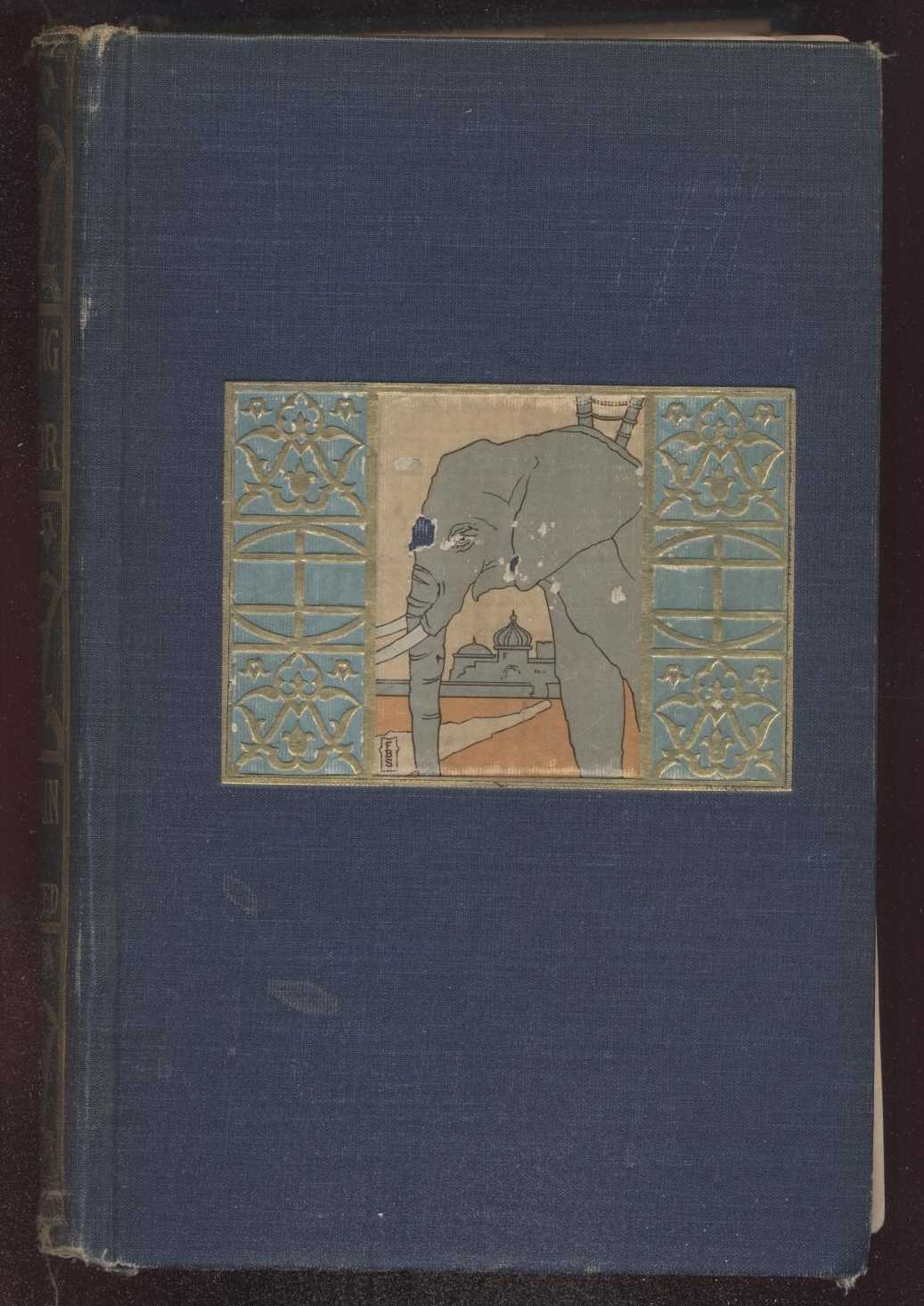
A Tramp Abroad — Volume 04, published in 1880 by Mark Twain, is a travel narrative that humorously chronicles Twain's adventures through Germany and Switzerland. Accompanied by his friend Harris, Twain offers insightful commentary on cultural norms and human experiences, blending whimsical encounters with sharp observations. The narrative begins with an exploration of the Black Forest, where Twain reflects on rural life and the absurdities of wealth, setting the tone for a journey filled with both humor and critique of society.
Editions

X-Ray
“That's the difference between governments and individuals. Governments don't care, individuals do.””
— Mark Twain
“Every noun has a gender, and there is no sense or system in the distribution; so the gender of each must be learned separately and by heart. There is no other way. To do this one has to have a memory like a memorandum-book. In German, a young lady has no sex, while a turnip has. Think what overwrought reverence that shows for the turnip, and what callous disrespect for the girl. See how it looks in print -- I translate this from a conversation in one of the best of the German Sunday-school books:Gretchen: "Wilhelm, where is the turnip?"Wilhelm: "She has gone to the kitchen."Gretchen: "Where is the accomplished and beautiful English maiden?"Wilhelm. "It has gone to the opera.””
— Mark Twain
“Everybody has heard of the great Heidelberg Tun, and most people have seen it, no doubt. It is a wine-cask as big as a cottage, and some traditions say it holds eighteen hundred thousand bottles, and other traditions say it holds eighteen hundred million barrels. I think it likely that one of these statements is a mistake, and the other is a lie. However, the mere matter of capacity is a thing of no sort of consequence, since the cask is empty, and indeed has always been empty, history says. An empty cask the size of a cathedral could excite but little emotion in me. I do not see any wisdom in building a monster cask to hoard up emptiness in, when you can get a better quality, outside, any day, free of expense.””
— Mark Twain
“A man who keeps company with glaciers comes to feel tolerably insignificant by and by.””
— Mark Twain
“The Germans have another kind of parenthesis, which they make by splitting a verb in two and putting half of it at the beginning of an exciting chapter and the other half at the end of it. Can any one conceive of anything more confusing than that? These things are called “separable verbs.” The German grammar is blistered all over with separable verbs; and the wider the two portions of one of them are spread apart, the better the author of the crime is pleased with his performance. A favorite one is reiste ab”
— Mark Twain
“The Germans are exceedingly fond of Rhine wines; they are put up in tall, slender bottles, and are considered a pleasant beverage. One tells them from vinegar by the label.””
— Mark Twain
“His hair was short and parted accurately in the middle, and he had all the look of an American person who would be likely to begin his signature with an initial, and spell his middle name out.””
— Mark Twain
“I have a prejudice against people who print things in a foreign language and add no translation. When I am the reader, and the author considers me able to do the translating myself, he pays me quite a nice compliment - but if he would do the translating for me I would try to get along without the compliment.””
— Mark Twain
“It's a Catholic glacier. You can tell by the look of it. And the management." I said, no, I believed nothing but the extreme end of it was in a Catholic canton. "Well, then, it's a government glacier," said Harris. "It's all the same. Over here the government runs everything”
— Mark Twain
Link to this book
Add a free, dofollow link to Lex on your blog, forum, syllabus, or reading list.

<a href="https://lex-books.com/book/a-tramp-abroad-volume-04-7cf2e89a-25e9-4e5e-b960-a117cd5608a8"><img src="https://lex-books.com/badges/read-on-lex.svg" alt="Read A Tramp Abroad — Volume 04 by Mark Twain free on Lex" width="160" height="40"></a>[](https://lex-books.com/book/a-tramp-abroad-volume-04-7cf2e89a-25e9-4e5e-b960-a117cd5608a8)[url=https://lex-books.com/book/a-tramp-abroad-volume-04-7cf2e89a-25e9-4e5e-b960-a117cd5608a8][img]https://lex-books.com/badges/read-on-lex.svg[/img][/url]Read A Tramp Abroad — Volume 04 by Mark Twain free on Lex: https://lex-books.com/book/a-tramp-abroad-volume-04-7cf2e89a-25e9-4e5e-b960-a117cd5608a8Cite this book
Reading this edition for a paper or guide? Copy a citation.
Twain, Mark. A Tramp Abroad — Volume 04. Lex, lex-books.com/book/a-tramp-abroad-volume-04-7cf2e89a-25e9-4e5e-b960-a117cd5608a8.Twain, M. (1880). A Tramp Abroad — Volume 04. Lex. https://lex-books.com/book/a-tramp-abroad-volume-04-7cf2e89a-25e9-4e5e-b960-a117cd5608a8Twain, Mark. A Tramp Abroad — Volume 04. Lex. https://lex-books.com/book/a-tramp-abroad-volume-04-7cf2e89a-25e9-4e5e-b960-a117cd5608a8.