Wieland; Or, the Transformation: An American Tale
1798
Wieland; Or, the Transformation: An American Tale
1798
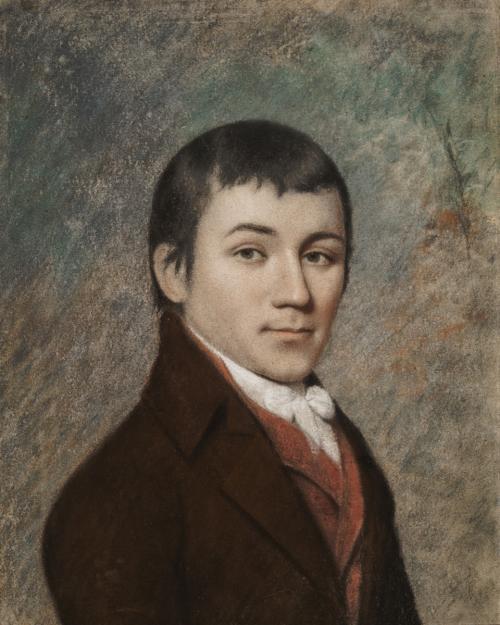
The first great American Gothic novel and one of the earliest horror stories in English literature, Charles Brockden Brown's Wieland remains astonishingly modern in its exploration of how reason collapses under irrational terror. Set in rural Pennsylvania in the 1760s, the novel opens with Clara addressing her "friends" to recount the catastrophic events that destroyed her family: her brother Wieland, a man of impeccable moral character and deep religious devotion, who murdered his wife and children in a fit of divine madness, convinced he heard God's voice commanding him to sacrifice his loved ones. What makes Wieland genuinely terrifying is Brown's insistence that we cannot trust our own senses. Mysterious voices, inexplicable sounds, and the presence of the enigmatic Carwin create a landscape of psychological menace where true voices cannot be distinguished from auditory phantoms. Published in 1798 when the young American republic was still forging its identity, Wieland works as both a devastating family tragedy and a radical interrogation of Enlightenment optimism. The novel asks whether a democratic society, built on the premise of rational citizens, can survive when the human mind proves catastrophically unreliable. This is the dark origin point of American horror, and it remains unsettlingly relevant.
Editions
X-Ray
“Then will I lay down my head in the lap of death. Hushed will be all my murmurs in the sleep of the grave.””
— Charles Brockden Brown
“Add wings to thy speed, sweet evening; and thou, moon, I charge thee, shroud thy beams at the moment when my Pleyel whispers love. I would not for the world, that the burning blushes, and the mounting raptures of that moment, should be visible.””
— Charles Brockden Brown
“Something whispered that the happiness we at present enjoyed was set on mutable foundations. Death must happen to all.””
— Charles Brockden Brown
“When I lay down the pen the taper of life will expire: my existence will terminate my tale.””
— Charles Brockden Brown
“They refuse to credit my tale; they impute my act to the influence of daemons; they account me an example of the doom me to death and infamy. Have I power to escape this evil? If I have, be sure I will exert it. I will not accept evil at their hand, when I am entitled to good; I will suffer only when I cannot elude suffering.””
— Charles Brockden Brown
“Surely," said I, "there is omnipotence in the cause that changed the views of a man like Carwin. The divinity that shielded me from his attempts will take suitable care of my future safety. Thus to yield to my fears is to deserve that they should be real.””
— Charles Brockden Brown
“Fear me not: the space that severs us is small, and visible succour is distant. You believe yourself completely in my power; that you stand upon the brink of ruin. Such are your groundless fears. I cannot lift a finger to hurt you. Easier it would be to stop the moon in her course than to injure you. The power that protects you would crumble my sinews, and reduce me to a heap of ashes in a moment, if I were to harbour a thought hostile to your safety.””
— Charles Brockden Brown
“All unaware, and in a manner which I had no power to explain, I was pushed from my immoveable and lofty station, and cast upon a sea of troubles.””
— Charles Brockden Brown
“I said to myself, we must die. Sooner or later, we must disappear for ever from the face of the earth. Whatever be the links that hold us to life, they must be broken. This scene of existence is, in all its parts, calamitous. The greater number is oppressed with immediate evils, and those, the tide of whose fortunes is full, how small is their portion of enjoyment, since they know that it will terminate.””
— Charles Brockden Brown
Link to this book
Add a free, dofollow link to Lex on your blog, forum, syllabus, or reading list.

<a href="https://lex-books.com/book/wieland-or-the-transformation-an-american-tale-036d5783-5560-41d8-a378-01b1cf5ef2a1"><img src="https://lex-books.com/badges/read-on-lex.svg" alt="Read Wieland; Or, the Transformation: An American Tale by Charles Brockden Brown free on Lex" width="160" height="40"></a>[](https://lex-books.com/book/wieland-or-the-transformation-an-american-tale-036d5783-5560-41d8-a378-01b1cf5ef2a1)[url=https://lex-books.com/book/wieland-or-the-transformation-an-american-tale-036d5783-5560-41d8-a378-01b1cf5ef2a1][img]https://lex-books.com/badges/read-on-lex.svg[/img][/url]Read Wieland; Or, the Transformation: An American Tale by Charles Brockden Brown free on Lex: https://lex-books.com/book/wieland-or-the-transformation-an-american-tale-036d5783-5560-41d8-a378-01b1cf5ef2a1Cite this book
Reading this edition for a paper or guide? Copy a citation.
Brown, Charles Brockden. Wieland; Or, the Transformation: An American Tale. Lex, lex-books.com/book/wieland-or-the-transformation-an-american-tale-036d5783-5560-41d8-a378-01b1cf5ef2a1.Brown, C. B. (1798). Wieland; Or, the Transformation: An American Tale. Lex. https://lex-books.com/book/wieland-or-the-transformation-an-american-tale-036d5783-5560-41d8-a378-01b1cf5ef2a1Brown, Charles Brockden. Wieland; Or, the Transformation: An American Tale. Lex. https://lex-books.com/book/wieland-or-the-transformation-an-american-tale-036d5783-5560-41d8-a378-01b1cf5ef2a1.