100 Best Public Domain Books to Read for Free in 2026
The definitive list of the greatest public domain books — all free to read online. Novels, philosophy, poetry, sci-fi, horror, and more.

Every book on this list is in the public domain, which means it's free — forever. No subscriptions, no library waitlists, no DRM. These are the books that shaped literature, and you can read any of them right now.
We've organized 100 of the best by category. Every title links to the full text on Lex, where you can read in your browser or app with custom fonts, dark mode, highlights, and — for many — free synchronized audiobooks.
The Essential Novels (1–20)
The novels that defined Western literature. These are the ones that appear on every "best of" list for a reason — they changed what fiction could do, and they're as readable now as the day they were published.

1. Pride and Prejudice — Jane Austen (1813)
The definitive romantic comedy, with prose so precise it makes most modern novels look bloated. Elizabeth Bennet is one of fiction's great heroines — smart, stubborn, and willing to change her mind.

2. Crime and Punishment — Fyodor Dostoevsky (1866)
A student murders a pawnbroker and convinces himself it was justified. Then guilt devours him. The most psychologically intense novel ever written.

3. Jane Eyre — Charlotte Brontë (1847)
"Reader, I married him." An orphan governess falls in love and discovers a terrible secret. Gothic romance with a fiercely independent heroine.
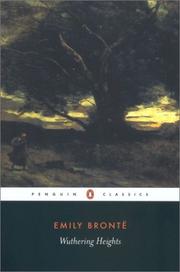
4. Wuthering Heights — Emily Brontë (1847)
Heathcliff and Catherine's destructive love tears across generations on the Yorkshire moors. Not a romance — a fever dream of obsession and revenge.

5. The Brothers Karamazov — Fyodor Dostoevsky (1880)
A father is murdered. One of his three sons did it. Philosophy, theology, and murder mystery woven into the most ambitious novel ever written.
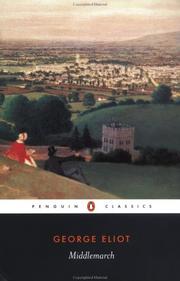
6. Middlemarch — George Eliot (1872)
Widely considered the greatest English-language novel. A sweeping portrait of provincial life where every character's choices feel inevitable in hindsight.

7. Moby-Dick — Herman Melville (1851)
Captain Ahab hunts the white whale. Dense, strange, brilliant. There are chapters that are just about whale anatomy — and yet the obsession at the center is unforgettable.

8. Dracula — Bram Stoker (1897)
The vampire novel. Told through diaries, letters, and newspaper clippings, it's far more unsettling and stranger than any film adaptation.

9. The Great Gatsby — F. Scott Fitzgerald (1925)
Gatsby's parties, Daisy's voice, the green light at the end of the dock. The American novel, in 180 perfect pages.

10. Les Misérables — Victor Hugo (1862)
Jean Valjean steals bread, goes to prison, rebuilds his life, and is hunted by Inspector Javert for decades. The musical only covers half of it.

11. The Picture of Dorian Gray — Oscar Wilde (1890)
A man stays young while his portrait ages. Wilde's only novel is a gothic meditation on vanity, corruption, and the price of living without consequences.

12. Frankenstein — Mary Shelley (1818)
Written by a 19-year-old. The creature isn't a mindless monster — he reads Milton and begs for companionship. The real horror is how his creator abandons him.

13. The Trial — Franz Kafka (1925)
A man is arrested, tried, and condemned — but never told what crime he committed. Kafka's nightmare of bureaucracy feels more relevant every year.

14. A Tale of Two Cities — Charles Dickens (1859)
"It was the best of times, it was the worst of times." Dickens at his most dramatic, set against the French Revolution.

15. Ulysses — James Joyce (1922)
One day in Dublin, told in every literary style imaginable. Difficult, rewarding, and genuinely funny if you let it be.
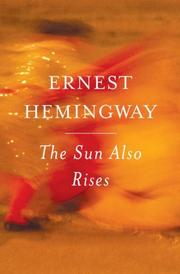
16. The Sun Also Rises — Ernest Hemingway (1926)
Expatriates drink in Paris and run with the bulls in Pamplona. Beneath the surface calm, everyone is broken by the war.
17. The Age of Innocence — Edith Wharton (1920)
A man in Gilded Age New York wants to break free of his suffocating social world for the woman he loves. He doesn't. Wharton's scalpel is merciless.
18. Madame Bovary — Gustave Flaubert (1857)
Emma Bovary is bored with her provincial life and seeks escape through affairs and overspending. The first great novel about consumer dissatisfaction.
19. The Scarlet Letter — Nathaniel Hawthorne (1850)
Hester Prynne is branded with an "A" for adultery in Puritan Massachusetts. A searing examination of guilt, punishment, and hypocrisy.
20. Persuasion — Jane Austen (1817)
Austen's final completed novel is about second chances — quieter and more emotionally mature than Pride and Prejudice, and arguably better.
All 20 novels above are free to read on Lex — with dark mode, custom fonts, highlights, and audiobooks. Start reading now →
Philosophy & Ideas (21–35)
The books that shaped how we think about ethics, politics, happiness, and the meaning of life. Some are 2,500 years old and still the best thing written on their subject.
21. Meditations — Marcus Aurelius (c. 180 AD)
A Roman Emperor's private journal. Not written for publication — just a man talking himself through being good in difficult circumstances. The foundational Stoic text.
22. The Republic — Plato (c. 375 BC)
What is justice? Plato's dialogues shaped Western philosophy for 2,400 years. The Allegory of the Cave alone is worth the read.
23. Beyond Good and Evil — Friedrich Nietzsche (1886)
Nietzsche dismantles conventional morality and asks what values should replace it. Provocative, aphoristic, and wildly misquoted.
24. The Prince — Niccolò Machiavelli (1532)
The handbook for rulers that invented "Machiavellian." Is it cynical advice or brilliant satire? Scholars still argue.
25. The Enchiridion — Epictetus (c. 135 AD)
A slave-turned-philosopher's manual for living. Practical Stoicism in under 50 pages: focus on what you can control, accept what you can't.
26. Walden — Henry David Thoreau (1854)
"I went to the woods because I wished to live deliberately." Thoreau's experiment in simple living remains the most quotable book about stepping back from noise.
27. Utilitarianism — John Stuart Mill (1863)
The greatest good for the greatest number. Mill's defense of utilitarianism is short, readable, and the backbone of modern ethics debates.
28. The Art of War — Sun Tzu (c. 5th century BC)
Strategy distilled to essentials. Read by generals, CEOs, and coaches for 2,500 years. Every chapter fits on a page.
29. As a Man Thinketh — James Allen (1903)
A tiny book with an outsized influence on the self-help genre. Your thoughts shape your reality. 30 minutes to read, years to absorb.
30. Tractatus Logico-Philosophicus — Ludwig Wittgenstein (1921)
"Whereof one cannot speak, thereof one must be silent." Wittgenstein's crystalline attempt to map the limits of language and thought.
31. The Communist Manifesto — Karl Marx & Friedrich Engels (1848)
Love it or hate it, this 23-page pamphlet reshaped the world. Worth reading to understand the argument firsthand rather than through summaries.
32. On Liberty — John Stuart Mill (1859)
The foundational defense of individual freedom and free speech. Mill's harm principle — your liberty ends where harm to others begins — still frames every debate.
33. Confessions — Saint Augustine (c. 400 AD)
The first great autobiography. Augustine's journey from hedonist to bishop is raw and self-aware in ways that feel shockingly modern.
34. Pensées — Blaise Pascal (1670)
Fragments of a planned defense of Christianity. Pascal's Wager, the "God-shaped hole," and some of the most piercing observations about human nature ever written.
35. The Wisdom of Life — Arthur Schopenhauer (1851)
Schopenhauer's most accessible work. A pessimist's surprisingly practical guide to happiness: health matters more than wealth, and solitude is underrated.
Poetry & Plays (36–50)
From Shakespeare to Whitman, these are the works that showed language at its most powerful. Plays you can read in an evening, and poems that have outlived empires.
36. Hamlet — William Shakespeare (c. 1600)
"To be, or not to be." The prince of Denmark feigns madness while deciding whether to avenge his father's murder. Shakespeare's deepest play.
37. Romeo and Juliet — William Shakespeare (c. 1597)
Two teenagers fall in love and die for it. The play that defined romantic tragedy for 400 years.
38. Macbeth — William Shakespeare (c. 1606)
Ambition, murder, guilt, and witches. Shakespeare's shortest tragedy is also his most relentless.
39. Paradise Lost — John Milton (1667)
Satan's rebellion against God, the fall of Man, and some of the most magnificent poetry in the English language. Milton makes the Devil sympathetic — that's the point.
40. The Importance of Being Earnest — Oscar Wilde (1895)
Two men pretend to be named "Ernest." Every line is a perfectly crafted joke. The funniest play in English.
41. The Odyssey — Homer (c. 8th century BC)
Odysseus fights to get home from the Trojan War. It takes 10 years. Cyclops, sirens, gods, and the most patient wife in literature.
42. The Iliad — Homer (c. 8th century BC)
The rage of Achilles during the Trojan War. 3,000 years old and still the greatest war poem — because it shows war as hell, not glory.
43. The Aeneid — Virgil (c. 19 BC)
Rome's founding myth: Aeneas escapes burning Troy and sails to Italy to found a new civilization. Virgil's answer to Homer.
44. A Doll's House — Henrik Ibsen (1879)
Nora slams the door and walks out on her marriage. In 1879 this was a scandal. The play that launched modern drama.
45. Pygmalion — George Bernard Shaw (1913)
A phonetics professor bets he can pass off a Cockney flower girl as a duchess. The source material for My Fair Lady, and sharper than the musical.
46. Les Fleurs du mal — Charles Baudelaire (1857)
Beauty in decay, ecstasy in sin. Baudelaire invented modern poetry and was prosecuted for obscenity. Six poems were banned.
47. Cyrano de Bergerac — Edmond Rostand (1897)
A brilliant swordsman with an enormous nose writes love letters for another man. One of the most moving stories about unrequited love ever staged.
48. The Canterbury Tales — Geoffrey Chaucer (c. 1400)
Pilgrims tell stories on the road to Canterbury. Bawdy, funny, and a panoramic snapshot of medieval English life.
49. Leaves of Grass — Walt Whitman (1855)
"I contain multitudes." Whitman reinvented American poetry with sprawling free verse that celebrated the body, democracy, and the open road.
50. Spoon River Anthology — Edgar Lee Masters (1915)
The dead residents of a small town speak from their graves, telling the truth they couldn't in life. Devastating and addictive.
Many of these plays and poems have free audiobook narrations on Lex. Browse 30,000+ free audiobooks →
Horror & Gothic (51–60)
The stories that invented modern horror. Vampires, ghosts, cosmic dread, and the things that lurk beneath polite society. Most are surprisingly short — and far darker than their adaptations suggest.
51. The King in Yellow — Robert W. Chambers (1895)
A cursed play drives anyone who reads it to madness. These connected stories influenced Lovecraft, True Detective, and an entire genre of cosmic horror.
52. Carmilla — Sheridan Le Fanu (1872)
A female vampire preys on a young woman. Written 25 years before Dracula, and in many ways more unsettling.
53. Dr Jekyll and Mr Hyde — Robert Louis Stevenson (1886)
Only 70 pages. A respectable doctor discovers a potion that separates his good and evil impulses. Everyone knows the twist — the story still works.
54. The Call of Cthulhu — H.P. Lovecraft (1928)
An ancient god sleeps beneath the Pacific Ocean. Humanity is irrelevant. Lovecraft's defining story launched cosmic horror.
55. The Turn of the Screw — Henry James (1898)
A governess sees ghosts in a country house. Or does she? Henry James wrote the most elegant horror story — and the most debated ending — in English literature.
56. The Yellow Wallpaper — Charlotte Perkins Gilman (1892)
A woman confined to a room for "rest cure" slowly goes mad. A feminist classic disguised as a ghost story, written from experience.
57. The Castle of Otranto — Horace Walpole (1764)
The first Gothic novel. A giant helmet falls from the sky and crushes a prince. It's wild, melodramatic, and invented an entire genre.
58. The Phantom of the Opera — Gaston Leroux (1910)
Darker and stranger than the musical. Erik isn't romantic — he's a murderous genius living beneath the Paris opera house.
59. The Great God Pan — Arthur Machen (1894)
A scientific experiment opens a door to something ancient and terrible. Stephen King called it "maybe the best horror story in the English language."
60. The Legend of Sleepy Hollow — Washington Irving (1820)
Ichabod Crane meets the Headless Horseman. Short, atmospheric, and the original American ghost story.
Adventure & Sci-Fi (61–75)
Treasure hunts, time machines, detective mysteries, and journeys to impossible places. These are the books that made genre fiction respectable — and they're still the most fun you can have reading.
61. The Adventures of Sherlock Holmes — Arthur Conan Doyle (1892)
Twelve stories that made Holmes a household name. "A Scandal in Bohemia," "The Red-Headed League," "The Speckled Band." Perfect detective fiction.
62. Around the World in Eighty Days — Jules Verne (1873)
Phileas Fogg bets he can circle the globe in 80 days. Steamships, trains, an elephant, and a ticking clock. Pure adventure.
63. The Time Machine — H.G. Wells (1895)
The original time travel story. Wells sends his protagonist 800,000 years forward and doesn't like what he finds.
64. Kidnapped — Robert Louis Stevenson (1886)
A young man is betrayed by his uncle, kidnapped, shipwrecked, and chased through the Scottish Highlands. Pure swashbuckling.
65. The Island of Dr. Moreau — H.G. Wells (1896)
A shipwreck survivor finds an island where a scientist surgically reshapes animals into human form. Body horror 100 years before the genre existed.
66. The Hound of the Baskervilles — Arthur Conan Doyle (1902)
A spectral hound haunts the Baskerville family on the Devon moors. Sherlock Holmes's greatest case, and a perfect mystery.
67. Don Quixote — Miguel de Cervantes (1605)
The first modern novel. An old man reads too many romances and decides he's a knight. Funny, sad, and the origin of fiction as we know it.
68. The Scarlet Pimpernel — Baroness Orczy (1905)
An English aristocrat secretly rescues French nobles from the guillotine. The original masked hero — before Zorro, before Batman.
69. The Lost World — Arthur Conan Doyle (1912)
Professor Challenger discovers a plateau in South America where dinosaurs still live. Doyle's other great creation, and the direct ancestor of Jurassic Park.
70. The Mysterious Affair at Styles — Agatha Christie (1920)
Hercule Poirot's first case. A wealthy woman is poisoned in her locked bedroom. Christie's debut launched the golden age of detective fiction.
71. White Fang — Jack London (1906)
A wild wolf-dog hybrid in the Yukon is gradually domesticated. London writes nature with brutal, unsentimental honesty.
72. Peter Pan — J.M. Barrie (1911)
The boy who never grows up. Darker and stranger than Disney suggests — Barrie's original is a meditation on childhood, memory, and loss.
73. The Wonderful Wizard of Oz — L. Frank Baum (1900)
Dorothy, Toto, and the yellow brick road. Baum's original is simpler and stranger than the movie — and he wrote 13 more Oz books after this one.
74. The Secret Garden — Frances Hodgson Burnett (1911)
A spoiled orphan discovers a hidden garden and transforms it — and herself — back to life. One of the great novels about healing.
75. Alice's Adventures in Wonderland — Lewis Carroll (1865)
Down the rabbit hole. Carroll's "nonsense" is actually a mathematician's assault on Victorian logic, and it's still the strangest book most people ever read as children.
Looking for more? Browse curated bookshelves — adventure, mystery, sci-fi, and hundreds more categories.
Non-Fiction Essentials (76–90)
Autobiography, politics, science, and social criticism. These books didn't just describe the world — they changed it. Each one started a conversation that's still going.
76. Autobiography — Benjamin Franklin (1791)
Franklin invented the American self-improvement genre. His 13 virtues system and relentless self-experimentation remain influential.
77. Narrative — Frederick Douglass (1845)
Born into slavery, Douglass taught himself to read and became America's most powerful abolitionist voice. Every sentence is deliberate.
78. The Art of Public Speaking — Dale Carnegie (1915)
Carnegie's original public speaking manual, decades before "How to Win Friends and Influence People." Practical, no-nonsense, and still useful.
79. The Elements of Style — William Strunk Jr. (1920)
"Omit needless words." The most concise guide to English writing ever published. Under 50 pages.
80. How the Other Half Lives — Jacob Riis (1890)
Riis documented the brutal conditions of New York tenement life with early flash photography. The book that launched urban reform.
81. A Vindication of the Rights of Woman — Mary Wollstonecraft (1792)
The founding text of feminism. Wollstonecraft argued for women's education and equality 150 years before women could vote.
82. The Souls of Black Folk — W.E.B. Du Bois (1903)
"The problem of the twentieth century is the problem of the color line." Du Bois's essays on race, identity, and double consciousness remain essential.
83. The Interpretation of Dreams — Sigmund Freud (1900)
Freud's masterwork. Whether you accept his theories or not, this book changed how humanity thinks about the unconscious mind.
84. On the Origin of Species — Charles Darwin (1859)
The book that changed biology forever. Darwin writes with surprising clarity and humility for someone overturning the foundations of science.
85. Up from Slavery — Booker T. Washington (1901)
Washington's autobiography traces his journey from slavery to founding the Tuskegee Institute. A counterpoint to Du Bois and a document of its era.
86. The Jungle — Upton Sinclair (1906)
Sinclair aimed at the public's heart and hit its stomach. His exposé of the meatpacking industry led directly to the Food and Drug Act.
87. Democracy in America — Alexis de Tocqueville (1835)
A Frenchman visits America and explains it better than any American could. Still the sharpest analysis of American democracy.
88. Leviathan — Thomas Hobbes (1651)
Life in the state of nature is "solitary, poor, nasty, brutish, and short." Hobbes's case for a strong government to prevent chaos.
89. The Wealth of Nations — Adam Smith (1776)
The invisible hand, division of labor, free markets. Smith's economics classic is more nuanced than the caricatures suggest.
90. Notebooks — Leonardo da Vinci (c. 1500)
Da Vinci's actual notebooks — sketches, inventions, observations, and questions. A window into the most extraordinary mind in history.
Short & Powerful (91–100)
Don't have time for a 500-page novel? These short works — novellas, short stories, and essays — pack an extraordinary punch in under 100 pages each.
91. A Christmas Carol — Charles Dickens (1843)
Scrooge, three ghosts, and one of the most satisfying character arcs in fiction. Read it in an evening.
92. The Gift of the Magi — O. Henry (1905)
A couple each sacrifices their most prized possession to buy a gift for the other. Five pages of perfect irony.
93. Anthem — Ayn Rand (1938)
A man rediscovers the word "I" in a collectivist dystopia. Rand's shortest and most focused work — you'll read it in an hour.
94. A Modest Proposal — Jonathan Swift (1729)
Swift suggests the Irish should eat their children to solve poverty. The most savage piece of satire in the English language.
95. The Bet — Anton Chekhov (1889)
A banker bets a lawyer that he can't survive 15 years of solitary confinement. What happens to a mind left alone with books? Chekhov answers in 10 pages.
96. The Story of an Hour — Kate Chopin (1894)
A wife learns her husband has died. Her reaction is not what anyone expects. Two pages that detonate like a bomb — collected free in Chopin's Awakening and Selected Short Stories.
97. Bartleby the Scrivener — Herman Melville (1853)
"I would prefer not to." A Wall Street copyist simply stops working and refuses to leave. Melville's strangest story predicted Kafka by 60 years.
98. The Metamorphosis — Franz Kafka (1915)
Gregor Samsa wakes up as a giant insect. His family's reaction is the real horror. The most famous opening line in modernist fiction.
99. Heart of Darkness — Joseph Conrad (1899)
A journey up the Congo River into the heart of colonial brutality. Kurtz's "The horror! The horror!" echoes through all of 20th-century literature.
100. The Prophet — Kahlil Gibran (1923)
A wise man answers questions about love, freedom, pain, and death. Poetic, spiritual, and the bestselling book of the 20th century.
Every book on this list is free to read on Lex — no signup, no credit card, no catch. Search for any book or browse curated shelves to find your next read.


