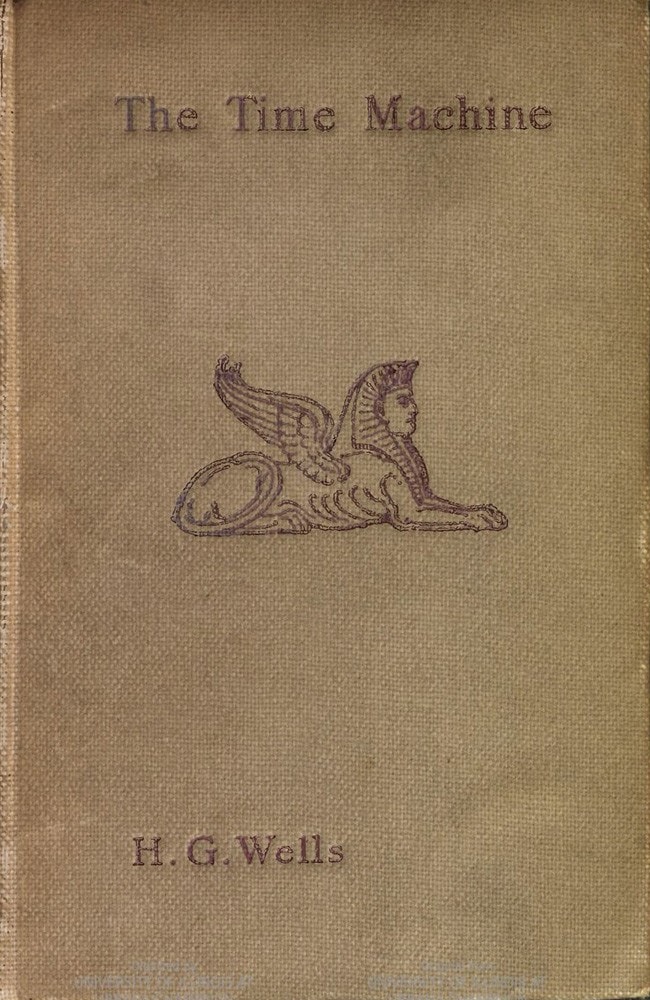
The Time Machine
1895
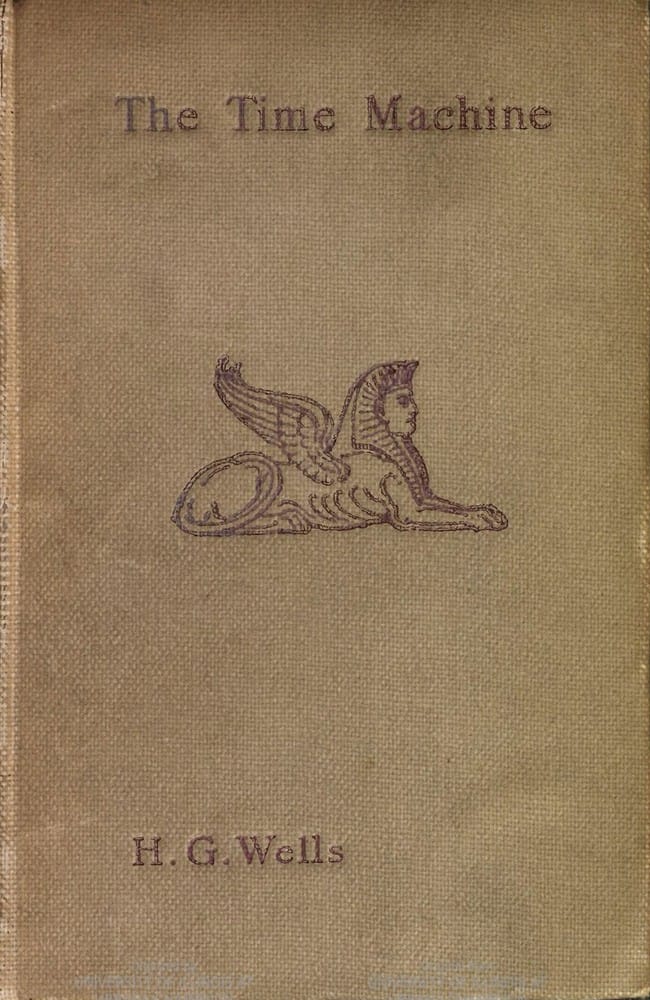
In 1895, H.G. Wells invented time travel. Not the concept in theory, but the dream in our collective imagination. A Victorian scientist builds a machine and propels himself 800,000 years into the future, where he discovers Earth has grown quiet and strange. The sun dims. The oceans have receded. And humanity has divided into two species: the ethereal, childlike Eloi who wander the surface in eternal afternoon, and the subterranean Morlocks who tend to them like farmers tending livestock. What begins as a scientific adventure becomes something far darker. Wells uses this far-future landscape as a mirror for his own era's anxieties about industrial capitalism, class warfare, and the direction of progress. The Time Traveller's journey through the corridors of deep time becomes a meditation on what we inherit, what we destroy, and what becomes of us when we wait long enough. It is a short book, barely a hundred pages, but it contains the entire anxious 20th century and everything that followed it. It remains the most elegant horror story about the future ever written.
Editions

X-Ray
“It is a law of nature we overlook, that intellectual versatility is the compensation for change, danger, and trouble. An animal perfectly in harmony with its environment is a perfect mechanism. Nature never appeals to intelligence until habit and instinct are useless. There is no intelligence where there is no change and no need of change. Only those animals partake of intelligence that have a huge variety of needs and dangers.”
— H. G. Wells
“We should strive to welcome change and challenges, because they are what help us grow. With out them we grow weak like the Eloi in comfort and security. We need to constantly be challenging ourselves in order to strengthen our character and increase our intelligence.”
— H. G. Wells
“And I have by me, for my comfort, two strange white flowers - shriveled now, and brown and flat and brittle - to witness that even when mind and strength had gone, gratitude and a mutual tenderness still lived on in the heart of men.”
— H. G. Wells
“Nature never appeals to intelligence until habit and instinct are useless. There is no intelligence where there is no need of change.”
— H. G. Wells
“Face this world. Learn its ways, watch it, be careful of too hasty guesses at its meaning. In the end you will find clues to it all.”
— H. G. Wells
“It sounds plausible enough tonight, but wait until tomorrow. Wait for the common sense of the morning.”
— H. G. Wells
“Looking at these stars suddenly dwarfed my own troubles and all the gravities of terrestrial life.”
— H. G. Wells
“Very simple was my explanation, and plausible enough---as most wrong theories are!”
— H. G. Wells
“We are kept keen on the grindstone of pain and necessity.”
— H. G. Wells
Link to this book
Add a free, dofollow link to Lex on your blog, forum, syllabus, or reading list.

<a href="https://lex-books.com/book/the-time-machine-1d253a23-0c8f-43b9-bb9b-ee338e947471"><img src="https://lex-books.com/badges/read-on-lex.svg" alt="Read The Time Machine by H. G. Wells free on Lex" width="160" height="40"></a>[](https://lex-books.com/book/the-time-machine-1d253a23-0c8f-43b9-bb9b-ee338e947471)[url=https://lex-books.com/book/the-time-machine-1d253a23-0c8f-43b9-bb9b-ee338e947471][img]https://lex-books.com/badges/read-on-lex.svg[/img][/url]Read The Time Machine by H. G. Wells free on Lex: https://lex-books.com/book/the-time-machine-1d253a23-0c8f-43b9-bb9b-ee338e947471Cite this book
Reading this edition for a paper or guide? Copy a citation.
Wells, H. G.. The Time Machine. Lex, lex-books.com/book/the-time-machine-1d253a23-0c8f-43b9-bb9b-ee338e947471.Wells, H. G. (1895). The Time Machine. Lex. https://lex-books.com/book/the-time-machine-1d253a23-0c8f-43b9-bb9b-ee338e947471Wells, H. G.. The Time Machine. Lex. https://lex-books.com/book/the-time-machine-1d253a23-0c8f-43b9-bb9b-ee338e947471.