The Elements of Style
The Elements of Style
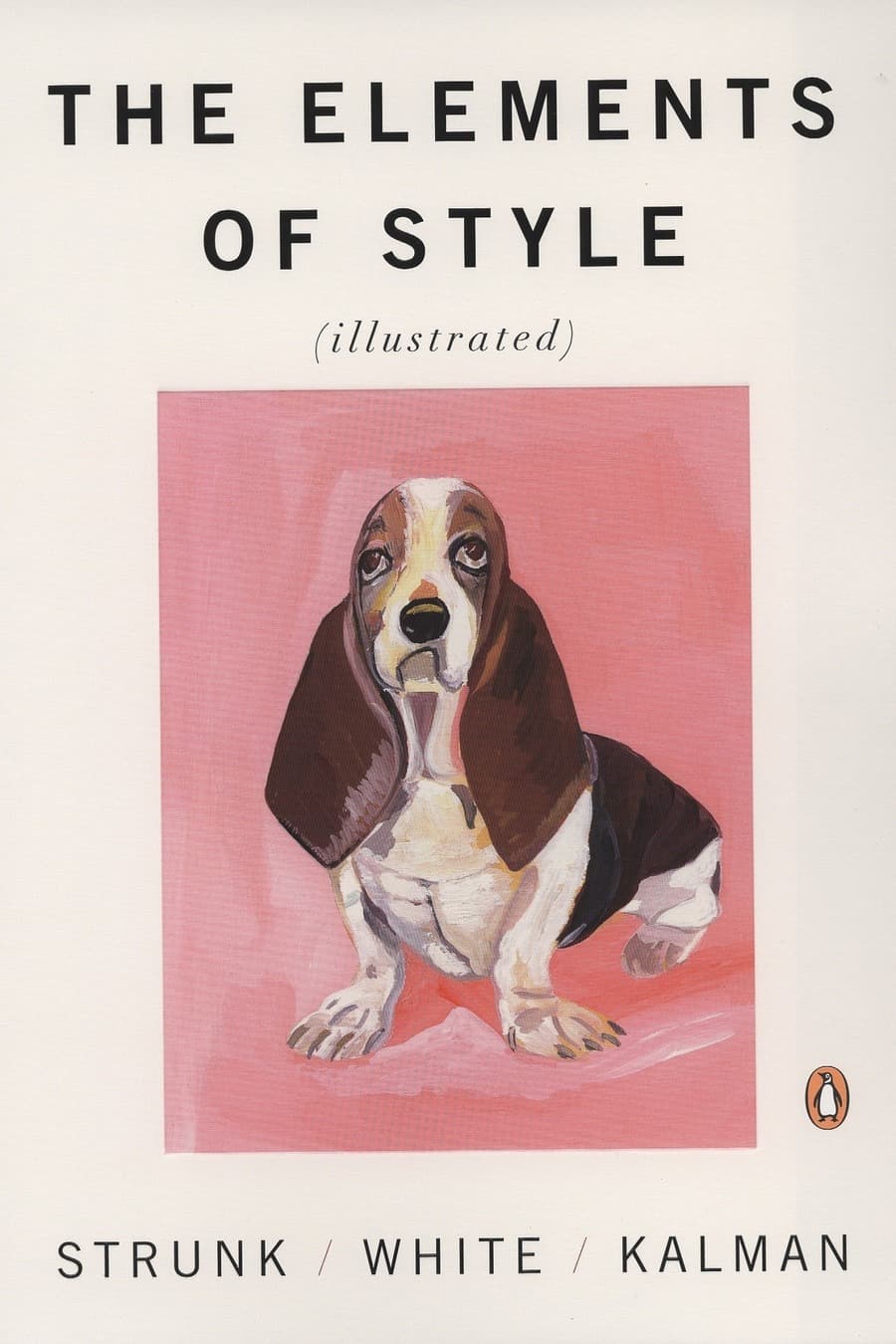
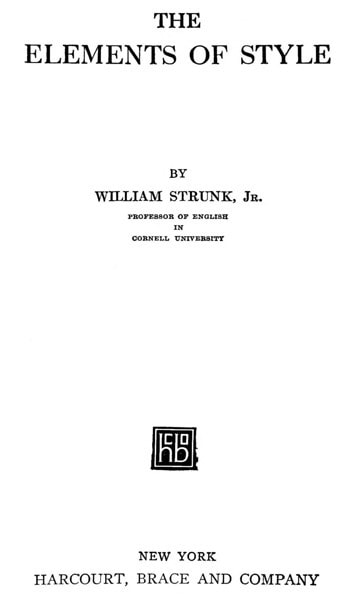
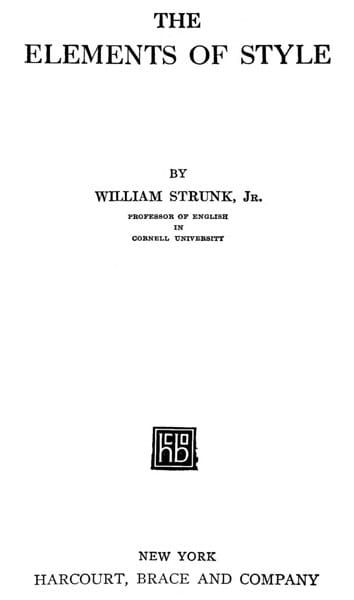
The book that taught generations of writers to cut the clutter. First written by William Strunk Jr. in 1918, then revised by E.B. White in 1959, this slender volume distills clear English into a handful of uncompromising rules. Its central plea: write with vigor. Use the active voice. Omit needless words. Be specific. Avoid fancy language trying to impress. These aren't suggestions for softer prose. They're commands from a man who believed that clarity is a moral obligation. The book ruthlessly tackles common errors, misused words, and the thousand small ways we obscure meaning with noise. It's not a comprehensive grammar reference. It's a laser-focused manual for anyone who wants their words to land. Whether you're drafting a memo or a novel, this book will make you wince at your own flab and then fix it. It's been called the second greatest favor you can do an aspiring writer. The first, as Dorothy Parker noted, is to shoot them now, while they're happy.
Editions
X-Ray
“Vigorous writing is concise. A sentence should contain no unnecessary words, a paragraph no unnecessary sentences, for the same reason that a drawing should have no unnecessary lines and a machine no unnecessary parts. This requires not that the writer make all his sentences short, or that he avoid all detail and treat his subjects only in outline, but that every word tell.””
— William Strunk
“To achieve style, begin by affecting none.””
— William Strunk
“The mind travels faster than the pen; consequently, writing becomes a question of learning to make occasional wing shots, bringing down the bird of thought as it flashes by. A writer is a gunner, sometimes waiting in the blind for something to come in, sometimes roaming the countryside hoping to scare something up.””
— William Strunk
“If you don't know how to pronounce a word, say it loud!" (William Strunk) ... Why compound ignorance with inaudibility?””
— William Strunk
“When a sentence is made stronger, it usually becomes shorter. Thus, brevity is a by-product of vigor.””
— William Strunk
“A single overstatement, wherever or however it occurs, diminishes the whole, and a carefree superlative has the power to destroy, for the reader, the object of the writer's enthusiasm.””
— William Strunk
“Never call a stomach a tummy without good reason.””
— William Strunk
“Flammable. An oddity, chiefly useful in saving lives. The common word meaning "combustible" is inflammable. But some people are thrown off by the in- and think inflammable means "not combustible." For this reason, trucks carrying gasoline or explosives are now marked FLAMMABLE. Unless you are operating such a truck and hence are concerned with the safety of children and illiterates, use inflammable.””
— William Strunk
“Consciously or unconsciously, the reader is dissatisfied with being told only what is not; the reader wishes to be told what is... If your every sentence admits a doubt, your writing will lack authority.””
— William Strunk
Link to this book
Add a free, dofollow link to Lex on your blog, forum, syllabus, or reading list.

<a href="https://lex-books.com/book/the-elements-of-style-5e64cf4b-fd33-41db-80ff-4708ef04af6e"><img src="https://lex-books.com/badges/read-on-lex.svg" alt="Read The Elements of Style by William Strunk free on Lex" width="160" height="40"></a>[](https://lex-books.com/book/the-elements-of-style-5e64cf4b-fd33-41db-80ff-4708ef04af6e)[url=https://lex-books.com/book/the-elements-of-style-5e64cf4b-fd33-41db-80ff-4708ef04af6e][img]https://lex-books.com/badges/read-on-lex.svg[/img][/url]Read The Elements of Style by William Strunk free on Lex: https://lex-books.com/book/the-elements-of-style-5e64cf4b-fd33-41db-80ff-4708ef04af6eCite this book
Reading this edition for a paper or guide? Copy a citation.
Strunk, William. The Elements of Style. Lex, lex-books.com/book/the-elements-of-style-5e64cf4b-fd33-41db-80ff-4708ef04af6e.Strunk, W. (n.d.). The Elements of Style. Lex. https://lex-books.com/book/the-elements-of-style-5e64cf4b-fd33-41db-80ff-4708ef04af6eStrunk, William. The Elements of Style. Lex. https://lex-books.com/book/the-elements-of-style-5e64cf4b-fd33-41db-80ff-4708ef04af6e.