The Prince
1532
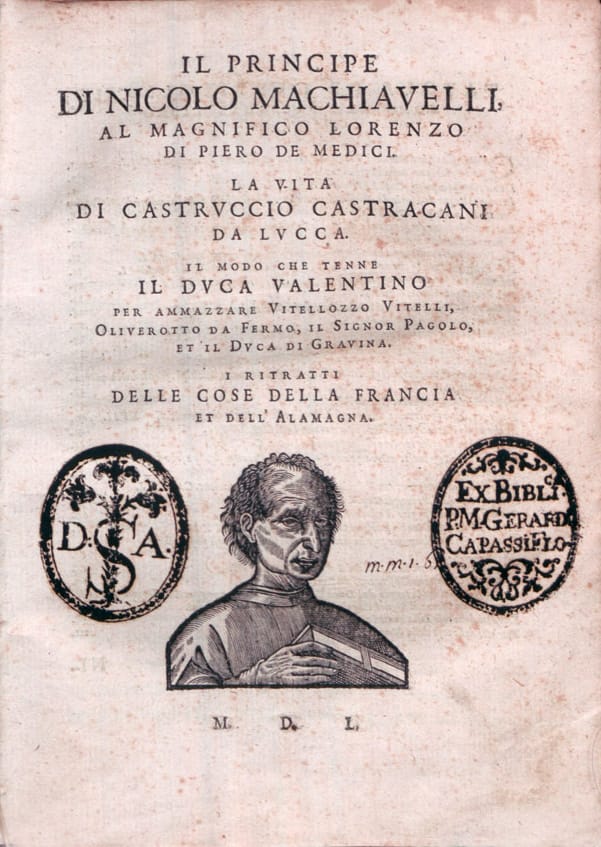
The Prince
1532
Translated by W. K. (William Kenaz) Marriott
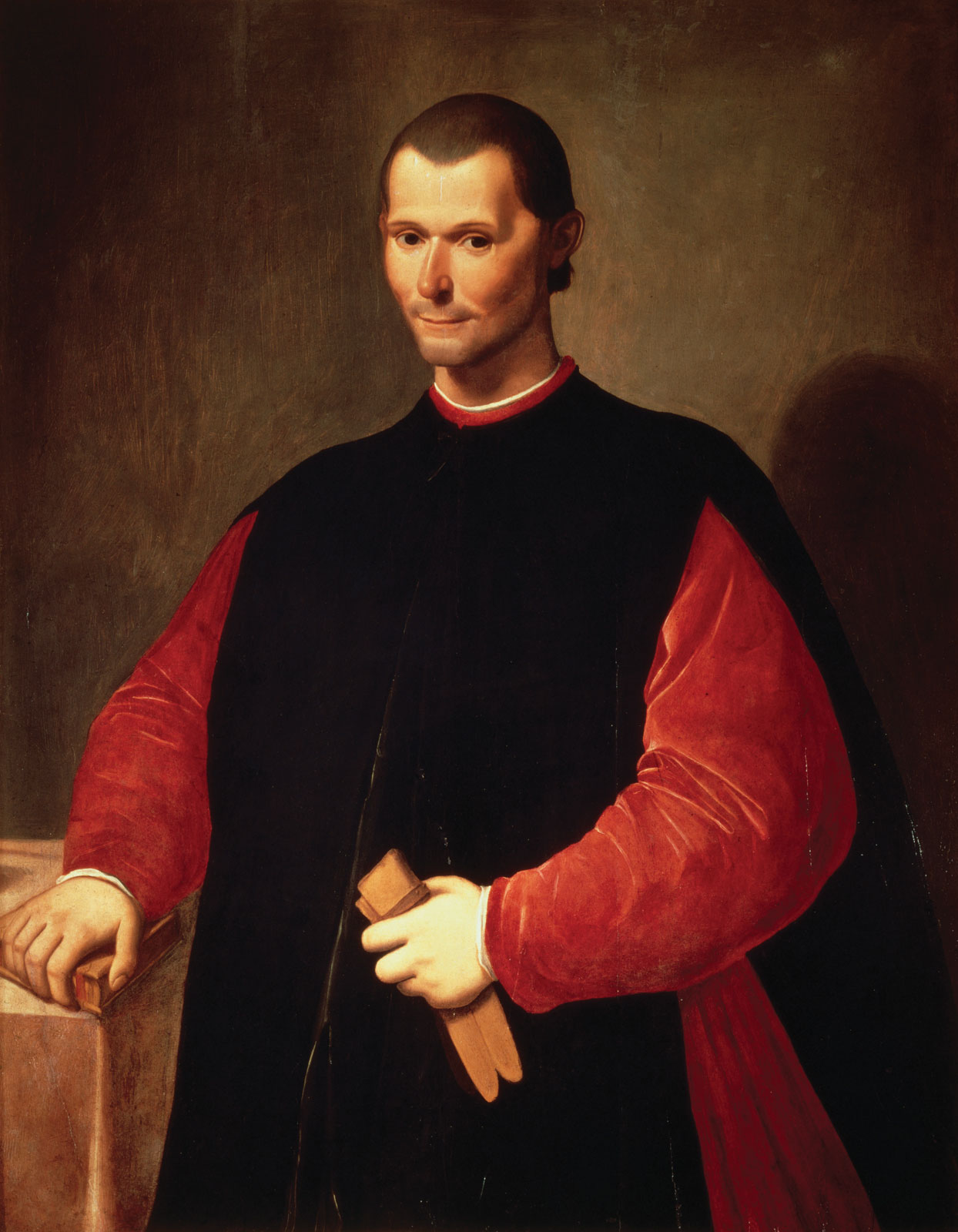
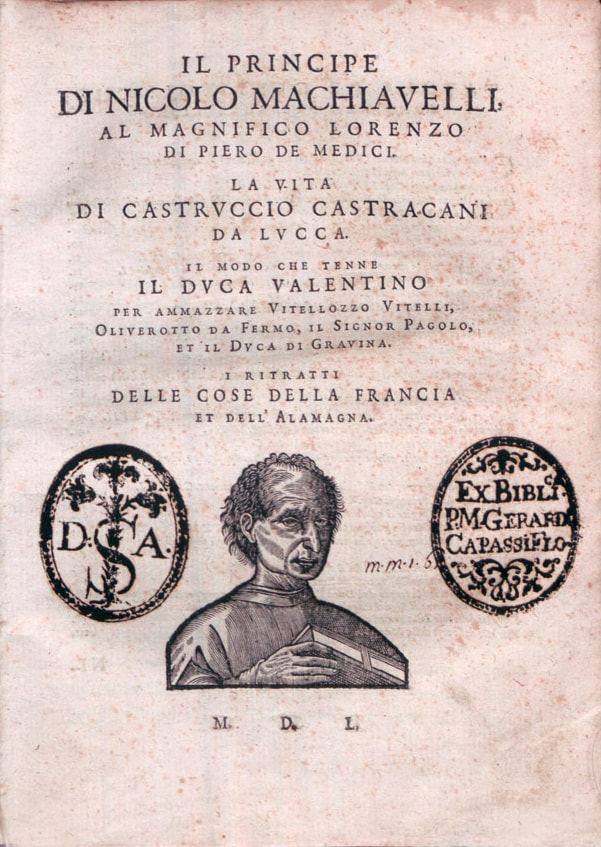
Written in 1513 by a man who had just been tortured and banished from Florence, The Prince is Machiavelli's brutal gift to Lorenzo de' Medici: a manual not for how rulers should be good, but for how they must be effective. It shattered the medieval tradition of advice-to-princes literature by refusing moralizing in favor of cold observation. The fox knows when to trick; the lion knows when to maul. A prince must be both. Machiavelli examines how principalities are acquired and held - through force, fraud, or fortune - and argues that the end justifies the means, that it is better to be feared than loved if you must choose, that promises are instruments to be broken when survival demands it. His case study is Cesare Borgia, whose cruelty and cunning he praises as political genius. Five centuries later, the book remains essential precisely because it describes what every serious person knows but few will say aloud: that power has its own logic, and the gap between how we explain our actions and why we actually take them is the most important gap in the world. For anyone who wants to understand politics, business, or human nature as they actually function - not as textbooks pretend.
Editions



X-Ray
“Everyone sees what you appear to be, few experience what you really are.””
— Niccolò Machiavelli
“If an injury has to be done to a man it should be so severe that his vengeance need not be feared.””
— Niccolò Machiavelli
“The first method for estimating the intelligence of a ruler is to look at the men he has around him.””
— Niccolò Machiavelli
“The lion cannot protect himself from traps, and the fox cannot defend himself from wolves. One must therefore be a fox to recognize traps, and a lion to frighten wolves.””
— Niccolò Machiavelli
“There is no other way to guard yourself against flattery than by making men understand that telling you the truth will not offend you.””
— Niccolò Machiavelli
“Never attempt to win by force what can be won by deception.””
— Niccolò Machiavelli
“it is much safer to be feared than loved because ...love is preserved by the link of obligation which, owing to the baseness of men, is broken at every opportunity for their advantage; but fear preserves you by a dread of punishment which never fails.””
— Niccolò Machiavelli
“Because there are three classes of intellects: one which comprehends by itself; another which appreciates what others comprehend; and a third which neither comprehends by itself nor by the showing of others; the first is the most excellent, the second is good, the third is useless.””
— Niccolò Machiavelli
“How we live is so different from how we ought to live that he who studies what ought to be done rather than what is done will learn the way to his downfall rather than to his preservation.””
— Niccolò Machiavelli
About The Prince
Chapter Summaries
- I
- Machiavelli begins by classifying all states as either republics or principalities, further dividing principalities into hereditary or new. He notes that new principalities can be entirely new or annexed to existing ones, and are acquired by arms (one's own or others'), fortune, or ability.
- II
- Hereditary states are easier to maintain than new ones, requiring only that the prince not transgress ancestral customs and deal prudently with circumstances. Long-established rule fosters natural affection and diminishes motives for change, making the prince more loved and secure.
- III
- Mixed principalities (annexed territories) present difficulties because people willingly change rulers hoping for betterment, often finding themselves worse off. A new prince must either destroy the former ruling family, reside in the new territory, or send colonies, while also managing powerful neighbors and avoiding the errors of Louis XII.
Key Themes
- Acquisition and Maintenance of Power
- This is the overarching theme, exploring various methods by which principalities are gained (hereditary, new, mixed, by ability, by fortune, by wickedness, by popular favor) and the strategies required to retain them. Machiavelli emphasizes that different types of states require different approaches to governance and defense.
- Virtù (Ability/Skill)
- Machiavelli's concept of 'virtù' refers to a prince's capacity for decisive action, courage, foresight, and skill in adapting to circumstances. It is crucial for acquiring and holding power, often enabling a prince to overcome the challenges posed by fortune.
- Fortuna (Fortune/Luck)
- Fortune represents the unpredictable element of human affairs, which Machiavelli suggests governs half of human actions. A wise prince must be prepared to resist her blows and adapt his conduct to the 'spirit of the times,' but even the most virtuous can be undone by extreme malignity of fortune.
Characters
- Niccolò Machiavelli(narrator)
- The author and narrator, a Florentine diplomat and political theorist who offers advice to princes based on his experience and study of history.
- Cesare Borgia (Duke Valentino)(protagonist)
- The son of Pope Alexander VI, presented by Machiavelli as an exemplary figure for a new prince in acquiring and consolidating power, despite his ultimate failure due to extreme malignity of fortune.
- Pope Alexander VI(supporting)
- Cesare Borgia's father, who used the Church's temporal power to aid his son's territorial acquisitions in Italy.
- Pope Julius II(supporting)
- A courageous and impetuous pontiff who succeeded Alexander VI, strengthened the Church's temporal power, and was a rival to Cesare Borgia.
- Louis XII of France(antagonist)
- King of France whose strategic errors in Italy are frequently cited by Machiavelli as examples of how not to maintain a newly acquired state.
- Ferdinand of Aragon (Ferdinand V)(supporting)
- The King of Spain, praised by Machiavelli for his cunning, religious pretexts, and successful expansion of power.
Link to this book
Add a free, dofollow link to Lex on your blog, forum, syllabus, or reading list.

<a href="https://lex-books.com/book/the-prince-2113faf2-357f-40f4-bbdf-c2eaf8c59733"><img src="https://lex-books.com/badges/read-on-lex.svg" alt="Read The Prince by Niccolò Machiavelli free on Lex" width="160" height="40"></a>[](https://lex-books.com/book/the-prince-2113faf2-357f-40f4-bbdf-c2eaf8c59733)[url=https://lex-books.com/book/the-prince-2113faf2-357f-40f4-bbdf-c2eaf8c59733][img]https://lex-books.com/badges/read-on-lex.svg[/img][/url]Read The Prince by Niccolò Machiavelli free on Lex: https://lex-books.com/book/the-prince-2113faf2-357f-40f4-bbdf-c2eaf8c59733Cite this book
Reading this edition for a paper or guide? Copy a citation.
Machiavelli, Niccolò. The Prince. Lex, lex-books.com/book/the-prince-2113faf2-357f-40f4-bbdf-c2eaf8c59733.Machiavelli, N. (1532). The Prince. Lex. https://lex-books.com/book/the-prince-2113faf2-357f-40f4-bbdf-c2eaf8c59733Machiavelli, Niccolò. The Prince. Lex. https://lex-books.com/book/the-prince-2113faf2-357f-40f4-bbdf-c2eaf8c59733.