The Republic
375 BC

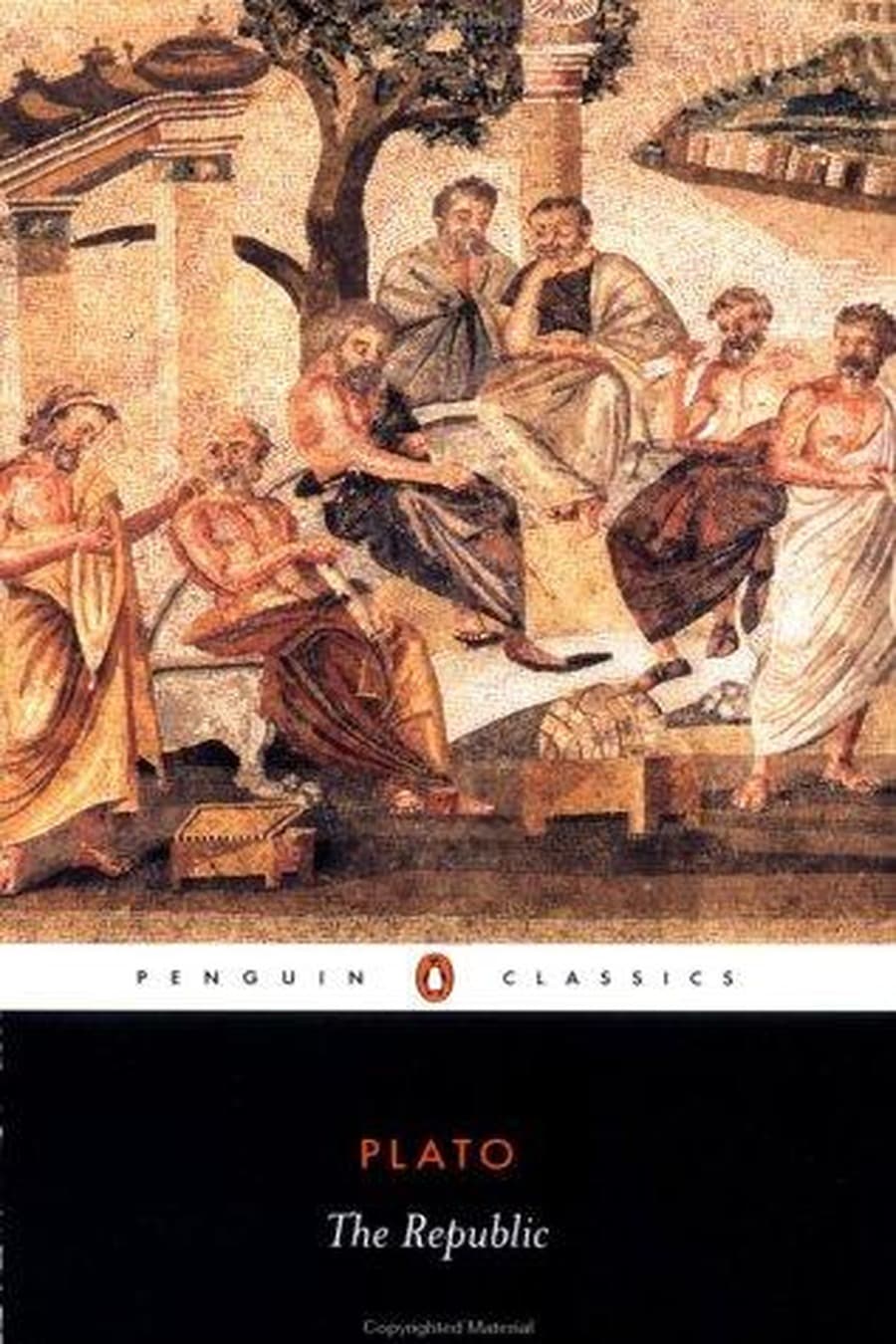
What is justice? Is it merely the advantage of the stronger, or something nobler worth dying for? Socrates finds himself in the Piraeus, trapped after a festival, pressed by his interlocutors to answer these impossible questions. The great philosopher doesn't merely debate - he interrogates, dismantles, and rebuilds, constructing in dialogue what would become the entire architecture of Western political thought. What emerges is a vision of the ideal city: ruled by philosopher kings, bound by harmony, its citizens sorted like metals into gold, silver, and bronze. But this is no utopian fantasy. Plato's dialogue crackles with tension as Socrates defends justice against its cynics, eventually arriving at the stunning conclusion that the just life is the happy life - even if every appearance says otherwise. The Republic is not a textbook. It is a drama of ideas, where the fate of souls and cities hangs on the outcome of a single conversation.
Editions

X-Ray
“The heaviest penalty for declining to rule is to be ruled by someone inferior to yourself.””
— Plato
“I am the wisest man alive, for I know one thing, and that is that I know nothing.””
— Plato
“If women are expected to do the same work as men, we must teach them the same things.””
— Plato
“The beginning is the most important part of the work.””
— Plato
“The object of education is to teach us to love what is beautiful.””
— Plato
“Bodily exercise, when compulsory, does no harm to the body; but knowledge which is acquired under compulsion obtains no hold on the mind.””
— Plato
“Musical innovation is full of danger to the State, for when modes of music change, the fundamental laws of the State always change with them.””
— Plato
“There is in every one of us, even those who seem to be most moderate, a type of desire that is terrible, wild, and lawless.””
— Plato
“The soul takes nothing with her to the next world but her education and her culture. At the beginning of the journey to the next world, one's education and culture can either provide the greatest assistance, or else act as the greatest burden, to the person who has just died.””
— Plato
About The Republic
Chapter Summaries
- 1
- The dialogue begins at the Piraeus festival, where Socrates is persuaded to stay and converse. The discussion on justice starts with Cephalus offering a conventional definition (telling truth, paying debts), followed by Polemarchus's refinement (benefiting friends, harming enemies), both refuted by Socrates. Thrasymachus then forcefully asserts that justice is merely the interest of the stronger, which Socrates challenges through analogies and arguments, ultimately concluding that he still lacks a definitive understanding of justice.
- 2
- Glaucon and Adeimantus challenge Socrates to prove justice's intrinsic value, independent of rewards, using the Ring of Gyges and contrasting the perfectly unjust man with the perfectly just man. Socrates proposes to seek justice first in the larger 'letters' of the state, then in the individual. He constructs a 'primitive state' based on needs and division of labor, which expands into a 'luxurious state' leading to war and the need for guardians. The education of guardians begins with music and gymnastic, emphasizing censorship of traditional myths to promote divine goodness, immutability, and truthfulness.
- 3
- The censorship of poetry continues, aiming to remove tales that instill fear of death, encourage lamentation, or depict gods and heroes with moral failings, thereby fostering courage and temperance. Rules for music (Dorian and Phrygian modes) and simple gymnastic are established. Plato critiques contemporary medicine and law, advocating for simplicity and self-sufficiency. The selection of rulers (guardians) is discussed, emphasizing their love for the state and rigorous testing. The 'magnificent lie' or myth of metals is introduced to justify social hierarchy and the guardians' communal, property-less lifestyle.
Key Themes
- The Nature of Justice
- The core inquiry of the Republic, justice is initially debated through conventional and sophistical definitions. Ultimately, Plato defines it as the harmonious ordering of the soul's parts and the state's classes, where each element performs its proper function without interference.
- The Ideal State and Governance
- Plato constructs a utopian society, an ideal 'polis,' ruled by philosopher-kings. This theme explores the structure, laws, and educational system necessary for such a state, contrasting it with the declining forms of government like timocracy, oligarchy, democracy, and tyranny.
- Education and Character Formation
- Education is presented as the foundational element for creating a just state and virtuous citizens. It encompasses physical training (gymnastic) and intellectual development (music, literature, mathematics, dialectic), aiming to cultivate reason and harmonize the soul's elements from youth through adulthood.
Characters
- Socrates(protagonist)
- The central figure of the dialogue and its narrator, who leads the philosophical discussion on justice and the ideal state.
- Glaucon(supporting)
- An impetuous youth and one of the principal respondents, who challenges Socrates to prove the inherent goodness of justice.
- Adeimantus(supporting)
- A graver and deeper character than Glaucon, who raises profound objections and pursues arguments further in the dialogue.
- Cephalus(minor)
- The aged patriarch of the house where the dialogue begins, who offers a conventional definition of justice before retiring.
- Polemarchus(minor)
- Son and heir of Cephalus, who continues the discussion on justice after his father, representing a proverbial stage of morality.
- Thrasymachus(antagonist)
- A Sophist characterized as vain and blustering, who asserts that 'might is right' and justice is the interest of the stronger.
Link to this book
Add a free, dofollow link to Lex on your blog, forum, syllabus, or reading list.

<a href="https://lex-books.com/book/the-republic-c8f8d7f4-f9a6-42e2-9d2f-1c891051fe30"><img src="https://lex-books.com/badges/read-on-lex.svg" alt="Read The Republic by Plato free on Lex" width="160" height="40"></a>[](https://lex-books.com/book/the-republic-c8f8d7f4-f9a6-42e2-9d2f-1c891051fe30)[url=https://lex-books.com/book/the-republic-c8f8d7f4-f9a6-42e2-9d2f-1c891051fe30][img]https://lex-books.com/badges/read-on-lex.svg[/img][/url]Read The Republic by Plato free on Lex: https://lex-books.com/book/the-republic-c8f8d7f4-f9a6-42e2-9d2f-1c891051fe30Cite this book
Reading this edition for a paper or guide? Copy a citation.
Plato. The Republic. Lex, lex-books.com/book/the-republic-c8f8d7f4-f9a6-42e2-9d2f-1c891051fe30.Plato (375 BC). The Republic. Lex. https://lex-books.com/book/the-republic-c8f8d7f4-f9a6-42e2-9d2f-1c891051fe30Plato. The Republic. Lex. https://lex-books.com/book/the-republic-c8f8d7f4-f9a6-42e2-9d2f-1c891051fe30.