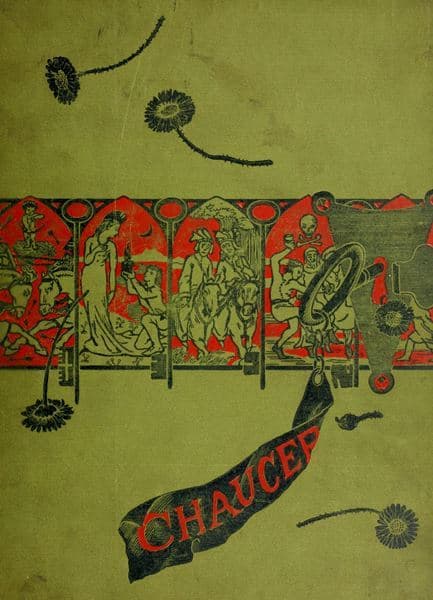
The Canterbury Tales, and Other Poems
1387
The Canterbury Tales, and Other Poems
1387
Chaucer wrote this around 1387, but The Canterbury Tales feels startlingly alive. A group of pilgrims - a knight, a miller, a prioress, a merchant, a plowman, and two-and-twenty others - gather at a Southwark inn and strike a bargain: each will tell two tales on the road to Canterbury, and the best storyteller wins a free dinner. What follows is a riotous parade of stories and characters that range from the heroic to the obscene, the sacred to the scandalous. The Miller's Tale is filthy and hilarious. The Wife of Bath argues that women desperately want sovereignty over their husbands. The Pardoner's confession of his own hypocrisy is staggering in its nakedness. Chaucer uses his frame to paint an entire cross-section of medieval English society - its piety and hypocrisy, its lust and learning, its class resentments and rivalries. This is a book that has survived six centuries because it is simply tremendous fun to read, and because beneath the jokes lies something genuinely sharp about how people actually were - and, perhaps, how they still are.
Editions


X-Ray
“And shame it is, if that a priest take keep, To see a shitten shepherd and clean sheep:””
— Geoffrey Chaucer
“Upon his arm he bare a gay bracer*, *small shield And by his side a sword and a buckler, And on that other side a gay daggere, Harnessed well, and sharp as point of spear:””
— Geoffrey Chaucer
Link to this book
Add a free, dofollow link to Lex on your blog, forum, syllabus, or reading list.

<a href="https://lex-books.com/book/the-canterbury-tales-and-other-poems-6099250e-297b-44cb-bb38-0b565e7a9626"><img src="https://lex-books.com/badges/read-on-lex.svg" alt="Read The Canterbury Tales, and Other Poems by Geoffrey Chaucer free on Lex" width="160" height="40"></a>[](https://lex-books.com/book/the-canterbury-tales-and-other-poems-6099250e-297b-44cb-bb38-0b565e7a9626)[url=https://lex-books.com/book/the-canterbury-tales-and-other-poems-6099250e-297b-44cb-bb38-0b565e7a9626][img]https://lex-books.com/badges/read-on-lex.svg[/img][/url]Read The Canterbury Tales, and Other Poems by Geoffrey Chaucer free on Lex: https://lex-books.com/book/the-canterbury-tales-and-other-poems-6099250e-297b-44cb-bb38-0b565e7a9626Cite this book
Reading this edition for a paper or guide? Copy a citation.
Chaucer, Geoffrey. The Canterbury Tales, and Other Poems. Lex, lex-books.com/book/the-canterbury-tales-and-other-poems-6099250e-297b-44cb-bb38-0b565e7a9626.Chaucer, G. (1387). The Canterbury Tales, and Other Poems. Lex. https://lex-books.com/book/the-canterbury-tales-and-other-poems-6099250e-297b-44cb-bb38-0b565e7a9626Chaucer, Geoffrey. The Canterbury Tales, and Other Poems. Lex. https://lex-books.com/book/the-canterbury-tales-and-other-poems-6099250e-297b-44cb-bb38-0b565e7a9626.