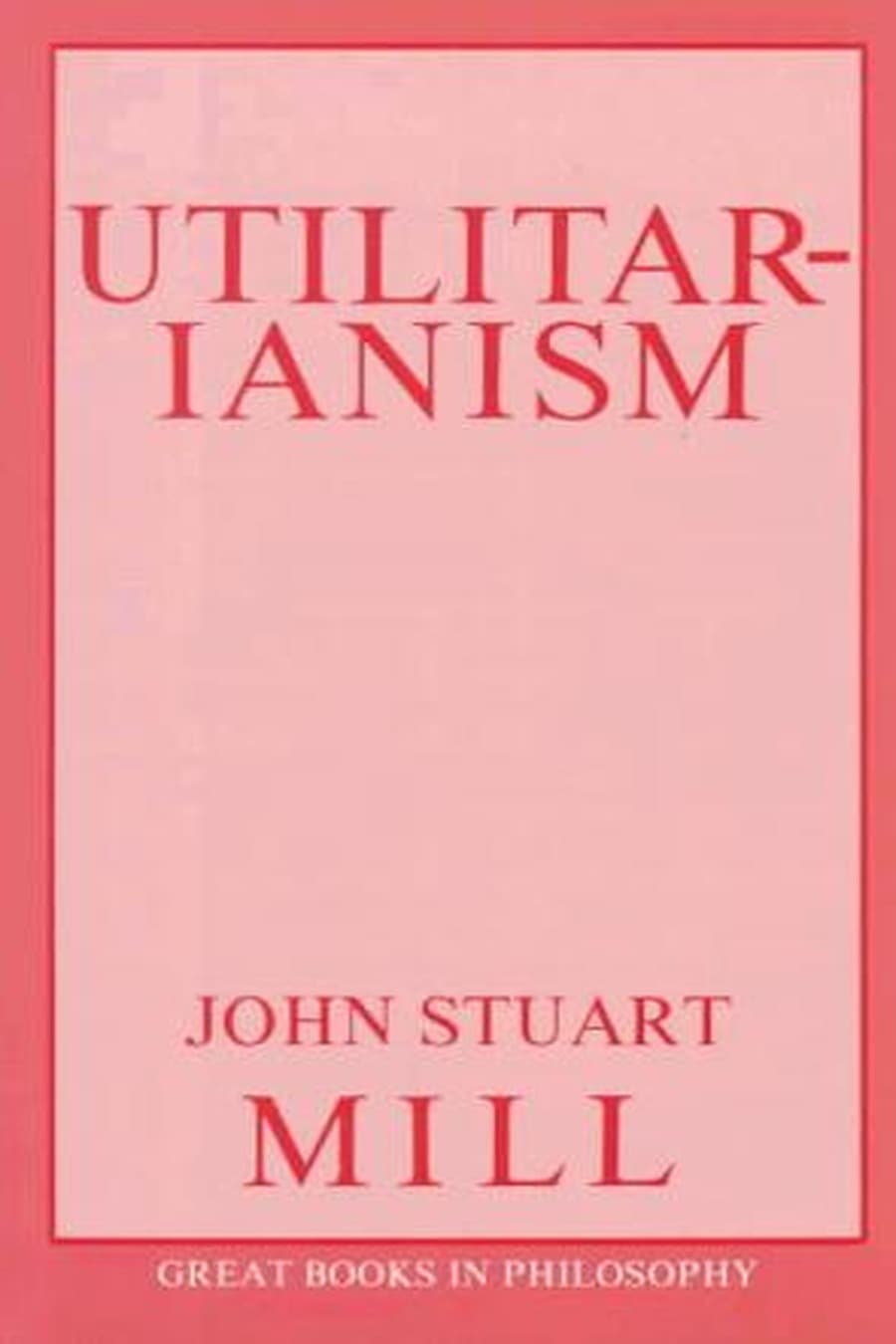
Utilitarianism
1863
The question at the heart of this book has haunted humanity for millennia: what makes an action right? Mill believed he had the answer. Written in 1863, Utilitarianism remains one of the most influential and controversial works in moral philosophy. Mill argues that the rightness of an action lies entirely in its consequences, specifically in its capacity to produce happiness for the greatest number of people. This 'principle of utility' as he calls it is not mere calculation but a profound claim about what matters in human life. The book is concise but devastating in its logic, moving from the foundations of moral reasoning to intricate debates about justice, punishment, and the nature of happiness itself. Whether you find Mill convincing or infuriating, his argument forces you to confront what you actually believe about morality and why. More relevant than ever in an age of algorithmic decision-making and cost-benefit analysis.
Editions

X-Ray
“It is indisputable that the being whose capacities of enjoyment are low, has the greatest chance of having them fully satisfied; and a highly endowed being will always feel that any happiness which he can look for, as the world is constituted, is imperfect. But he can learn to bear its imperfections, if they are at all bearable; and they will not make him envy the being who is indeed unconscious of the imperfections, but only because he feels not at all the good which those imperfections qualify. It is better to be a human being dissatisfied than a pig satisfied; better to be dissatisfied than a fool satisfied. And if the fool, or the pig, is of a different opinion, it is only because they only know their own side of the question.””
— John Stuart Mill
“The creed which accepts as the foundation of morals, Utility, or the Greatest-Happiness Principle, holds that actions are right in proportion as they tend to promote happiness, wrong as they tend to produce the reverse of happiness. By happiness is intended pleasure, and the absence of pain; by unhappiness, pain, and the privation of pleasure.””
— John Stuart Mill
“It is better to be a human being dissatisfied than a pig satisfied; better to be Socrates dissatisfied than a fool satisfied.””
— John Stuart Mill
“All social inequalities which have ceased to be considered expedient, assume the character not of simple inexpediency, but of injustice, and appear so tyrannical, that people are apt to wonder how they ever could have. been tolerated; forgetful that they themselves perhaps tolerate other inequalities under an equally mistaken notion of expediency, the correction of which would make that which they approve seem quite as monstrous as what they have at last learnt to condemn.””
— John Stuart Mill
“Capacity for the nobler feelings is in most natures a very tender plant, easily killed, not only by hostile influences, but by mere want of sustenance; and in the majority of young persons it speedily dies away if the occupations to which their position in life has devoted them, and the society into which it has thrown them, are not favourable to keeping that higher capacity in exercise. Men lose their high aspirations as they lose their intellectual tastes, because they have not time or opportunity for indulging them; and they addict themselves to inferior pleasures, not because they deliberately prefer them, but because they are either the only ones to which they have access, or the only ones which they are any longer capable of enjoying.””
— John Stuart Mill
“The art of music is good, for the reason, among others, that it produces pleasure; but what proof is it possible to give that pleasure is good? If, then, it is asserted that there is a comprehensive formula, including all things which are in themselves good, and that whatever else is good, is not so as an end, but as a mean, the formula may be accepted or rejected, but is not a subject of what is commonly understood by proof.””
— John Stuart Mill
“To those who have neither public nor private affections, the excitements of life are much curtailed, and in any case dwindle in value as the time approaches when all selfish interests must be terminated by death: while those who leave after them objects of personal affection, and especially those who have also cultivated a fellow-feeling with the collective interests of mankind, retain as lively an interest in life on the eve of death as in the vigour of youth and health.””
— John Stuart Mill
“A cultivated mind”
— John Stuart Mill
Link to this book
Add a free, dofollow link to Lex on your blog, forum, syllabus, or reading list.

<a href="https://lex-books.com/book/utilitarianism-11313a37-e696-4f3a-a0b0-c6733752a2e7"><img src="https://lex-books.com/badges/read-on-lex.svg" alt="Read Utilitarianism by John Stuart Mill free on Lex" width="160" height="40"></a>[](https://lex-books.com/book/utilitarianism-11313a37-e696-4f3a-a0b0-c6733752a2e7)[url=https://lex-books.com/book/utilitarianism-11313a37-e696-4f3a-a0b0-c6733752a2e7][img]https://lex-books.com/badges/read-on-lex.svg[/img][/url]Read Utilitarianism by John Stuart Mill free on Lex: https://lex-books.com/book/utilitarianism-11313a37-e696-4f3a-a0b0-c6733752a2e7Cite this book
Reading this edition for a paper or guide? Copy a citation.
Mill, John Stuart. Utilitarianism. Lex, lex-books.com/book/utilitarianism-11313a37-e696-4f3a-a0b0-c6733752a2e7.Mill, J. S. (1863). Utilitarianism. Lex. https://lex-books.com/book/utilitarianism-11313a37-e696-4f3a-a0b0-c6733752a2e7Mill, John Stuart. Utilitarianism. Lex. https://lex-books.com/book/utilitarianism-11313a37-e696-4f3a-a0b0-c6733752a2e7.