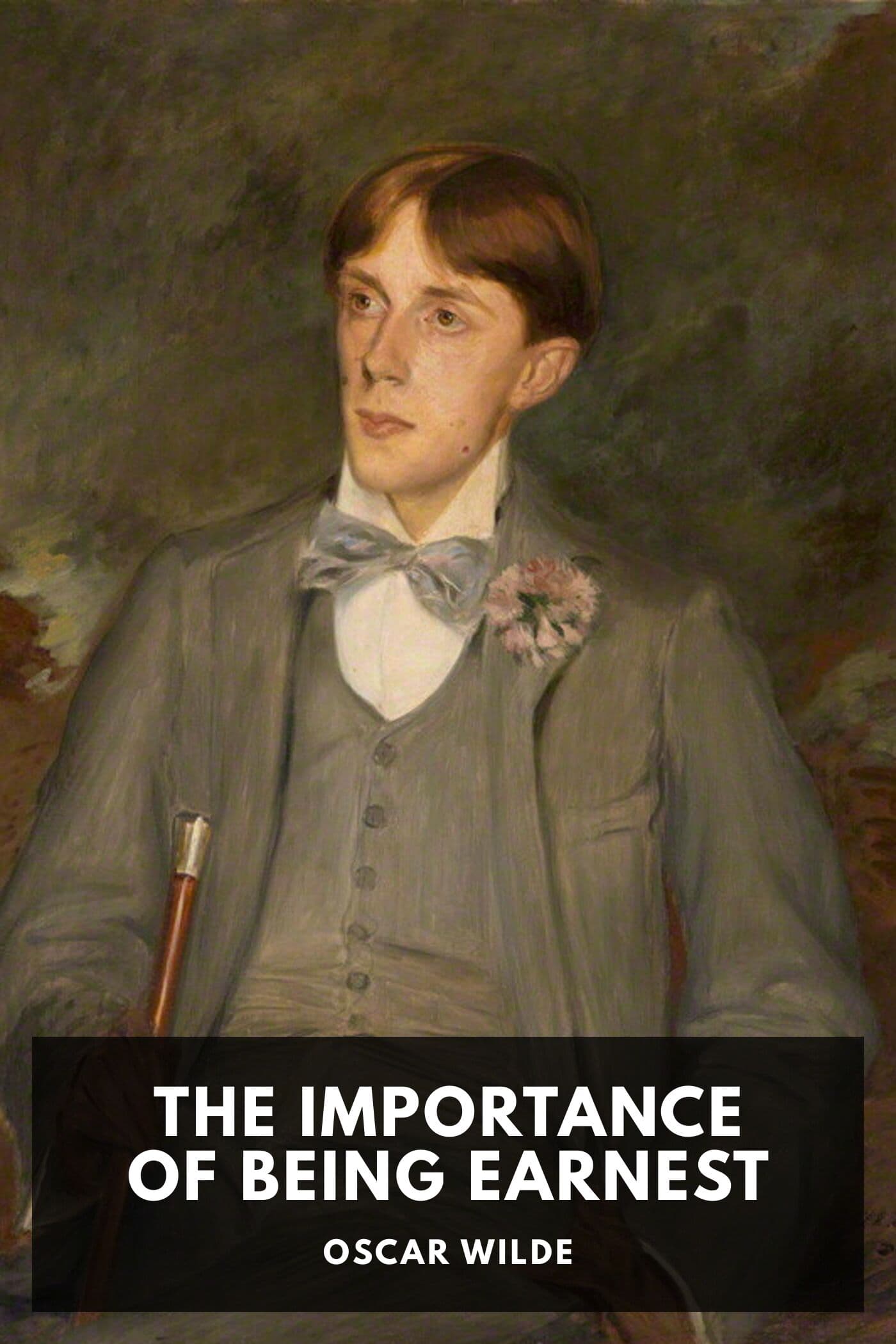
The Importance of Being Earnest: A Trivial Comedy for Serious People
1895
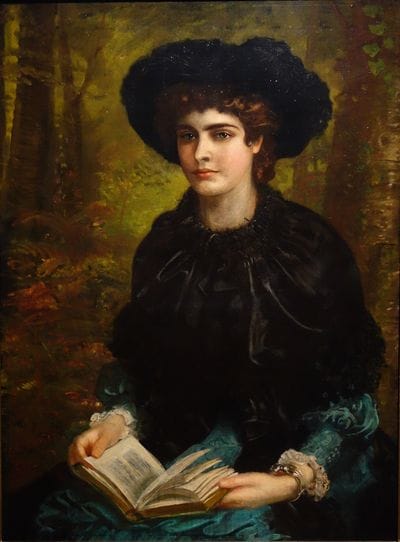
The Importance of Being Earnest: A Trivial Comedy for Serious People
1895
Wilde's masterpiece is a razor-sharp comedy where nothing is as it seems and everyone is lying. John Worthing and Algernon Moncrieff have invented imaginary invalids named Ernest and Bunbury to escape the tedious obligations of respectable society and pursue their pleasures. When John travels to London to propose to Gwendolen Fairfax, he must maintain his fiction while Algernon travels to the country to meet John's ward, Cecily. The women, meanwhile, are obsessed with the name Ernest and will only marry men who bear it. What follows is a glorious tangle of mistaken identities, confessions, and cigarette cases that famously reveal the truth about who is and isn't earnest. Wilde dismantles Victorian hypocrisy with devastating precision, wrapping his profound commentary on marriage, class, and morality in the most brilliant dialogue ever written for the stage. It remains riotously funny because its central absurdities, people inventing dying relatives to escape dinner parties and women promising to reform men they've just met, cut far too close to how society actually functions. For anyone who loves devastating wit, elegant wordplay, and satire that has never lost its teeth.
Editions


X-Ray
A respectable country gentleman who leads a double life as 'Ernest' in London to escape his responsibilities. He is guardian to Cecily Cardew and was found as a baby in a handbag at Victoria Station.
A charming, witty dandy who creates an invalid friend named 'Bunbury' to escape social obligations. He represents aesthetic philosophy and hedonistic attitudes while pursuing Cecily under false pretenses.
Lady Bracknell's daughter, sophisticated and fashionable, with fixed ideas about romance. She is obsessed with marrying someone named Ernest and represents urban superficiality with genuine feeling.
Jack's eighteen-year-old ward, imaginative and romantic, living in the country. She creates elaborate fantasies including a three-month engagement to 'Ernest' before meeting Algernon.
About The Importance of Being Earnest: A Trivial Comedy for Serious People
Chapter Summaries
- Act I
- In Algernon's London flat, Jack Worthing arrives from the country and reveals he leads a double life as 'Ernest' in town and 'Jack' in the country. Algernon discovers Jack's ward Cecily through a cigarette case inscription and reveals his own fictional invalid friend 'Bunbury.' Jack proposes to Algernon's cousin Gwendolen, who accepts him specifically because she believes his name is Ernest. Lady Bracknell interrogates Jack about his suitability and rejects him upon learning he was found as a baby in a handbag at Victoria Station.
- Act II
- At Jack's country estate, Cecily studies with Miss Prism while discussing Jack's fictitious wicked brother Ernest. Algernon arrives pretending to be Ernest and instantly falls in love with Cecily, who reveals they've been engaged for three months in her imagination. Jack returns in mourning, claiming Ernest died, only to find Algernon there as Ernest. Gwendolen arrives and meets Cecily; both women discover they're engaged to 'Ernest,' leading to a confrontation that exposes Jack and Algernon's deceptions.
- Act III
- The couples reconcile when Jack and Algernon promise to be christened as Ernest. Lady Bracknell arrives and opposes both engagements until learning of Cecily's fortune. The revelation that Miss Prism once lost a baby in a handbag leads to the discovery that Jack is actually Algernon's older brother and was indeed christened Ernest. All couples are united, and Jack realizes he has been telling the truth all along about being Ernest and having a brother.
Key Themes
- The Double Life
- The play explores how Victorian society's rigid expectations force individuals to create alternate identities to pursue pleasure and escape responsibility. Both Jack and Algernon maintain fictional personas that ultimately reveal truths about their desires and social constraints.
- The Importance of Being Earnest/Ernest
- The pun on 'earnest' (serious) and 'Ernest' (the name) drives the plot while commenting on the superficiality of social values. The play suggests that being earnest (sincere) is less important than appearing to be Ernest (having the right name/appearance).
- Marriage and Money
- The play satirizes how Victorian marriage was primarily an economic transaction disguised as romance. Lady Bracknell embodies this mercenary approach, while the younger generation attempts to marry for love within these constraints.
Characters
- Jack Worthing(protagonist)
- A respectable country gentleman who leads a double life as 'Ernest' in London to escape his responsibilities. He is guardian to Cecily Cardew and was found as a baby in a handbag at Victoria Station.
- Algernon Moncrieff(major)
- A charming, witty dandy who creates an invalid friend named 'Bunbury' to escape social obligations. He represents aesthetic philosophy and hedonistic attitudes while pursuing Cecily under false pretenses.
- Gwendolen Fairfax(major)
- Lady Bracknell's daughter, sophisticated and fashionable, with fixed ideas about romance. She is obsessed with marrying someone named Ernest and represents urban superficiality with genuine feeling.
- Cecily Cardew(major)
- Jack's eighteen-year-old ward, imaginative and romantic, living in the country. She creates elaborate fantasies including a three-month engagement to 'Ernest' before meeting Algernon.
- Lady Bracknell(antagonist)
- A formidable matriarch who embodies Victorian society's values and hypocrisies. She blocks the romantic unions until they meet her standards of wealth and breeding, delivering the play's most memorable lines.
- Miss Prism(major)
- Cecily's governess, a respectable spinster with a secret past. She once wrote a three-volume novel and absent-mindedly placed it in a perambulator while putting baby Jack in a handbag.
Link to this book
Add a free, dofollow link to Lex on your blog, forum, syllabus, or reading list.

<a href="https://lex-books.com/book/the-importance-of-being-earnest-a-trivial-comedy-for-serious-people-da1c7c83-ce8b-469f-bbed-305f49e1d45b"><img src="https://lex-books.com/badges/read-on-lex.svg" alt="Read The Importance of Being Earnest: A Trivial Comedy for Serious People by Oscar Wilde free on Lex" width="160" height="40"></a>[](https://lex-books.com/book/the-importance-of-being-earnest-a-trivial-comedy-for-serious-people-da1c7c83-ce8b-469f-bbed-305f49e1d45b)[url=https://lex-books.com/book/the-importance-of-being-earnest-a-trivial-comedy-for-serious-people-da1c7c83-ce8b-469f-bbed-305f49e1d45b][img]https://lex-books.com/badges/read-on-lex.svg[/img][/url]Read The Importance of Being Earnest: A Trivial Comedy for Serious People by Oscar Wilde free on Lex: https://lex-books.com/book/the-importance-of-being-earnest-a-trivial-comedy-for-serious-people-da1c7c83-ce8b-469f-bbed-305f49e1d45bCite this book
Reading this edition for a paper or guide? Copy a citation.
Wilde, Oscar. The Importance of Being Earnest: A Trivial Comedy for Serious People. Lex, lex-books.com/book/the-importance-of-being-earnest-a-trivial-comedy-for-serious-people-da1c7c83-ce8b-469f-bbed-305f49e1d45b.Wilde, O. (1895). The Importance of Being Earnest: A Trivial Comedy for Serious People. Lex. https://lex-books.com/book/the-importance-of-being-earnest-a-trivial-comedy-for-serious-people-da1c7c83-ce8b-469f-bbed-305f49e1d45bWilde, Oscar. The Importance of Being Earnest: A Trivial Comedy for Serious People. Lex. https://lex-books.com/book/the-importance-of-being-earnest-a-trivial-comedy-for-serious-people-da1c7c83-ce8b-469f-bbed-305f49e1d45b.