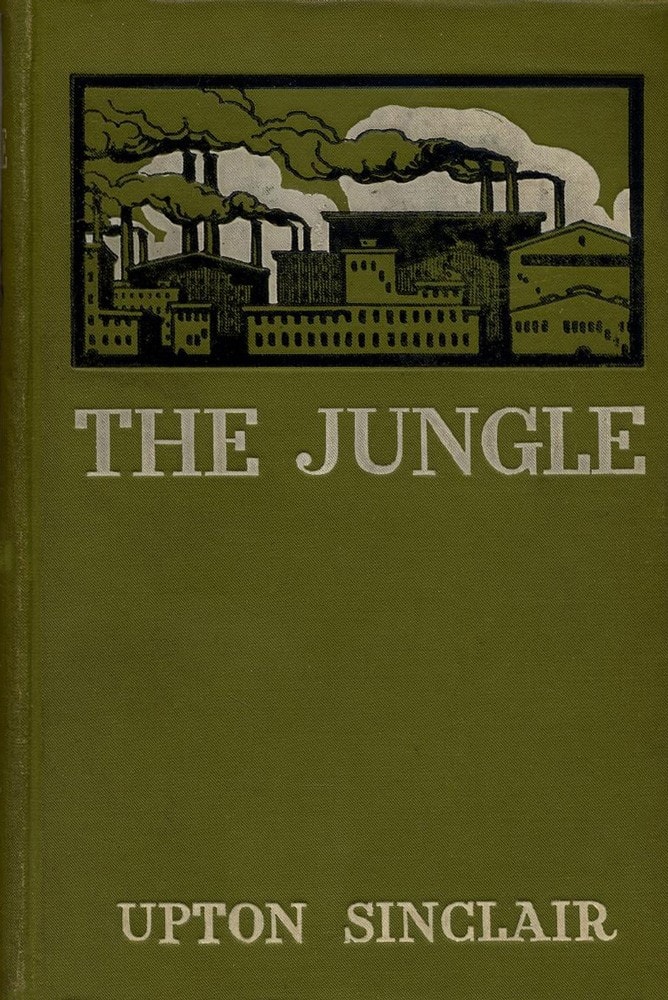
The Jungle
1905
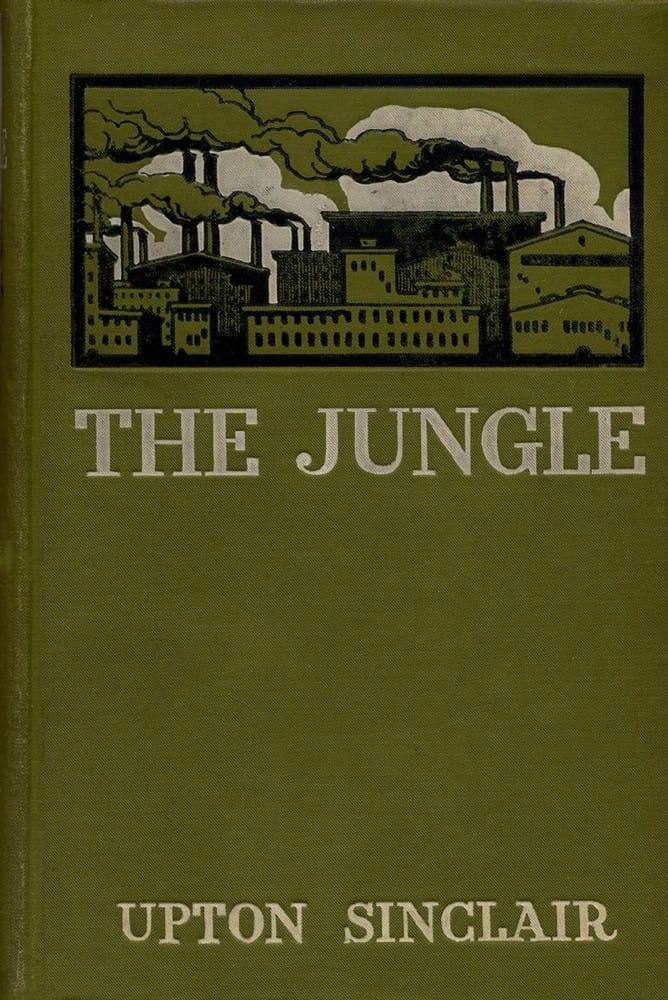
Upton Sinclair spent seven weeks hidden inside Chicago's Union Stock Yards, and what he witnessed turned his socialist fury into fiction that literally changed American law. The Jungle follows Jurgis Rudkus and his young bride Ona, Lithuanian immigrants who arrive in Packingtown dreaming of opportunity, only to discover that America's promise is built on blood, grime, and the bodies of the desperate. Sinclair renders their wedding celebration with brutal poetry before dragging them through the sausage factories, the tuberculosis-tainted air, the child labor, the corruption, and the systematic destruction of every last shred of human dignity. The novel's power lies not in subtlety but in overwhelming, churning force: a 36-chapter indictment that reads like a hammer. Sinclair intended to write about wage slavery, but the American public, revolted by his descriptions of contaminated meat, forced President Theodore Roosevelt to launch an investigation that led directly to the Meat Inspection Act of 1906. What survives is both a time capsule of industrial horror and a furious, alive argument that the system itself is the disease. For readers who want literature that fought back.
Editions
X-Ray
“They use everything about the hog except the squeal.””
— Upton Sinclair
“The rich people not only had all the money, they had all the chance to get more; they had all the know-ledge and the power, and so the poor man was down, and he had to stay down.””
— Upton Sinclair
“There is one kind of prison where the man is behind bars, and everything that he desires is outside; and there is another kind where the things are behind the bars, and the man is outside.””
— Upton Sinclair
“Into this wild-beast tangle these men had been born without their consent, they had taken part in it because they could not help it; that they were in jail was no disgrace to them, for the game had never been fair, the dice were loaded. They were swindlers and thieves of pennies and dimes, and they had been trapped and put out of the way by the swindlers and thieves of millions of dollars.””
— Upton Sinclair
“The great corporation which employed you lied to you, and lied to the whole country”
— Upton Sinclair
“If we are the greatest nation the sun ever shone upon, it would seem to be mainly because we have been able to goad our wage-earners to this pitch of frenzy.””
— Upton Sinclair
“To do that would mean, not merely to be defeated, but to acknowledge defeat- and the difference between these two things is what keeps the world going.””
— Upton Sinclair
“One could not stand and watch very long without being philosophical, without beginning to deal in symbols and similes, and to hear the hog-squeal of the universe.... Each of them had an individuality of his own, a will of his own, a hope and a heart's desire; each was full of self-confidence, of self-importance, and a sense of dignity. And trusting and strong in faith he had gone about his business, the while a black shadow hung over him, and a horrid Fate in his pathway. Now suddenly it had swooped upon him, and had seized him by the leg. Relentless, remorseless, all his protests, his screams were nothing to it. It did its cruel will with him, as if his wishes, his feelings, had simply no existence at all; it cut his throat and watched him gasp out his life.””
— Upton Sinclair
“They were trying to save their souls- and who but a fool could fail to see that all that was the matter with their souls was that they had not been able to get a decent existence for their bodies?””
— Upton Sinclair
Link to this book
Add a free, dofollow link to Lex on your blog, forum, syllabus, or reading list.

<a href="https://lex-books.com/book/the-jungle-f51659dc-dfe2-4eb2-9b42-f29838456220"><img src="https://lex-books.com/badges/read-on-lex.svg" alt="Read The Jungle by Upton Sinclair free on Lex" width="160" height="40"></a>[](https://lex-books.com/book/the-jungle-f51659dc-dfe2-4eb2-9b42-f29838456220)[url=https://lex-books.com/book/the-jungle-f51659dc-dfe2-4eb2-9b42-f29838456220][img]https://lex-books.com/badges/read-on-lex.svg[/img][/url]Read The Jungle by Upton Sinclair free on Lex: https://lex-books.com/book/the-jungle-f51659dc-dfe2-4eb2-9b42-f29838456220Cite this book
Reading this edition for a paper or guide? Copy a citation.
Sinclair, Upton. The Jungle. Lex, lex-books.com/book/the-jungle-f51659dc-dfe2-4eb2-9b42-f29838456220.Sinclair, U. (1905). The Jungle. Lex. https://lex-books.com/book/the-jungle-f51659dc-dfe2-4eb2-9b42-f29838456220Sinclair, Upton. The Jungle. Lex. https://lex-books.com/book/the-jungle-f51659dc-dfe2-4eb2-9b42-f29838456220.