The Notebooks of Leonardo Da Vinci — Complete
The Notebooks of Leonardo Da Vinci — Complete
Translated by Jean Paul Richter
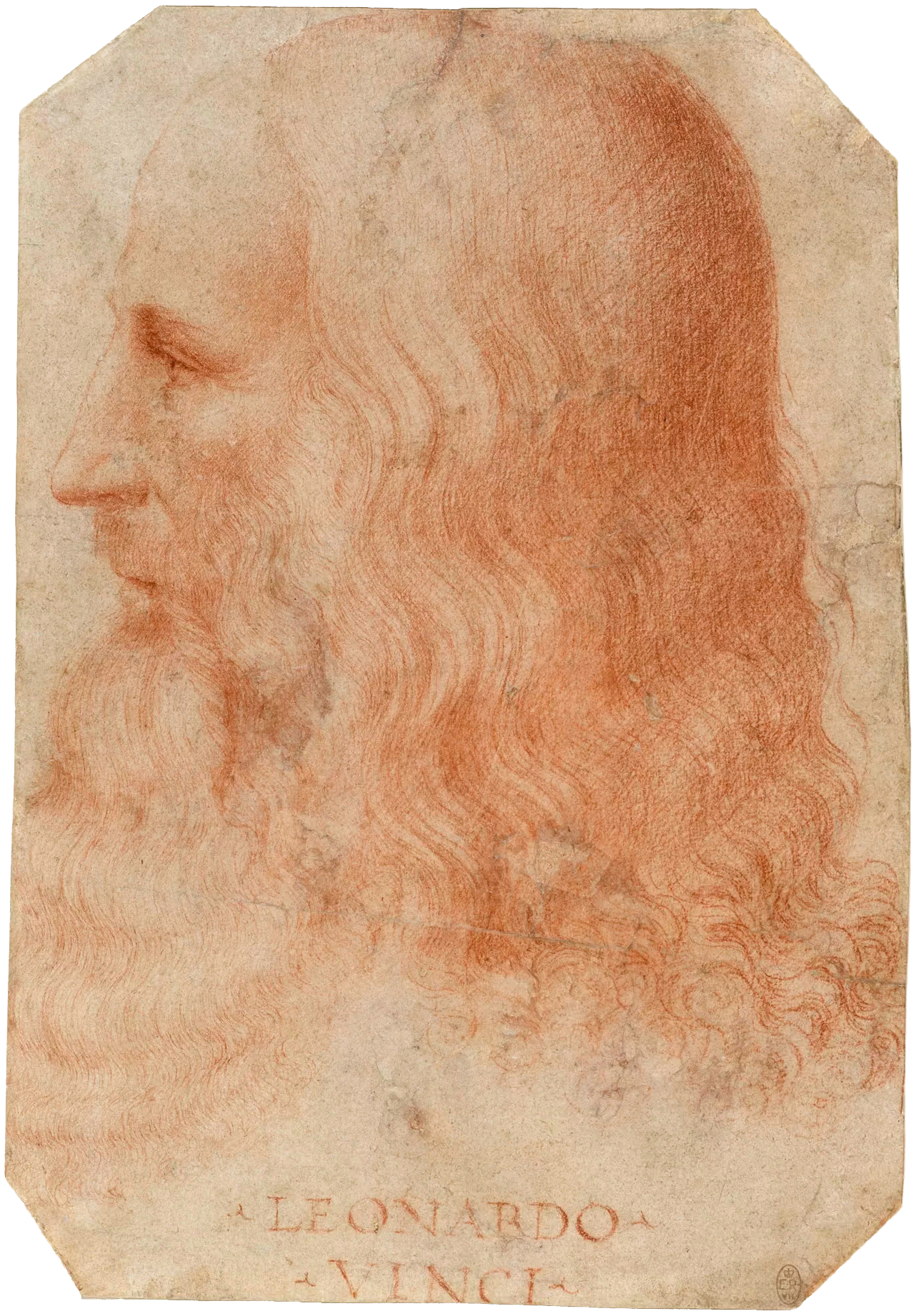
For centuries, Leonardo da Vinci's notebooks remained scattered fragments, their mirror-written pages defying all but the most dedicated scholars. Now, in these pages, a mind of almost supernatural curiosity unfolds before you. Here, his legendary anatomical sketches coexist with theatrical stage designs, hydraulic engineering proposals beside botanical studies, and his revolutionary theories on light sit alongside flights of fancy about flying machines. Over thirty years, Leonardo recorded everything that seized his attention: the movement of water, the growth of plants, the mechanics of the human body, the principles that make paintings breathe. These are not finished works but the raw material of genius itself, questions and observations and failed experiments that reveal how one man saw the world and tried to understand it. This volume organizes his scattered notes into accessible sections covering human figures, anatomy, botany, landscape, astronomy, architecture, sculpture, and inventions. For anyone who has ever wondered what it looks like when an extraordinary mind confronts the mystery of the natural world, there is nothing else like this.
Editions
X-Ray
“All sciences are vain and full of errors that are not born of Experience, the mother of all Knowledge.””
— da Vinci Leonardo
“I awoke only to find that the rest of the world was still asleep.””
— da Vinci Leonardo
“Man has much power of discourse which for the most part is vain and false; animals have but little, but it is useful and true, and a small truth is better than a great lie.””
— da Vinci Leonardo
“Men fight wars and destroy everything around them. The earth should open and swallow them up. He who does not value life does not deserve it. Never destroy another life through rage, or through malice.””
— da Vinci Leonardo
“The water you touch in a river is the last of that which has passed, and the first of that which is coming. Thus it is with time present.Life, if well spent, is long.””
— da Vinci Leonardo
“The men of experiment are like the ant; they only collect and use. But the bee gathers its materials from the flowers of the garden and of the field, but transforms and digests it by a power of its own.””
— da Vinci Leonardo
“If the painter wishes to see beauties that charm him, it lies in his power to create them, and if he wishes to see monstrosities that are frightful, ridiculous, or truly pitiable, he is lord and God thereof.””
— da Vinci Leonardo
“For nothing can be loved or hated unless it is first known.””
— da Vinci Leonardo
“It is as great an error to speak well of a worthless man as to speak ill of a good man.””
— da Vinci Leonardo
About The Notebooks of Leonardo Da Vinci — Complete
Chapter Summaries
- I
- Richter's preface discusses the incomplete nature and historical neglect of Leonardo's works, highlighting the challenges of deciphering his unique handwriting and disorganized manuscripts. It introduces Leonardo's own prefaces, where he defends his empirical approach against literary critics and outlines his intention to publish his scientific and artistic observations.
- II
- This section delves into the mathematical foundations of perspective, defining basic geometric terms like point, line, and superficies. It introduces Leonardo's 'Pyramid of Sight' theory, explaining how objects transmit images to the eye, and provides experimental proofs, including the function of the camera obscura.
- III
- This extensive section outlines Leonardo's comprehensive theory of light and shade, categorizing different types of light (direct, diffused, subdued) and shadows (primary, derived). It explores the intensity, form, and interaction of light and shadow, emphasizing their crucial role in defining opaque bodies and creating relief in painting.
Key Themes
- Empiricism and Observation
- Leonardo consistently champions direct experience ('esperienza') as the ultimate source of knowledge, often refuting ancient authorities or speculative theories with practical experiments and detailed observations. This is evident in his anatomical dissections, optical experiments, and geological studies, where he prioritizes what can be seen and tested.
- Universality of Knowledge and Interdisciplinary Approach
- Leonardo's notebooks demonstrate his belief that all fields of study are interconnected. He applies scientific principles to art (perspective, light and shade, anatomy for figures) and draws philosophical conclusions from natural phenomena, advocating for a holistic understanding of the world where art and science mutually inform each other.
- Critique of Authority and Dogma
- Throughout the text, Leonardo challenges established views, whether from ancient philosophers like Epicurus and Pliny, or contemporary artists and mathematicians, insisting that truth must be confirmed by experience rather than blind adherence to tradition. He often presents counter-arguments and experimental proofs to dismantle conventional wisdom.
Characters
- Leonardo Da Vinci(protagonist)
- The primary author, a polymath whose diverse observations and theories across art, science, and philosophy form the core of the notebooks.
- Jean Paul Richter(supporting)
- The translator and editor of this complete collection, providing the framework, historical context, and critical commentary for Leonardo's original notes.
- Ludovico il Moro(minor)
- Duke of Milan and a significant patron of Leonardo, commissioning major works like the Sforza monument.
- Francesco Sforza(minor)
- The deceased father of Ludovico il Moro, for whom Leonardo was commissioned to create a grand equestrian statue.
- Vitruvius(minor)
- An ancient Roman architect whose work on human proportions and architectural principles is referenced by Leonardo.
- Pliny(minor)
- An ancient Roman naturalist whose theories, particularly on the saltiness of the sea, are directly challenged and refuted by Leonardo.
Link to this book
Add a free, dofollow link to Lex on your blog, forum, syllabus, or reading list.

<a href="https://lex-books.com/book/the-notebooks-of-leonardo-da-vinci-complete-67903943-5bc2-4e9f-9238-bfd46331cf8d"><img src="https://lex-books.com/badges/read-on-lex.svg" alt="Read The Notebooks of Leonardo Da Vinci — Complete by da Vinci Leonardo free on Lex" width="160" height="40"></a>[](https://lex-books.com/book/the-notebooks-of-leonardo-da-vinci-complete-67903943-5bc2-4e9f-9238-bfd46331cf8d)[url=https://lex-books.com/book/the-notebooks-of-leonardo-da-vinci-complete-67903943-5bc2-4e9f-9238-bfd46331cf8d][img]https://lex-books.com/badges/read-on-lex.svg[/img][/url]Read The Notebooks of Leonardo Da Vinci — Complete by da Vinci Leonardo free on Lex: https://lex-books.com/book/the-notebooks-of-leonardo-da-vinci-complete-67903943-5bc2-4e9f-9238-bfd46331cf8dCite this book
Reading this edition for a paper or guide? Copy a citation.
Leonardo, da Vinci. The Notebooks of Leonardo Da Vinci — Complete. Lex, lex-books.com/book/the-notebooks-of-leonardo-da-vinci-complete-67903943-5bc2-4e9f-9238-bfd46331cf8d.Leonardo, D. V. (n.d.). The Notebooks of Leonardo Da Vinci — Complete. Lex. https://lex-books.com/book/the-notebooks-of-leonardo-da-vinci-complete-67903943-5bc2-4e9f-9238-bfd46331cf8dLeonardo, da Vinci. The Notebooks of Leonardo Da Vinci — Complete. Lex. https://lex-books.com/book/the-notebooks-of-leonardo-da-vinci-complete-67903943-5bc2-4e9f-9238-bfd46331cf8d.