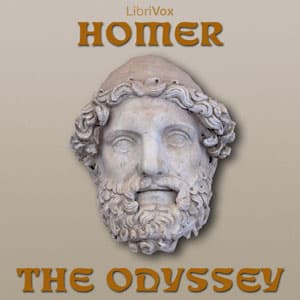
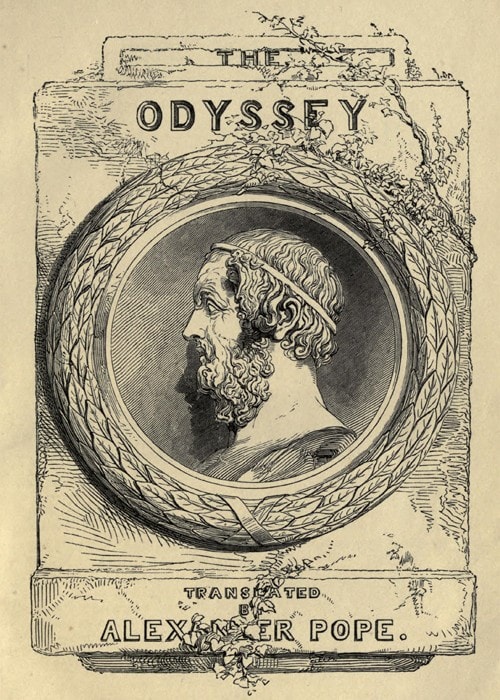
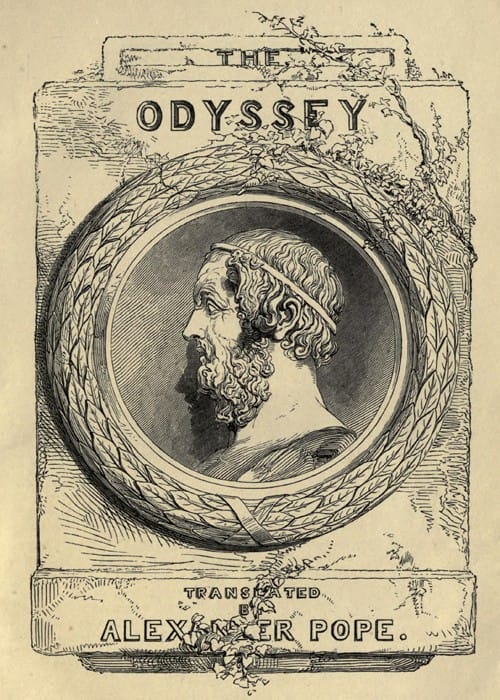
The Odyssey
800 BC
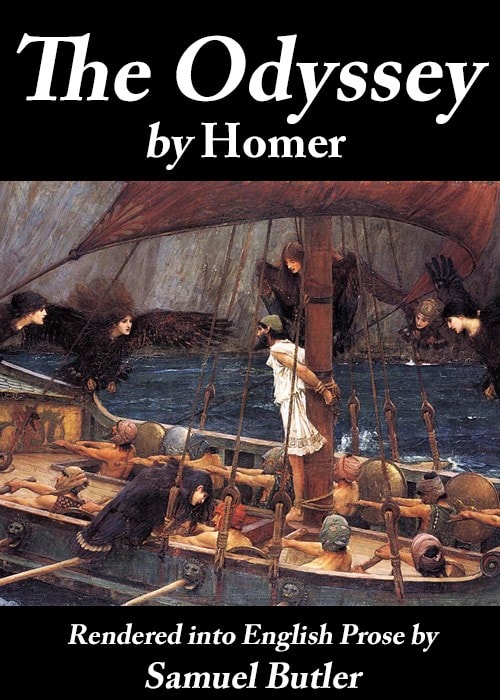
The Odyssey is not a story about heroes who win wars. It is about the one who wins the long way home. After ten years of fighting at Troy, Odysseus faces an even harder battle: ten more years of storms, monsters, sorceresses, and the slow erosion of everything he was. A Cyclops devours his men. A witch turns them into swine. A sea nymph offers immortality. And back on Ithaca, a hundred suitors consume his house and court his wife, while his son grows into a stranger. What makes this poem endure is not its spectacle but its psychology. Odysseus has no magical powers, no divine favor that outweighs his transgressions. What he has is his mind: wit, patience, and the stubborn refusal to become less than himself. The gods toy with him. The sea punishes him. But he endures because he can adapt, lie, wait, and strike. This is the first great portrait in Western literature of intelligence as a form of heroism. The second story threading through the poem is quieter but equally powerful: a son's search for his father, a wife's refusal to surrender. Homer gives us a homecoming that costs everything to earn, and a family worth returning to.
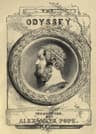
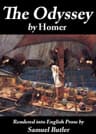
Editions

X-Ray
“Of all creatures that breathe and move upon the earth, nothing is bred that is weaker than man.””
— Homer
“There is a time for many words, and there is also a time for sleep.””
— Homer
“There is nothing more admirable than when two people who see eye to eye keep house as man and wife, confounding their enemies and delighting their friends.””
— Homer
“A man who has been through bitter experiences and travelled far enjoys even his sufferings after a time””
— Homer
“Be strong, saith my heart; I am a soldier; I have seen worse sights than this.””
— Homer
“For a friend with an understanding heart is worth no less than a brother””
— Homer
“Men are so quick to blame the gods: they saythat we devise their misery. But theythemselves- in their depravity- designgrief greater than the griefs that fate assigns.””
— Homer
“Sleep, delicious and profound, the very counterfeit of death””
— Homer
“My name is Nobody.””
— Homer
About The Odyssey
Chapter Summaries
- INTRODUCTION
- The introduction discusses the skepticism surrounding Homer's authorship and the historical reliability of his biographies, particularly the Wolfian theory. The author expresses a belief in the unity of Homeric authorship, emphasizing the aesthetic and emotional impact of the poems over minute critical analysis.
- 1
- The poem opens with the gods in council discussing Ulysses' prolonged detention by Calypso. Minerva descends to Ithaca, disguised as Mentes, to inspire Telemachus to seek news of his father and confront the insolent suitors feasting in his palace.
- 2
- Telemachus calls an assembly of Ithacan lords, publicly denouncing the suitors' behavior. An omen of two eagles is interpreted as a sign of the suitors' doom. Telemachus requests a ship to travel to Pylos and Sparta, which Minerva (disguised as Mentor) helps him secure, and they embark that night.
Key Themes
- Nostos (The Homecoming)
- The central theme of the epic, focusing on Ulysses' overwhelming desire to return to his home, wife, and son, and the immense difficulties he faces in achieving this goal. It explores the deep human connection to one's homeland and family.
- Hospitality (Xenia)
- A crucial moral code in ancient Greece, where hosts were expected to welcome strangers and guests to treat their hosts with respect. The narrative frequently highlights instances of good hospitality (Nestor, Menelaus, Alcinous, Eumaeus) and its violation (Cyclops, Suitors), with divine consequences for both.
- Divine Intervention and Fate
- The gods play an active and often contradictory role in human affairs. While Jove ultimately decrees Ulysses' return, Neptune actively opposes it, and Minerva consistently guides and protects her favored hero. This theme explores the interplay between divine will and human agency.
Characters
- Ulysses (Odysseus)(protagonist)
- The King of Ithaca, renowned for his wisdom and cunning, who endures a long and arduous journey home after the Trojan War.
- Telemachus(supporting)
- Ulysses' son, who embarks on his own journey to find news of his father and protect his mother from the suitors.
- Penelope(supporting)
- Ulysses' faithful wife, who cleverly fends off numerous suitors in her husband's absence.
- Minerva (Pallas Athena)(supporting)
- The goddess of wisdom and warfare, who acts as Ulysses' divine patron and actively assists him and Telemachus.
- Jove (Zeus)(supporting)
- The king of the gods, who ultimately orchestrates Ulysses' return, balancing divine will and mortal actions.
- Neptune (Poseidon)(antagonist)
- The god of the sea, who relentlessly hinders Ulysses' journey home in revenge for the blinding of his son, Polyphemus.
Link to this book
Add a free, dofollow link to Lex on your blog, forum, syllabus, or reading list.

<a href="https://lex-books.com/book/the-odyssey-cc92d9ae-a5d3-4918-b40a-0469315ca4a7"><img src="https://lex-books.com/badges/read-on-lex.svg" alt="Read The Odyssey by Homer free on Lex" width="160" height="40"></a>[](https://lex-books.com/book/the-odyssey-cc92d9ae-a5d3-4918-b40a-0469315ca4a7)[url=https://lex-books.com/book/the-odyssey-cc92d9ae-a5d3-4918-b40a-0469315ca4a7][img]https://lex-books.com/badges/read-on-lex.svg[/img][/url]Read The Odyssey by Homer free on Lex: https://lex-books.com/book/the-odyssey-cc92d9ae-a5d3-4918-b40a-0469315ca4a7Cite this book
Reading this edition for a paper or guide? Copy a citation.
Homer. The Odyssey. Lex, lex-books.com/book/the-odyssey-cc92d9ae-a5d3-4918-b40a-0469315ca4a7.Homer (800 BC). The Odyssey. Lex. https://lex-books.com/book/the-odyssey-cc92d9ae-a5d3-4918-b40a-0469315ca4a7Homer. The Odyssey. Lex. https://lex-books.com/book/the-odyssey-cc92d9ae-a5d3-4918-b40a-0469315ca4a7.