The King in Yellow
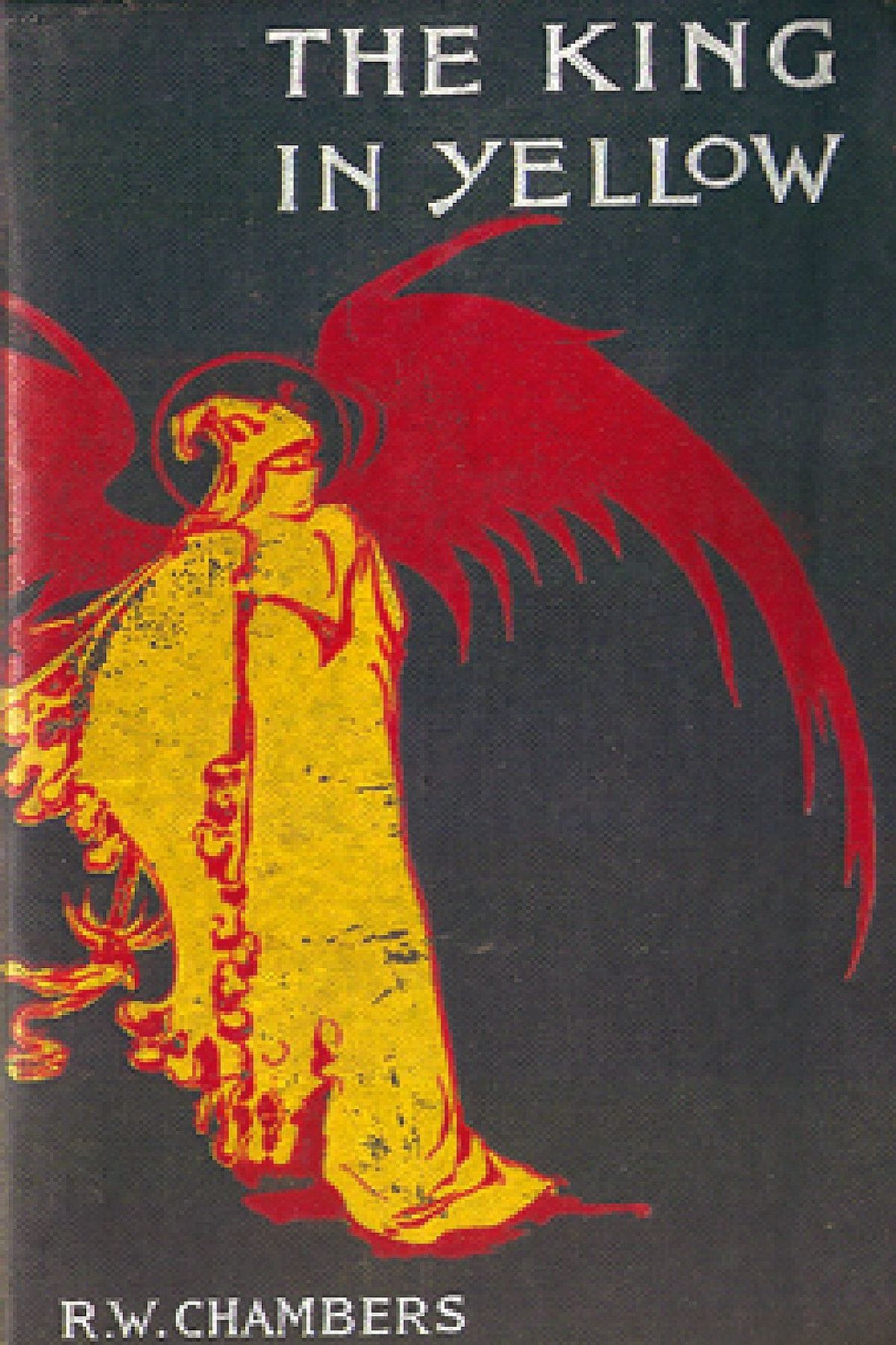
There's a play that drives men mad. It whispers from the margins of turn-of-the-century New York, a forbidden text so dangerous that those who read it rarely emerge unchanged. This is the architecture of Robert W. Chambers' seminal collection, a book that invented the template for modern weird fiction that Lovecraft would later make his own. The first four stories form a connected nightmare: a future New York where citizens can volunteer for the Lethal Chamber; a man recovering from a head injury whose obsession consumes him; a repairer of reputations whose sanity crumbles under the weight of something he calls the Yellow Sign. These tales operate in the space between madness and revelation, where the supernatural isn't a monster but a symptom of something broken in reality itself. The collection's strange power lies in its structure - it begins in genuine terror and dissolves into something quieter, almost tender. It's the book that taught an entire generation of writers how to suggest the unspeakable rather than explain it.
Editions


X-Ray
“Ah," she said, "to come is easy and takes hours; to go is different”
— Robert W. Chambers
“I cannot forget Carcosa where black stars hang in the heavens; where the shadows of men's thoughts lengthen in the afternoon, when the twin suns sink into the lake of Hali; and my mind will bear for ever the memory of the Pallid Mask. I pray God will curse the writer, as the writer has cursed the world with this beautiful, stupendous creation, terrible in its simplicity, irresistible in its truth”
— Robert W. Chambers
“for I knew that the King in Yellow had opened his tattered mantle and there was only God to cry to now.””
— Robert W. Chambers
“There a painless death awaits him who can no longer bear the sorrows of this life.””
— Robert W. Chambers
“No, he is not vicious, nor is he in the least demented. His mind is a wonder chamber, from which he can extract treasures that you and I would give years of our life to acquire.””
— Robert W. Chambers
“Come and see my rose-coloured bath full of death!””
— Robert W. Chambers
“This is the thing that troubles me, for I cannot forget Carcosa where black stars hang in the heavens; where the shadows of men's thoughts lengthen in the afternoon, when the twin suns sink into the lake of Hali; and my mind will bear for ever the memory of the Pallid Mask.””
— Robert W. Chambers
“The ambition of Caesar and of Napoleon pales before that which could not rest until it had seized the minds of men and controlled even their unborn thoughts,””
— Robert W. Chambers
“Along the shore the cloud waves break,The twin suns sink behind the lake,The shadows lengthen In Carcosa.Strange is the night where black stars rise,And strange moons circle through the skies,But stranger still is Lost Carcosa.Songs that the Hyades shall sing,Where flap the tatters of the King,Must die unheard in Dim Carcosa.Song of my soul, my voice is dead,Die thou, unsung, as tears unshedShall dry and die in Lost Carcosa.””
— Robert W. Chambers
About The King in Yellow
Chapter Summaries
- In the Court of the Dragon
- During vespers at St. Barnabé, the narrator becomes disturbed by sinister organ music and notices a repulsive church watchman. After leaving the service early, he finds himself pursued through Paris by this mysterious figure who seems to appear everywhere. The pursuit ends at his home in the Court of the Dragon, where he is trapped. Suddenly he awakens back in the church, but his vision transforms into the alien city of Carcosa under black stars.
- The Repairer of Reputations
- Set in 1920 New York, Hildred Castaigne believes he is heir to the Imperial Dynasty of America after reading 'The King in Yellow.' With the help of the deformed Mr. Wilde, who runs a reputation repair business, he plots to claim his throne. His cousin Louis stands in his way, being engaged to Constance. Hildred's delusions lead to violence and his eventual commitment to an asylum where he dies.
- The Mask
- Boris, a sculptor, discovers a solution that can turn living things to marble. His friends Alec and Geneviève visit, and tensions arise when Geneviève's hidden love for Alec is revealed during a fever. Unable to bear the truth of their feelings while she loves Boris, tragedy strikes. Boris shoots himself and Geneviève drowns in the solution. Years later, Alec returns to find Geneviève has awakened from her marble state.
Key Themes
- Forbidden Knowledge
- The danger of seeking or stumbling upon knowledge that the human mind cannot safely comprehend. The King in Yellow represents ultimate forbidden knowledge that invariably corrupts those who encounter it.
- Madness and Sanity
- The thin boundary between sanity and madness, and how perspective determines which is which. Characters often cannot distinguish their delusions from reality.
- Love and Sacrifice
- Love appears throughout as both redemptive and destructive, often requiring terrible sacrifices. Characters repeatedly choose love over safety, sanity, or social position.
Characters
- Hildred Castaigne(protagonist)
- The narrator of 'The Repairer of Reputations,' a young man who believes he is heir to a secret American dynasty after reading The King in Yellow. His fall from a horse may have affected his sanity.
- Mr. Wilde(major)
- A deformed dwarf who runs a 'Reputation Repair' business and claims to know the genealogy of the Imperial Dynasty of America. Has wax ears and is missing fingers.
- Boris Yvain(protagonist)
- A talented sculptor who discovers a solution that turns living matter to marble. Loves Geneviève but she secretly loves his friend Alec.
- Jack Scott(protagonist)
- An artist who becomes entangled with The King in Yellow through his model Tessie. Appears in multiple stories as different characters.
- Valentine Tissot(major)
- A young woman in the Latin Quarter who befriends the innocent American student Hastings. Implied to be a courtesan though Hastings doesn't realize it.
- Foxhall Clifford(major)
- An American art student in Paris, known for his many romantic pursuits. Appears in multiple stories as a recurring character in the Latin Quarter.
Link to this book
Add a free, dofollow link to Lex on your blog, forum, syllabus, or reading list.

<a href="https://lex-books.com/book/the-king-in-yellow-2fceb3f0-85a7-4e13-a3f2-32bb67619233"><img src="https://lex-books.com/badges/read-on-lex.svg" alt="Read The King in Yellow by Robert W. Chambers free on Lex" width="160" height="40"></a>[](https://lex-books.com/book/the-king-in-yellow-2fceb3f0-85a7-4e13-a3f2-32bb67619233)[url=https://lex-books.com/book/the-king-in-yellow-2fceb3f0-85a7-4e13-a3f2-32bb67619233][img]https://lex-books.com/badges/read-on-lex.svg[/img][/url]Read The King in Yellow by Robert W. Chambers free on Lex: https://lex-books.com/book/the-king-in-yellow-2fceb3f0-85a7-4e13-a3f2-32bb67619233Cite this book
Reading this edition for a paper or guide? Copy a citation.
Chambers, Robert W.. The King in Yellow. Lex, lex-books.com/book/the-king-in-yellow-2fceb3f0-85a7-4e13-a3f2-32bb67619233.Chambers, R. W. (n.d.). The King in Yellow. Lex. https://lex-books.com/book/the-king-in-yellow-2fceb3f0-85a7-4e13-a3f2-32bb67619233Chambers, Robert W.. The King in Yellow. Lex. https://lex-books.com/book/the-king-in-yellow-2fceb3f0-85a7-4e13-a3f2-32bb67619233.