Carmilla
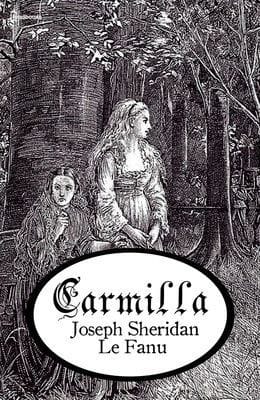
Carmilla
Before Dracula slithered into literary history, there was Carmilla: a fever-dream of a novella that rewrote everything we thought we knew about vampires, desire, and who gets to be the monster. Set in a remote Austrian castle, it follows Laura, a sheltered young woman whose lonely existence shatters when the mysterious Carmilla arrives after a carriage accident. Their connection is immediate, intense, and deeply unsettling. Carmilla is beautiful, otherworldly, and prone to strange absences and violent mood shifts. She watches Laura with an hunger that exceeds friendship. She creeps into Laura's chamber at night. She speaks in half-confessions and fragmented memories. As Laura weakens, as nightmares and illness consume her, the truth gathers like fog outside the castle windows. Le Fanu crafts something startling: a vampire story where the predation is as much emotional as physical, where the line between affection and consumption blurs entirely. The sexual charge between these two women was radical for 1872 and remains electrifying today. This is Gothic fiction at its most primal: not about ghosts or crumbling architecture, but about desire that devours and identity that cannot be spoken aloud.
Editions
X-Ray
“You will think me cruel, very selfish, but love is always selfish; the more ardent the more selfish. How jealous I am you cannot know. You must come with me, loving me, to death; or else hate me, and still come with me, and me through death and after. There is no such word as indifference in my apathetic nature.””
— Joseph Sheridan Le Fanu
“But to die as lovers may - to die together, so that they may live together.””
— Joseph Sheridan Le Fanu
“For some nights I slept profoundly; but still every morning I felt the same lassitude, and a languor weighed upon me all day. I felt myself a changed girl. A strange melancholy was stealing over me, a melancholy that I would not have interrupted. Dim thoughts of death began to open, and an idea that I was slowly sinking took gentle, and, somehow, not unwelcome possession of me. If it was sad, the tone of mind which this induced was also sweet. Whatever it might be, my soul acquiesced in it.””
— Joseph Sheridan Le Fanu
“But dreams come through stone walls, light up dark rooms, or darken light ones, and their persons make their exits and their entrances as they please, and laugh at locksmiths.””
— Joseph Sheridan Le Fanu
“I have been in love with no one, and never shall," she whispered, "unless it should be with you."How beautiful she looked in the moonlight!Shy and strange was the look with which she quickly hid her face in my neck and hair, with tumultuous sighs, that seemed almost to sob, and pressed in mine a hand that trembled.Her soft cheek was glowing against mine. "Darling, darling," she murmured, "I live in you; and you would die for me, I love you so."I started from her.She was gazing on me with eyes from which all fire, all meaning had flown, and a face colorless and apathetic."Is there a chill in the air, dear?" she said drowsily. "I almost shiver; have I been dreaming? Let us come in. Come; come; come in.””
— Joseph Sheridan Le Fanu
“If your dear heart is wounded, my wild heart bleeds with yours.””
— Joseph Sheridan Le Fanu
“You are mine, you shall be mine, you and I are one for ever.””
— Joseph Sheridan Le Fanu
“Nevertheless, life and death are mysterious states, and we know little of the resources of either.””
— Joseph Sheridan Le Fanu
“Dearest, your little heart is wounded; think me not cruel because I obey the irresistible law of my strength and weakness; if your dear heart is wounded, my wild heart bleeds with yours. In the rapture of my enormous humiliation I live in your warm life, and you shall die--die, sweetly die--into mine. I cannot help it; as I draw near to you, you, in your turn, will draw near to others, and learn the rapture of that cruelty, which yet is love; so, for a while, seek to know no more of me and mine, but trust me with all your loving spirit.””
— Joseph Sheridan Le Fanu
Link to this book
Add a free, dofollow link to Lex on your blog, forum, syllabus, or reading list.

<a href="https://lex-books.com/book/carmilla-cc299537-afb6-4cf2-9aab-41dea67de3c4"><img src="https://lex-books.com/badges/read-on-lex.svg" alt="Read Carmilla by Joseph Sheridan Le Fanu free on Lex" width="160" height="40"></a>[](https://lex-books.com/book/carmilla-cc299537-afb6-4cf2-9aab-41dea67de3c4)[url=https://lex-books.com/book/carmilla-cc299537-afb6-4cf2-9aab-41dea67de3c4][img]https://lex-books.com/badges/read-on-lex.svg[/img][/url]Read Carmilla by Joseph Sheridan Le Fanu free on Lex: https://lex-books.com/book/carmilla-cc299537-afb6-4cf2-9aab-41dea67de3c4Cite this book
Reading this edition for a paper or guide? Copy a citation.
Fanu, Joseph Sheridan Le. Carmilla. Lex, lex-books.com/book/carmilla-cc299537-afb6-4cf2-9aab-41dea67de3c4.Fanu, J. S. L. (n.d.). Carmilla. Lex. https://lex-books.com/book/carmilla-cc299537-afb6-4cf2-9aab-41dea67de3c4Fanu, Joseph Sheridan Le. Carmilla. Lex. https://lex-books.com/book/carmilla-cc299537-afb6-4cf2-9aab-41dea67de3c4.