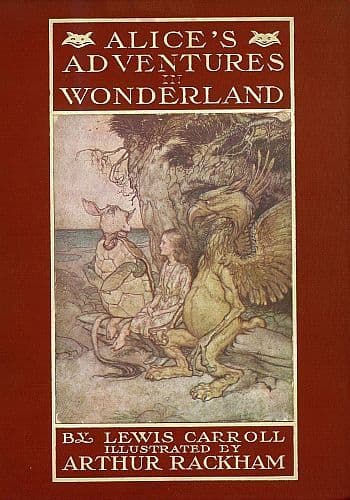
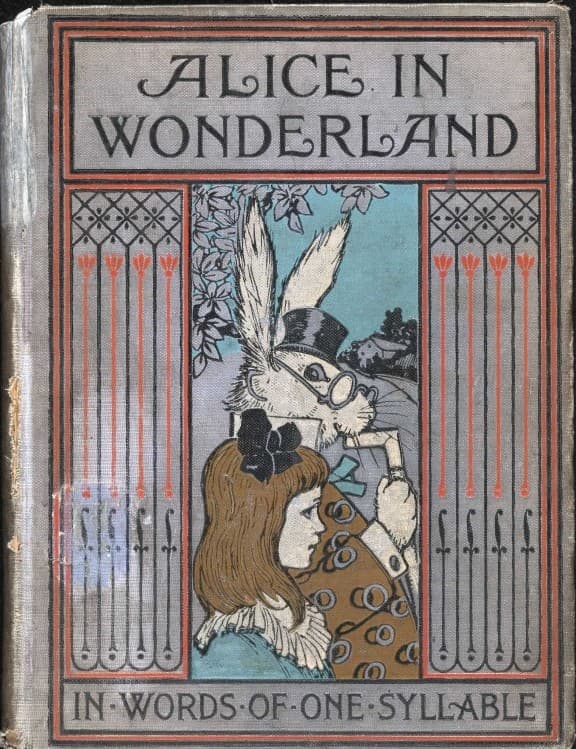
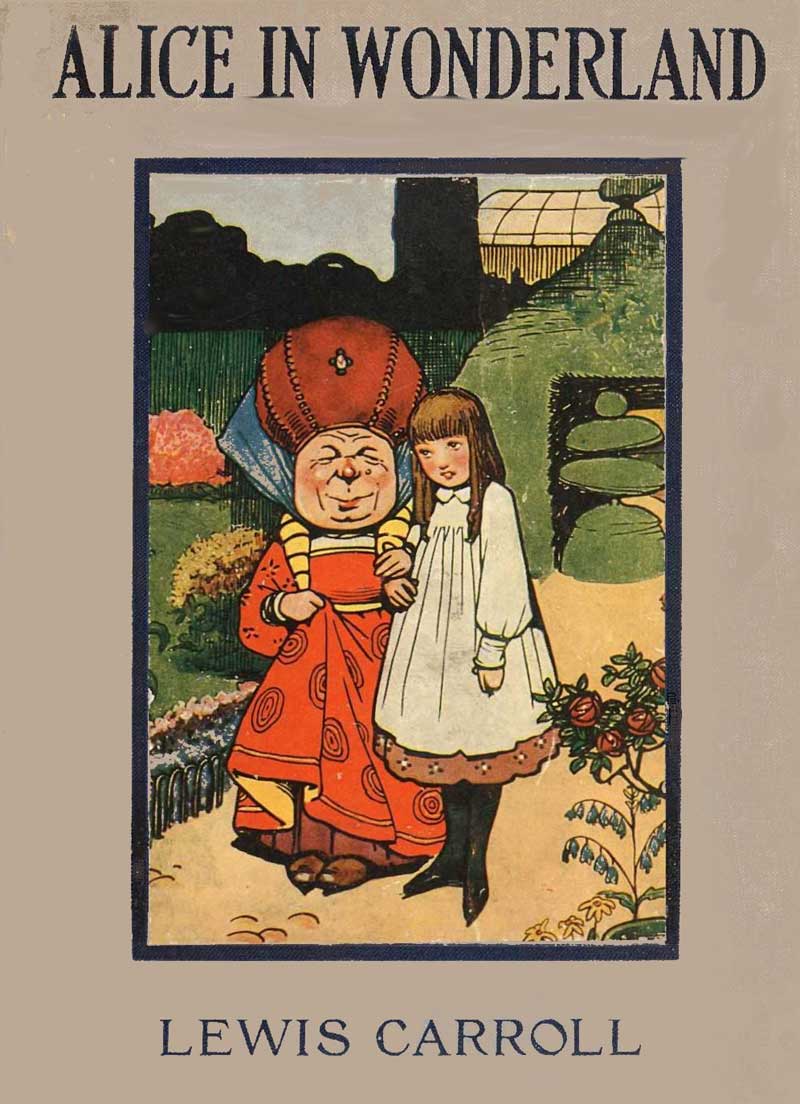
Alice's Adventures in Wonderland
1865
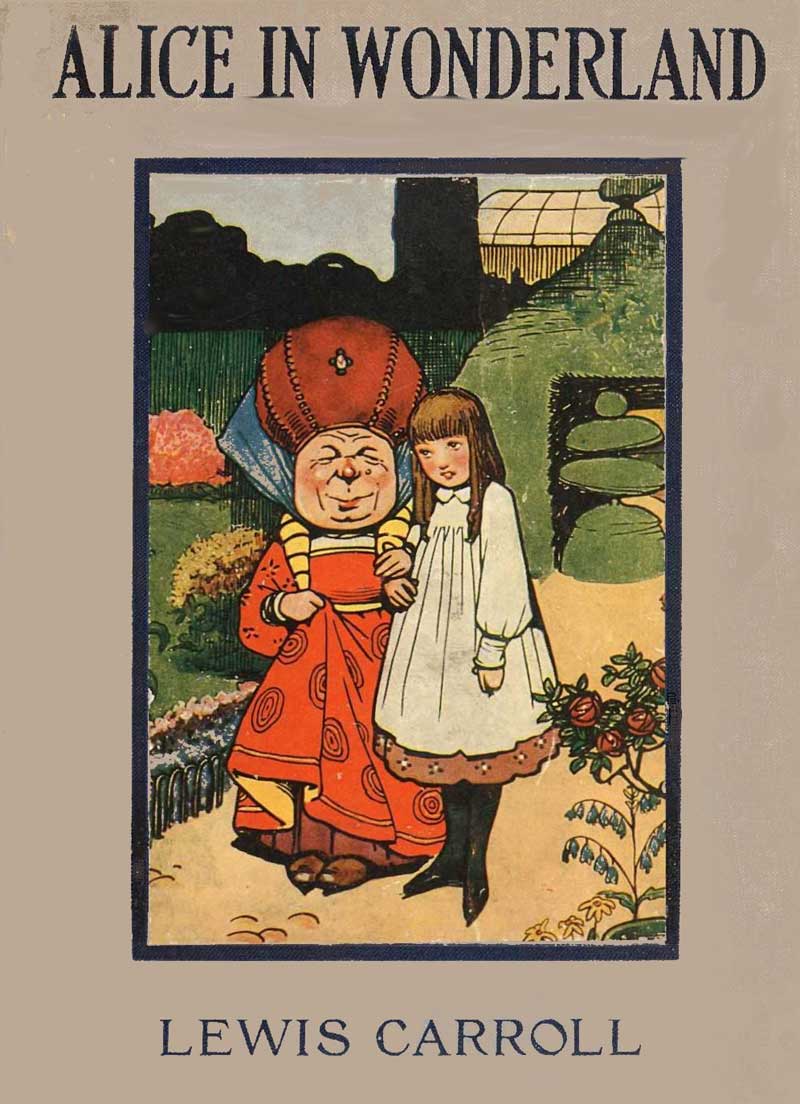
Alice's Adventures in Wonderland
1865
A Victorian mathematician's fever dream, Alice's Adventures in Wonderland drops a perfectly proper English girl down a rabbit hole and into a world where nothing makes sense and everything insists it does. Alice chases the White Rabbit, shrinks and grows at the wrong moments, attends a mad tea party, plays croquet with flamingos, and discovers that the rules of this place are governed by pure whimsy. Carroll's genius lies in his refusal to explain: the nonsense is the point. What begins as a children's tale of wonder becomes something far stranger when you realize the world above ground and below it are equally arbitrary. The Queen of Hearts screams for executions while the Cheshire Cat dissolves into laughter. Logic dissolves. Language bends. A caterpillar offers riddles with no answers. This is the book that taught children that stories don't have to teach. It endures because it captures the exact sensation of childhood: the world is enormous, terrifying, hilarious, and no one will tell you the rules because there aren't any.
Editions


X-Ray
“If you drink much from a bottle marked 'poison' it is certain to disagree with you sooner or later.””
— Lewis Carroll
“How puzzling all these changes are! I'm never sure what I'm going to be, from one minute to another.””
— Lewis Carroll
“And what is the use of a book," thought Alice, "without pictures or conversation?””
— Lewis Carroll
“Alice asked the Cheshire Cat, who was sitting in a tree, “What road do I take?”The cat asked, “Where do you want to go?”“I don’t know,” Alice answered.“Then,” said the cat, “it really doesn’t matter, does it?””
— Lewis Carroll
“In another moment down went Alice after it, never once considering how in the world she was to get out again.””
— Lewis Carroll
“How long is forever?Sometimes just one second””
— Lewis Carroll
“Alice thought to herself "I don't see how he can ever finish, if he doesn't begin.””
— Lewis Carroll
“Alice had begun to think that very few things indeed were really impossible.””
— Lewis Carroll
“I almost wish I hadn't gone down that rabbit-hole”
— Lewis Carroll
About Alice's Adventures in Wonderland
Chapter Summaries
- 1
- Alice, bored, follows a White Rabbit down a rabbit-hole into a fantastical world. She finds herself in a long hall with many locked doors and, after drinking a shrinking potion and eating a growing cake, struggles to reach a tiny key to a beautiful garden.
- 2
- Alice grows to an enormous size, filling the hall with her tears. She then shrinks rapidly after fanning herself, falling into her own pool of tears where she meets a Mouse and other creatures.
- 3
- To dry off from the Pool of Tears, the Dodo organizes a nonsensical 'Caucus-race' where everyone wins. The Mouse attempts to tell its 'long and sad tale,' but Alice's comments about her cat Dinah offend the animals, causing them to disperse.
Key Themes
- Identity and Self-Discovery
- Alice frequently questions 'Who am I?' as her size and surroundings constantly change. This theme explores the fluidity of self and the search for identity in a world where external definitions are unstable.
- Logic vs. Nonsense
- Wonderland operates on a logic entirely alien to Alice's Victorian sensibilities. The book highlights the clash between rational thought and absurd, arbitrary rules, often revealing the limitations of strict logic.
- Childhood and Imagination
- The entire adventure can be seen as a child's dream, emphasizing the boundless nature of imagination. It contrasts the innocent, questioning perspective of childhood with the rigid, often nonsensical, rules of the adult world.
Characters
- Alice(protagonist)
- A curious and imaginative young girl who falls into Wonderland, constantly grappling with its illogical rules and her own changing size and identity.
- Alice's Sister(minor)
- Alice's older sister, who is reading a dull book at the beginning and end, representing the mundane reality from which Alice escapes and returns.
- White Rabbit(supporting)
- A perpetually anxious and hurried creature who first leads Alice into Wonderland, serving as a herald for the Queen of Hearts.
- Mouse(supporting)
- A dignified and easily offended creature who joins Alice in the Pool of Tears and attempts to dry the party with a 'long and sad tale'.
- Dodo(minor)
- A character in the Caucus-Race, based on Lewis Carroll himself, who proposes the nonsensical race to dry everyone.
- Caterpillar(supporting)
- A wise, philosophical, and somewhat irritable creature who gives Alice advice on how to control her size using the mushroom.
Narrated by
Ana Rita
AI-generated · Word-synced · 1 chapters
Link to this book
Add a free, dofollow link to Lex on your blog, forum, syllabus, or reading list.

<a href="https://lex-books.com/book/alice-s-adventures-in-wonderland-3dfbc8ba-812d-40ec-a724-f5e8029b8b33"><img src="https://lex-books.com/badges/read-on-lex.svg" alt="Read Alice's Adventures in Wonderland by Lewis Carroll free on Lex" width="160" height="40"></a>[](https://lex-books.com/book/alice-s-adventures-in-wonderland-3dfbc8ba-812d-40ec-a724-f5e8029b8b33)[url=https://lex-books.com/book/alice-s-adventures-in-wonderland-3dfbc8ba-812d-40ec-a724-f5e8029b8b33][img]https://lex-books.com/badges/read-on-lex.svg[/img][/url]Read Alice's Adventures in Wonderland by Lewis Carroll free on Lex: https://lex-books.com/book/alice-s-adventures-in-wonderland-3dfbc8ba-812d-40ec-a724-f5e8029b8b33Cite this book
Reading this edition for a paper or guide? Copy a citation.
Carroll, Lewis. Alice's Adventures in Wonderland. Lex, lex-books.com/book/alice-s-adventures-in-wonderland-3dfbc8ba-812d-40ec-a724-f5e8029b8b33.Carroll, L. (1865). Alice's Adventures in Wonderland. Lex. https://lex-books.com/book/alice-s-adventures-in-wonderland-3dfbc8ba-812d-40ec-a724-f5e8029b8b33Carroll, Lewis. Alice's Adventures in Wonderland. Lex. https://lex-books.com/book/alice-s-adventures-in-wonderland-3dfbc8ba-812d-40ec-a724-f5e8029b8b33.