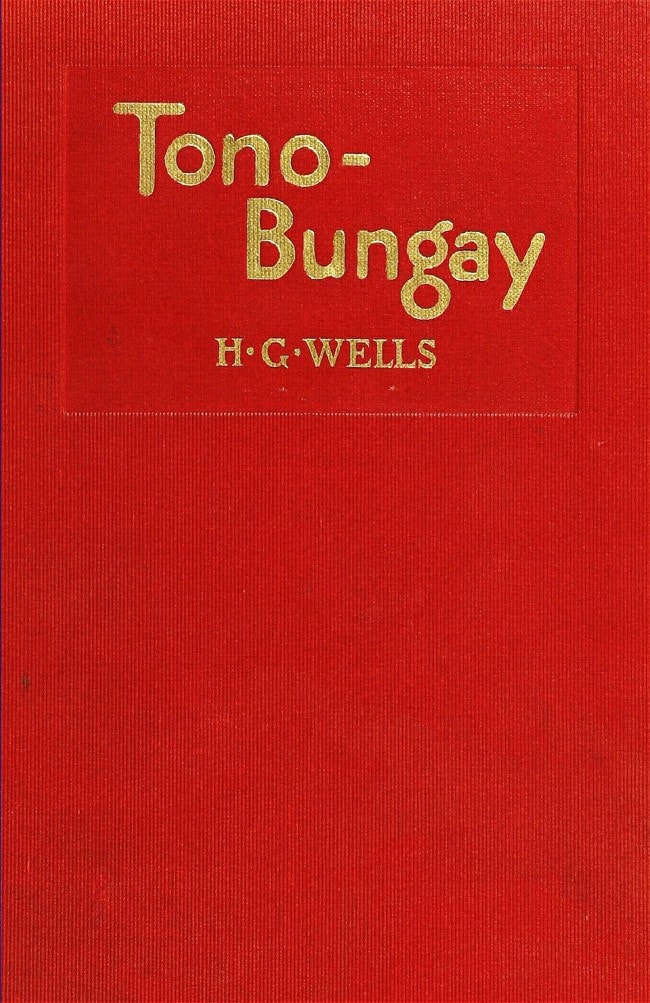
Tono-Bungay
1909
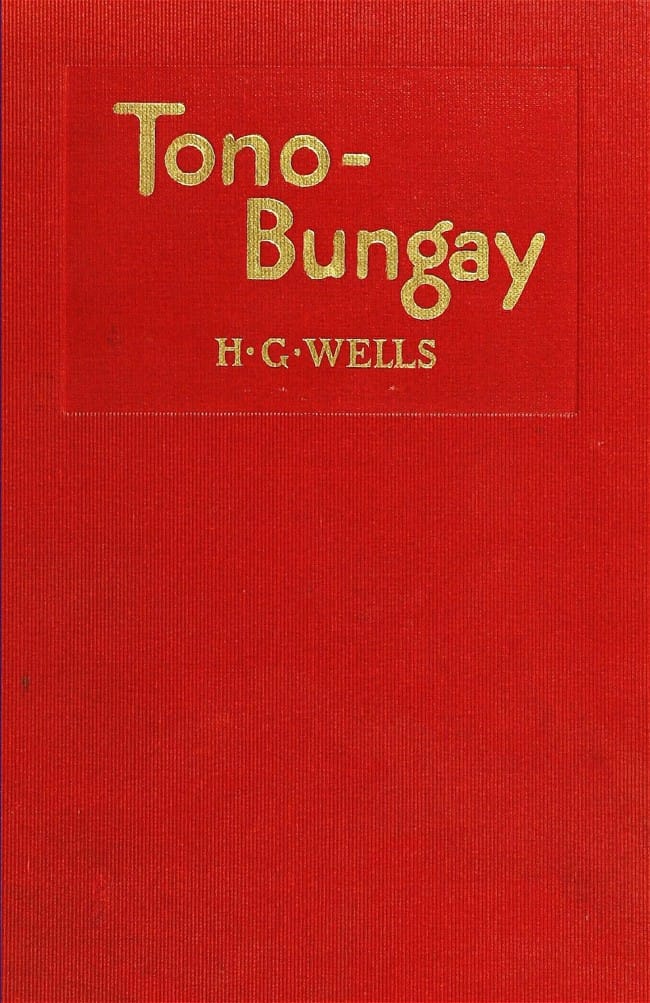
H.G. Wells turns his analytical gaze from imaginary worlds to something far more unsettling: the lies we choose to believe. When young George Ponderevo assists his uncle Edward in marketing Tono-Bungay - a tonic that is, quite literally, nothing but colored water - he becomes witness to a extraordinary phenomenon. Society decides, almost eagerly, to believe in miracles. Through George's wry, sometimes bitter retrospection, Wells dissects the machinery of Edwardian capitalism: the advertising, the credulity, the desperate social climbing that transforms nothing into a fortune. Part satire, part meditation on class and identity, Tono-Bungay is arguably Wells's most crafted work - a novel that understands how modernity trades in illusions even as it pretends to celebrate reason. The book is semi-autobiographical, drawing on Wells's own uneasy encounter with the patent medicine industry, and its sharpness has lost none of its bite. For readers who believe the marketing, this is a corrective. For those who don't, it's a vindication.
Editions

X-Ray
“Most people in this world seem to live "in character"; they have a beginning, a middle, and an end, and the three are congruous one with another and true to the roles of their type.””
— H. G. Wells
“It was Plutarch, you know, and nothing intrinsically American that prevented George Washington being a King...””
— H. G. Wells
“What I want to know is, in the Middle Ages, did they do anything for Housemaid's Knee? What did they put in their hot baths after jousting?””
— H. G. Wells
“...I suppose it is a lingering trace of Plutarch and my ineradicable boyish imagination that at bottom our State should be wise, sane, and dignified, that makes me think a country which leaves its medical and literary criticism, or indeed any such vitally important criticism, entirely to private enterprise and open to the advances of any purchaser much be in a frankly hopeless condition.””
— H. G. Wells
“What hope is there for a people whose women become fruitless?””
— H. G. Wells
Link to this book
Add a free, dofollow link to Lex on your blog, forum, syllabus, or reading list.

<a href="https://lex-books.com/book/tono-bungay-28cea14a-a466-4d7b-bfa1-993cad2bb2c5"><img src="https://lex-books.com/badges/read-on-lex.svg" alt="Read Tono-Bungay by H. G. Wells free on Lex" width="160" height="40"></a>[](https://lex-books.com/book/tono-bungay-28cea14a-a466-4d7b-bfa1-993cad2bb2c5)[url=https://lex-books.com/book/tono-bungay-28cea14a-a466-4d7b-bfa1-993cad2bb2c5][img]https://lex-books.com/badges/read-on-lex.svg[/img][/url]Read Tono-Bungay by H. G. Wells free on Lex: https://lex-books.com/book/tono-bungay-28cea14a-a466-4d7b-bfa1-993cad2bb2c5Cite this book
Reading this edition for a paper or guide? Copy a citation.
Wells, H. G.. Tono-Bungay. Lex, lex-books.com/book/tono-bungay-28cea14a-a466-4d7b-bfa1-993cad2bb2c5.Wells, H. G. (1909). Tono-Bungay. Lex. https://lex-books.com/book/tono-bungay-28cea14a-a466-4d7b-bfa1-993cad2bb2c5Wells, H. G.. Tono-Bungay. Lex. https://lex-books.com/book/tono-bungay-28cea14a-a466-4d7b-bfa1-993cad2bb2c5.