Sybil, Or, the Two Nations
1845
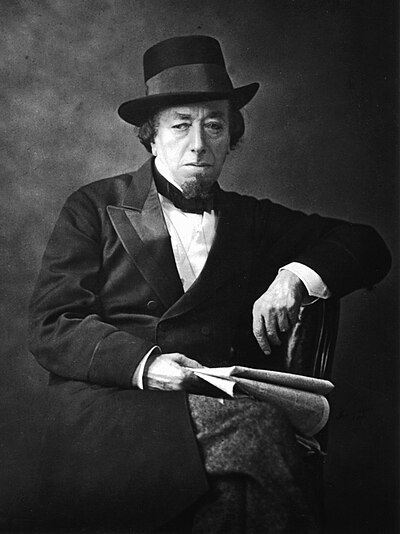
In 1845, a future Prime Minister wrote a novel so explosive it was called a threat to social order. Benjamin Disraeli coined the phrase that would define Victorian England's greatest shame: the Two Nations of rich and poor, living in parallel universes of obscene privilege and crushing destitution, separated by an abyss that neither acknowledged. Sybil is the story of Charles Egremont, a young aristocrat who awakens to the suffering hidden behind London's fashionable drawing rooms and Manchester's smoke-choked slums. Through his journey, Disraeli exposes what the establishment refused to see: families living in cellars without light or air, children worked to death in factories, entire communities abandoned to despair while their wealthy neighbors debated horse races. This was not fiction meant to entertain. Disraeli insisted every detail came from royal commission reports or his own observations, and that he had to suppress truths too shocking for publication. The book helped ignite the social reforms that would reshape Britain, and its audacious blend of political argument and narrative drive influenced everything from Dickens to modern political fiction. For readers who want to understand how literature changed the world, Sybil remains essential.
Editions
X-Ray
“Two nations; between whom there is no intercourse and no sympathy; who are as ignorant of each other's habits, thoughts, and feelings, as if they were dwellers in different zones, or inhabitants of different planets; who are formed by a different breeding, are fed by a different food, are ordered by different manners, and are not governed by the same laws . . . . THE RICH AND THE POOR.””
— Benjamin, Earl of Beaconsfield Disraeli
“The poor are very well off, at least the agricultural poor, very well off indeed. Their incomes are certain, that is a great point, and they have no cares, no anxieties; they always have a resource, they always have the House. People without cares do not require as much food as those whose life entails anxieties. See how long they live!””
— Benjamin, Earl of Beaconsfield Disraeli
“To be conscious that you are ignorant is a great step to knowledge.””
— Benjamin, Earl of Beaconsfield Disraeli
“There is no wisdom like frankness.””
— Benjamin, Earl of Beaconsfield Disraeli
“We live in an age where to be young and to be indifferent can no longer by synonymous. We must prepare for the coming hour. The claims of the future are represented by suffering millions; and the youth of a nation are the trustees of posterity””
— Benjamin, Earl of Beaconsfield Disraeli
“We live in an age when to be young and to be indifferent can be no longer synonymous.””
— Benjamin, Earl of Beaconsfield Disraeli
“Power has only one duty--to secure the social welfare of the people.””
— Benjamin, Earl of Beaconsfield Disraeli
“In great cities men are brought together by the desire of gain. They are not in a state of cooperation, but of isolation, as to the making of fortunes;; and for all the rest they are careless of neighbors. Christianity teaches us to love our neighbour as ourself; modern society acknowledges no neighbour.””
— Benjamin, Earl of Beaconsfield Disraeli
“I cannot pay attention unless I am attracted.””
— Benjamin, Earl of Beaconsfield Disraeli
Link to this book
Add a free, dofollow link to Lex on your blog, forum, syllabus, or reading list.

<a href="https://lex-books.com/book/sybil-or-the-two-nations-00076022-f497-4b4c-aefe-c60036d88cd8"><img src="https://lex-books.com/badges/read-on-lex.svg" alt="Read Sybil, Or, the Two Nations by Benjamin, Earl of Beaconsfield Disraeli free on Lex" width="160" height="40"></a>[](https://lex-books.com/book/sybil-or-the-two-nations-00076022-f497-4b4c-aefe-c60036d88cd8)[url=https://lex-books.com/book/sybil-or-the-two-nations-00076022-f497-4b4c-aefe-c60036d88cd8][img]https://lex-books.com/badges/read-on-lex.svg[/img][/url]Read Sybil, Or, the Two Nations by Benjamin, Earl of Beaconsfield Disraeli free on Lex: https://lex-books.com/book/sybil-or-the-two-nations-00076022-f497-4b4c-aefe-c60036d88cd8Cite this book
Reading this edition for a paper or guide? Copy a citation.
Benjamin, Earl of Beaconsfield Disraeli. Sybil, Or, the Two Nations. Lex, lex-books.com/book/sybil-or-the-two-nations-00076022-f497-4b4c-aefe-c60036d88cd8.Benjamin, E. O. B. D. (1845). Sybil, Or, the Two Nations. Lex. https://lex-books.com/book/sybil-or-the-two-nations-00076022-f497-4b4c-aefe-c60036d88cd8Benjamin, Earl of Beaconsfield Disraeli. Sybil, Or, the Two Nations. Lex. https://lex-books.com/book/sybil-or-the-two-nations-00076022-f497-4b4c-aefe-c60036d88cd8.