Joan and Peter: The story of an education
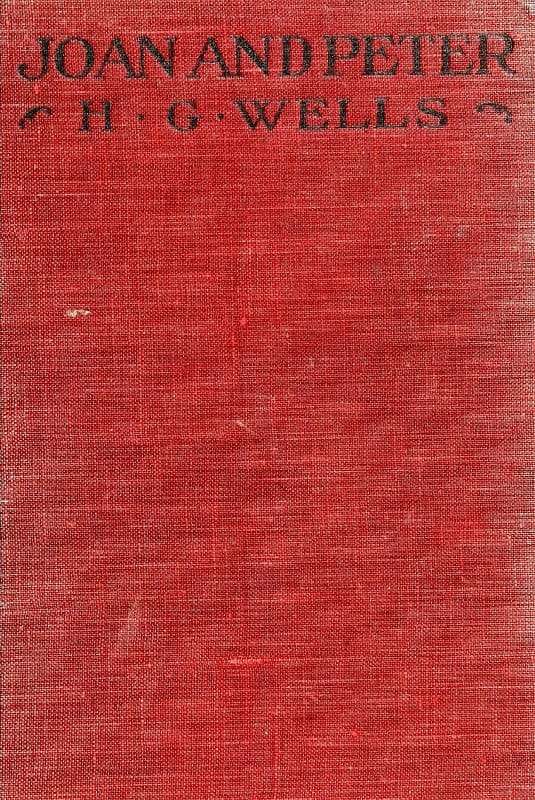
Joan and Peter: The story of an education
This is H.G. Wells writing from deep personal wound. The novel is essentially his revenge on the English education system that scarred him as a child, disguised as a story about two orphaned siblings. Joan and Peter, left parentless at five, are batted between four wildly different guardians who represent competing philosophies about how to raise children. The education they receive is a gauntlet of failures: repressive religious schools, brutal boarding academies, progressive experiments that collapse into chaos. Wells skewers them all with precision and fury. Then the First World War arrives and transforms the novel from satirical education critique into something darker and more urgent. The children grow into young adults navigating a world at breaking point, their scattered childhood convictions hardening into adult convictions about nation, purpose, love, and what education is actually for. It's sprawling, ambitious, sometimes messy in its urge to cover everything, but alive with the anger of a writer settling scores with his own past.
Editions
X-Ray
“In times of long established peace, when the tradition of generations has established the illusion of the profoundest human security, men's minds are not greatly distressed by grotesqueness and absurdity in their political forms. It is all part of the humour and the good-humour of life. When one believes that all the tigers in the jungle are dead, it is quite amusing to walk along the jungle paths in a dressing-gown with a fan instead of a gun.””
— H. G. Wells
Link to this book
Add a free, dofollow link to Lex on your blog, forum, syllabus, or reading list.

<a href="https://lex-books.com/book/joan-and-peter-the-story-of-an-education-059a7afd-86c7-459d-83d3-01d3025db8f6"><img src="https://lex-books.com/badges/read-on-lex.svg" alt="Read Joan and Peter: The story of an education by H. G. Wells free on Lex" width="160" height="40"></a>[](https://lex-books.com/book/joan-and-peter-the-story-of-an-education-059a7afd-86c7-459d-83d3-01d3025db8f6)[url=https://lex-books.com/book/joan-and-peter-the-story-of-an-education-059a7afd-86c7-459d-83d3-01d3025db8f6][img]https://lex-books.com/badges/read-on-lex.svg[/img][/url]Read Joan and Peter: The story of an education by H. G. Wells free on Lex: https://lex-books.com/book/joan-and-peter-the-story-of-an-education-059a7afd-86c7-459d-83d3-01d3025db8f6Cite this book
Reading this edition for a paper or guide? Copy a citation.
Wells, H. G.. Joan and Peter: The story of an education. Lex, lex-books.com/book/joan-and-peter-the-story-of-an-education-059a7afd-86c7-459d-83d3-01d3025db8f6.Wells, H. G. (n.d.). Joan and Peter: The story of an education. Lex. https://lex-books.com/book/joan-and-peter-the-story-of-an-education-059a7afd-86c7-459d-83d3-01d3025db8f6Wells, H. G.. Joan and Peter: The story of an education. Lex. https://lex-books.com/book/joan-and-peter-the-story-of-an-education-059a7afd-86c7-459d-83d3-01d3025db8f6.