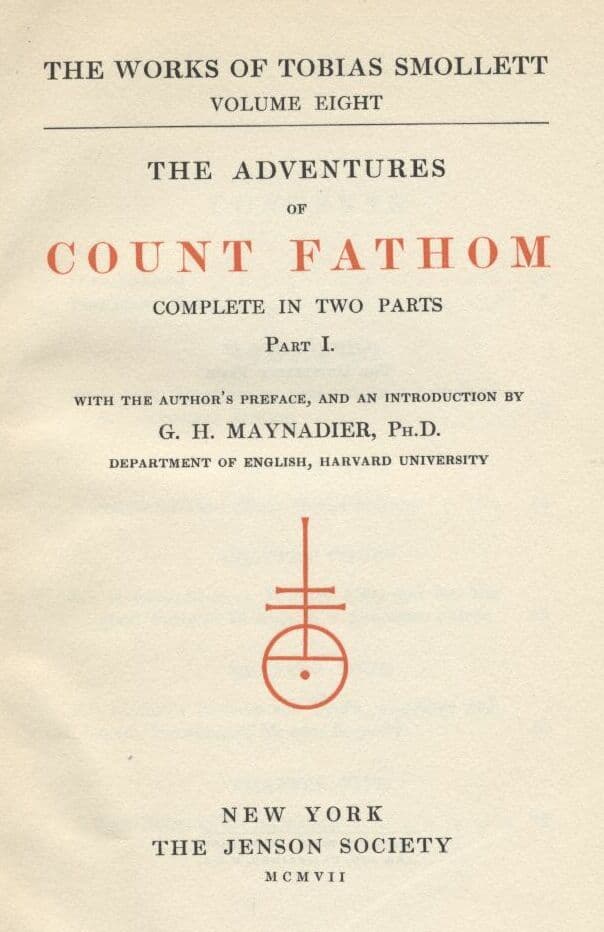
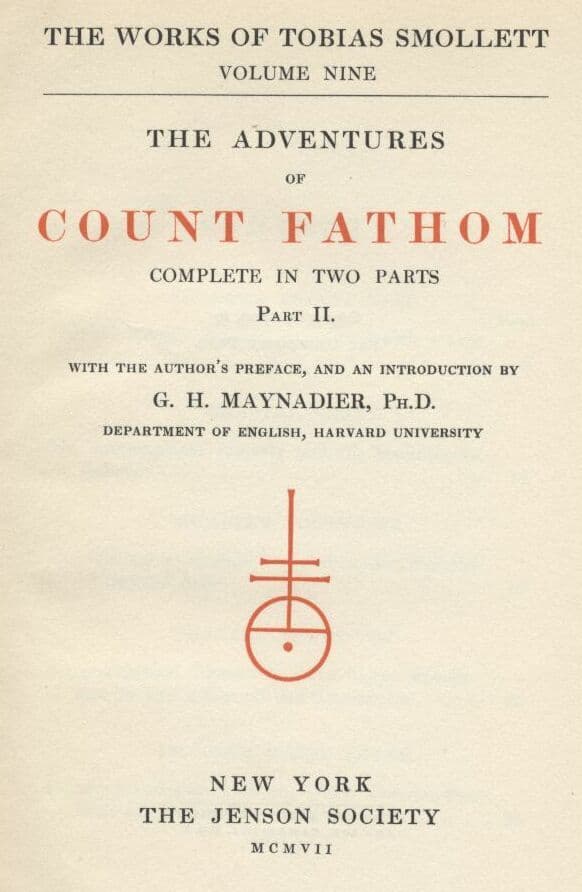
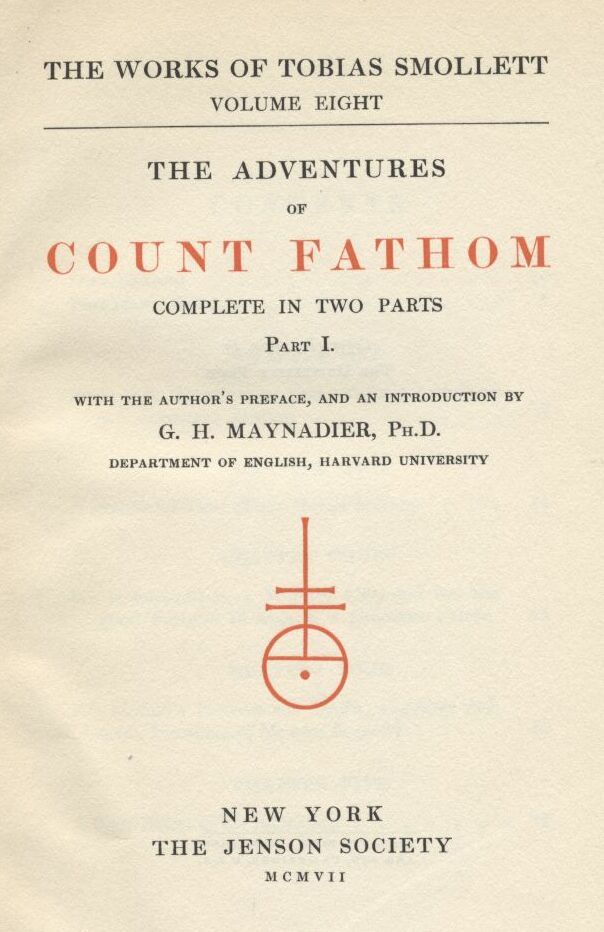
The Adventures of Ferdinand Count Fathom — Complete
1753
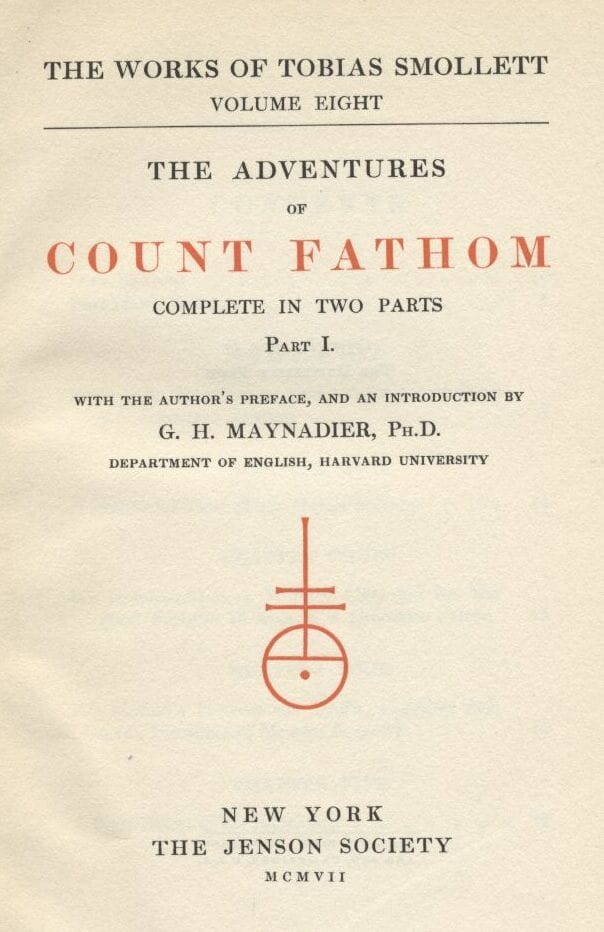
Ferdinand Count Fathom is one of literature's most unsettling protagonists: a man born to a camp follower, raised in military encampments, who transforms his mother's survival instincts into a ruthless talent for manipulation, social climbing, and cold-blooded deceit. Smollett's 1753 novel prefigures the Gothic tradition by a full quarter-century, offering not a haunted castle but something more terrifying - a man who treats the world as a chessboard and everyone on it as a piece to be sacrificed. Fathom moves through 18th-century Europe with chameleon adaptability, charming his way into the homes of the wealthy and powerful while orchestrating elaborate schemes that collapse lives around him. What makes the novel endure is its unsettling sympathy: we watch Fathom's machinations with the same breathlessness we reserve for sharks, unable to look away. Smollett writes with a satirist's precision, exposing the moral rot beneath the polished surface of polite society - the hypocrisy, the greed, the casual cruelty that Fathom merely mirrors back at his victims. This is picaresque fiction at its most barbed, a portrait of villainy that holds up a merciless mirror to the world that created him.
Editions
X-Ray
A cunning and amoral adventurer who uses deceit and manipulation to advance his social and financial standing.
A Scottish Imperial officer and Fathom's benevolent patron, who raises and educates him.
Count Melvil's virtuous and naive son, who is repeatedly exploited and betrayed by Fathom.
A strong and opportunistic English camp-follower who raises Ferdinand amidst military campaigns and teaches him early lessons in survival.
About The Adventures of Ferdinand Count Fathom — Complete
Chapter Summaries
- Introduction
- G. H. Maynadier's introduction discusses Smollett's unique writing style in 'Fathom,' noting its departure from his usual realistic fiction towards a more inventive, romantic, and melodramatic plot. It highlights the comparative lifelessness of most characters, with Fathom's mother being an exception, and emphasizes the novel's interest in its plot and its foreshadowing of romantic and melodramatic elements.
- Dedication
- The author dedicates the book to an unnamed 'Doctor' (implied to be Smollett himself), discussing the difficulties of dedications and candidly critiquing the Doctor's character while affirming friendship. He explains his purpose in writing 'Ferdinand Count Fathom' as a cautionary tale, presenting a villain as the main character to deter readers from vice.
- 1
- The narrator discusses the challenges of historical writing and introduces Ferdinand Count Fathom, a character of obscure but promising birth, born in a wagon in Flanders to an English camp-follower mother with many admirers. The narrator anticipates reader criticism for focusing on 'low life' and defends his choice by comparing it to classical and picaresque literature.
Key Themes
- Deceit and Hypocrisy
- Fathom's character is a masterclass in dissimulation; he constantly feigns virtue, friendship, and love to exploit others. The novel highlights how easily people are fooled by outward appearances and eloquent words, even when actions contradict them.
- Appearance vs. Reality
- A recurring motif is the stark contrast between how characters present themselves and their true nature. Fathom, despite his noble title and polished manners, is a villain, while others, like the 'King of Corsica' in jail, maintain dignity despite their reduced circumstances. Society often values superficial displays over genuine worth.
- Moral Corruption and Social Critique
- The novel serves as a biting satire of 18th-century society, exposing the corruption and venality present in various strata, from the nobility and legal system to the medical profession and common citizens. Fathom's success underscores the ease with which vice can thrive in a credulous and self-interested world.
Characters
- Ferdinand Count Fathom(protagonist)
- A cunning and amoral adventurer who uses deceit and manipulation to advance his social and financial standing.
- Count Melvil(supporting)
- A Scottish Imperial officer and Fathom's benevolent patron, who raises and educates him.
- Renaldo(supporting)
- Count Melvil's virtuous and naive son, who is repeatedly exploited and betrayed by Fathom.
- Fathom's Mother(minor)
- A strong and opportunistic English camp-follower who raises Ferdinand amidst military campaigns and teaches him early lessons in survival.
- Teresa(supporting)
- Mademoiselle de Melvil's cunning maid, who becomes Fathom's first lover and accomplice in his schemes.
- Wilhelmina(supporting)
- The jeweller's romantic and naive daughter, who falls victim to Fathom's seduction and fraud.
Link to this book
Add a free, dofollow link to Lex on your blog, forum, syllabus, or reading list.

<a href="https://lex-books.com/book/the-adventures-of-ferdinand-count-fathom-complete-01a5a663-330f-43e8-b448-f3a1999beab5"><img src="https://lex-books.com/badges/read-on-lex.svg" alt="Read The Adventures of Ferdinand Count Fathom — Complete by T. Smollett free on Lex" width="160" height="40"></a>[](https://lex-books.com/book/the-adventures-of-ferdinand-count-fathom-complete-01a5a663-330f-43e8-b448-f3a1999beab5)[url=https://lex-books.com/book/the-adventures-of-ferdinand-count-fathom-complete-01a5a663-330f-43e8-b448-f3a1999beab5][img]https://lex-books.com/badges/read-on-lex.svg[/img][/url]Read The Adventures of Ferdinand Count Fathom — Complete by T. Smollett free on Lex: https://lex-books.com/book/the-adventures-of-ferdinand-count-fathom-complete-01a5a663-330f-43e8-b448-f3a1999beab5Cite this book
Reading this edition for a paper or guide? Copy a citation.
Smollett, T.. The Adventures of Ferdinand Count Fathom — Complete. Lex, lex-books.com/book/the-adventures-of-ferdinand-count-fathom-complete-01a5a663-330f-43e8-b448-f3a1999beab5.Smollett, T. (1753). The Adventures of Ferdinand Count Fathom — Complete. Lex. https://lex-books.com/book/the-adventures-of-ferdinand-count-fathom-complete-01a5a663-330f-43e8-b448-f3a1999beab5Smollett, T.. The Adventures of Ferdinand Count Fathom — Complete. Lex. https://lex-books.com/book/the-adventures-of-ferdinand-count-fathom-complete-01a5a663-330f-43e8-b448-f3a1999beab5.