The War in the Air
1908
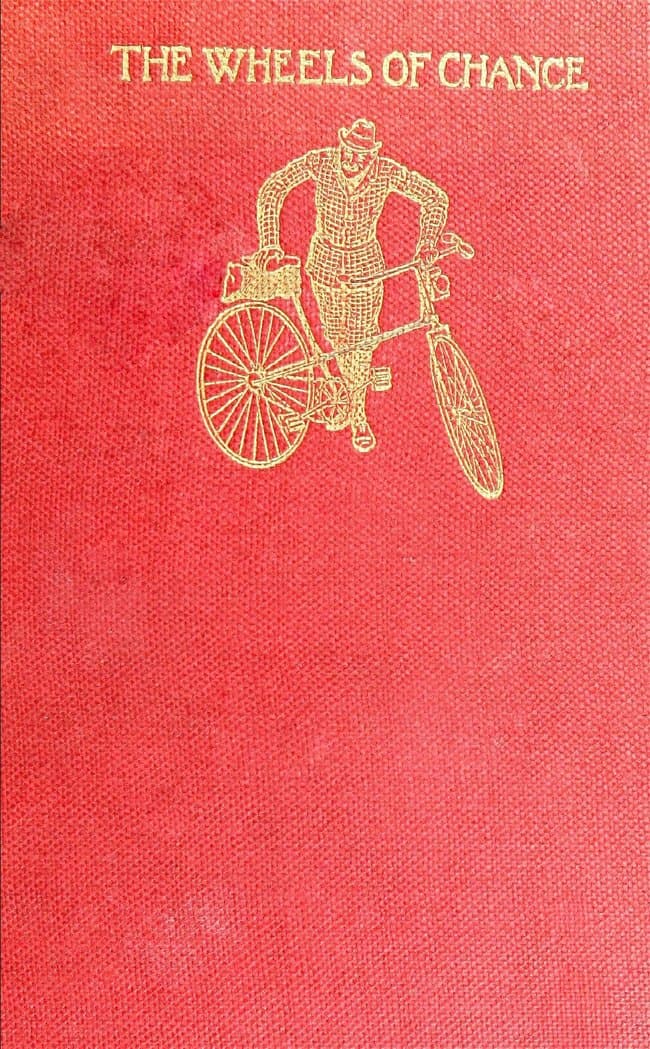
In 1907, H.G. Wells looked at the infant technology of flight and saw humanity's future - and it was terrifying. Written before the airplane had proven itself in war, The War in the Air imagines a global conflict fought entirely from the skies, with zeppelins bombing cities and fleets of propeller-driven craft engaged in deadly dogfights above a bewildered civilization. Bert Smallways, a bicycle engineer with more curiosity than caution, stows away on the German flagship Vaterland and finds himself trapped aboard the very vessel that ignites the Great War. What follows is part adventure, part prophecy: Wells understood that flight would transform not just how wars were fought, but who would fight them and how civilizations would crumble when the sky itself became a battlefield. The novel's vision of coordinated aerial assault, of empires toppled by technology, reads less like speculation than like journalists filing dispatches from a future already arrived. For readers who wonder how Victorians imagined our world, this is the answer - unsettling, prescient, and utterly absorbing.
Editions
X-Ray
“...money – leastways we thought it was money till everything smashed up, and then seemingly it was jes’ paper...””
— H. G. Wells
“The accidental balance on the side of Progress was far slighter and infinitely more complex and delicate in its adjustments than the people of that time suspected; but that did not alter the fact that it was an effective balance. They did not realize that this age of relative good fortune was an age of immense but temporary opportunity for their kind. They complacently assumed a necessary progress towards which they had no moral responsibility. They did not realize that this security of progress was a thing still to be won or lost, and that the time to win it was a time that passed. They went about their affairs energetically enough, and yet with a curious idleness towards those threatening things. No one troubled over the real dangers of mankind.””
— H. G. Wells
“It is impossible now to estimate how much of the intellectual and physical energy of the world was wasted in military preparation and equipment, but it was an enormous proportion. Great Britain spent upon army and navy money and capacity, that directed into the channels of physical culture and education would have made the British the aristocracy of the world. Her rulers could have kept the whole population learning and exercising up to the age of eighteen and made a broad-chested and intelligent man of every Bert Smallways in the islands, had they given the resources they spent in war material to the making of men. Instead of which they waggled flags at him until he was fourteen, incited him to cheer, and then turned him out of school to begin that career of private enterprise we have compactly recorded. France achieved similar imbecilities; Germany was, if possible worse; Russia under the waste and stresses of militarism festered towards bankruptcy and decay. All Europe was producing big guns and countless swarms of little Smallways.””
— H. G. Wells
Link to this book
Add a free, dofollow link to Lex on your blog, forum, syllabus, or reading list.

<a href="https://lex-books.com/book/the-war-in-the-air-38ea0698-40fe-4816-82fa-8cff89b85937"><img src="https://lex-books.com/badges/read-on-lex.svg" alt="Read The War in the Air by H. G. Wells free on Lex" width="160" height="40"></a>[](https://lex-books.com/book/the-war-in-the-air-38ea0698-40fe-4816-82fa-8cff89b85937)[url=https://lex-books.com/book/the-war-in-the-air-38ea0698-40fe-4816-82fa-8cff89b85937][img]https://lex-books.com/badges/read-on-lex.svg[/img][/url]Read The War in the Air by H. G. Wells free on Lex: https://lex-books.com/book/the-war-in-the-air-38ea0698-40fe-4816-82fa-8cff89b85937Cite this book
Reading this edition for a paper or guide? Copy a citation.
Wells, H. G.. The War in the Air. Lex, lex-books.com/book/the-war-in-the-air-38ea0698-40fe-4816-82fa-8cff89b85937.Wells, H. G. (1908). The War in the Air. Lex. https://lex-books.com/book/the-war-in-the-air-38ea0698-40fe-4816-82fa-8cff89b85937Wells, H. G.. The War in the Air. Lex. https://lex-books.com/book/the-war-in-the-air-38ea0698-40fe-4816-82fa-8cff89b85937.