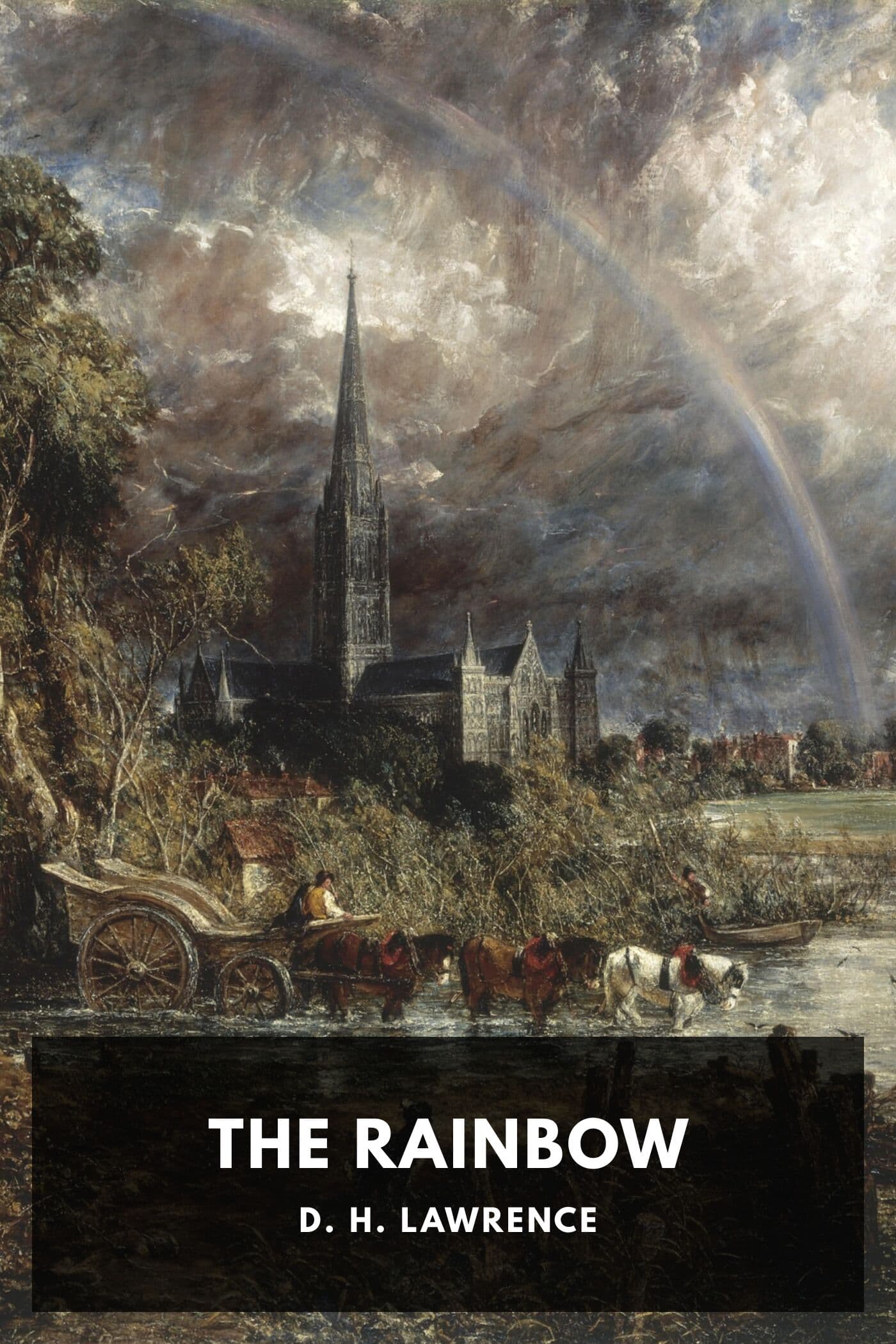
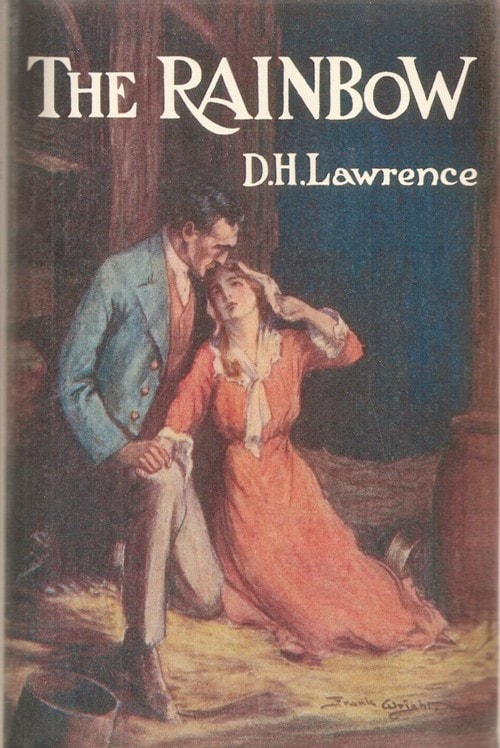
The Rainbow
1915
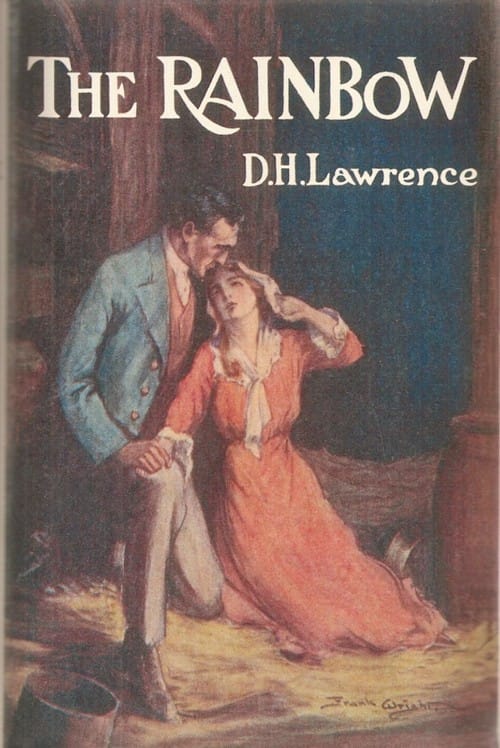
Three generations of the Brangwen family wrestle with desire and constraint at their Nottinghamshire farm, and Lawrence tells their story with an intensity that still startles. Tom Brangwen's marriage to the Polish-born Lydia opens the first great chasm between what the body wants and what society permits. Their daughter Ursula grows into a young woman whose ambitions and passions threaten to consume her whole. As industrialization creeps across the countryside, the old rhythms of farm life fracture, but the Brangwens keep reaching for something beyond the ordinary. The rainbow itself becomes Lawrence's persistent, aching symbol: that luminous arc that promises connection but hovers always just out of grasp. Published in 1915, The Rainbow was immediately suppressed for its frank portrayal of marriage and female desire, and its psychological daring remains undiminished. This is a novel about what it costs to refuse surrender, and why the struggle for fulfillment matters even when it brings only partial answers.
Editions
X-Ray
“If I were the moon, I know where I would fall down.””
— D. H. Lawrence
“Why, oh why must one grow up, why must one inherit this heavy, numbing responsibility of living an undiscovered life? Out of the nothingness and the undifferentiated mass, to make something of herself! But what? In the obscurity and pathlessness to take a direction! But whither? How take even one step? And yet, how stand still? This was torment indeed, to inherit the responsibility of one’s own life.””
— D. H. Lawrence
“But having more freedom she only became more profoundly aware of the big want. She wanted so many things. She wanted to read great, beautiful books, and be rich with them; she wanted to see beautiful things, and have the joy of them for ever; she wanted to know big, free people; and there remained always the want she could put no name to?It was so difficult. There were so many things, so much to meet and surpass. And one never knew where one was going.””
— D. H. Lawrence
“She looked at him, and oh, the weariness to her, of theeffort to understand another language, the weariness of hearinghim, attending to him, making out who he was, as he stood therefair-bearded and alien, looking at her. She knew something ofhim, of his eyes. But she could not grasp him. She closed hereyes.””
— D. H. Lawrence
“And she shrank away again, back into her darkness, and for a long while remained blotted safely away from living.””
— D. H. Lawrence
“Was his life nothing? Had he nothing to show, no work? He did not count his work, anyone could have done it. What had he known, but the long, marital embrace with his wife. Curious, that this was what his life amounted to! At any rate, it was something, it was eternal. He would say so to anybody, and be proud of it. He lay with his wife in his arms, and she was still his fulfillment, just the same as ever. And that was the be-all and the end-all. Yes, and he was proud of it.””
— D. H. Lawrence
“He worked very hard, till nothing lived in him but his eyes.””
— D. H. Lawrence
“Their words were only accidents in the mutual silence.””
— D. H. Lawrence
“And yet - and yet - one's kite will rise on the wind as far as ever one has string to let it go. It tugs and tugs and will go, and one is glad the further it goes, even if everybody else is nasty about it.””
— D. H. Lawrence
Link to this book
Add a free, dofollow link to Lex on your blog, forum, syllabus, or reading list.

<a href="https://lex-books.com/book/the-rainbow-01501c58-91b7-4a39-bf66-46ea59182599"><img src="https://lex-books.com/badges/read-on-lex.svg" alt="Read The Rainbow by D. H. Lawrence free on Lex" width="160" height="40"></a>[](https://lex-books.com/book/the-rainbow-01501c58-91b7-4a39-bf66-46ea59182599)[url=https://lex-books.com/book/the-rainbow-01501c58-91b7-4a39-bf66-46ea59182599][img]https://lex-books.com/badges/read-on-lex.svg[/img][/url]Read The Rainbow by D. H. Lawrence free on Lex: https://lex-books.com/book/the-rainbow-01501c58-91b7-4a39-bf66-46ea59182599Cite this book
Reading this edition for a paper or guide? Copy a citation.
Lawrence, D. H.. The Rainbow. Lex, lex-books.com/book/the-rainbow-01501c58-91b7-4a39-bf66-46ea59182599.Lawrence, D. H. (1915). The Rainbow. Lex. https://lex-books.com/book/the-rainbow-01501c58-91b7-4a39-bf66-46ea59182599Lawrence, D. H.. The Rainbow. Lex. https://lex-books.com/book/the-rainbow-01501c58-91b7-4a39-bf66-46ea59182599.