The World Set Free
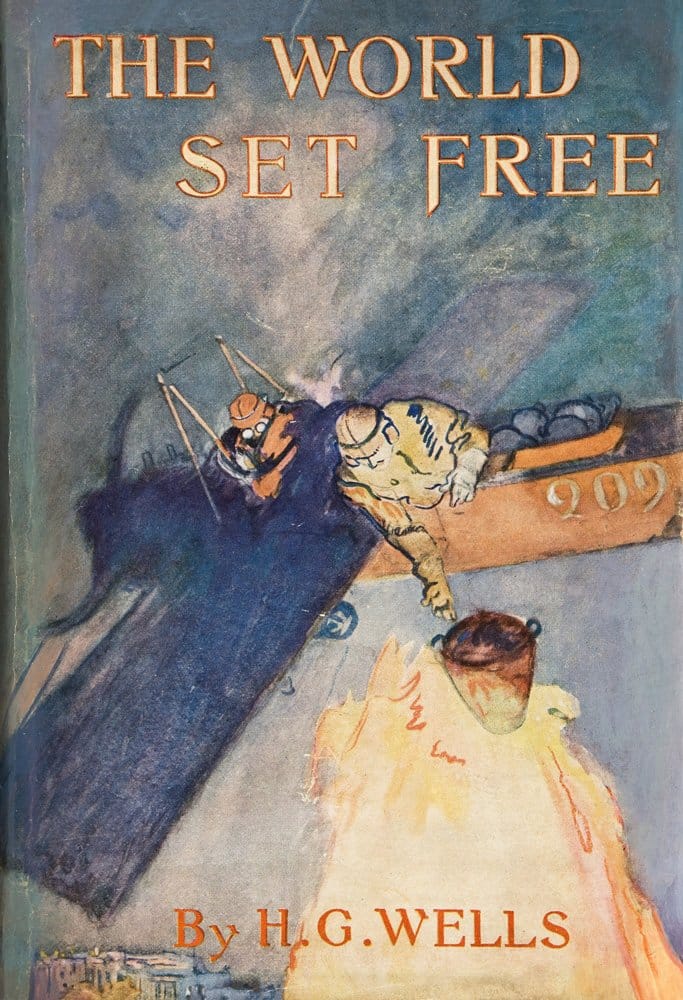
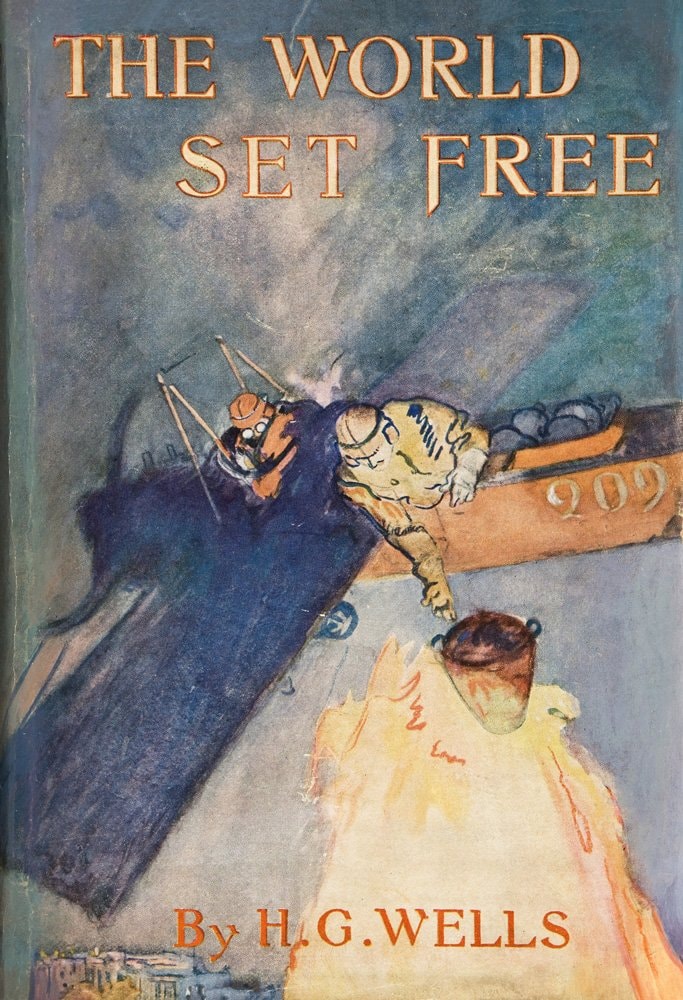
Wells wrote this in 1913. He imagined atomic weapons. He described chain reactions, radioactive fallout, bombs dropped from aircraft that would incinerate cities for miles. He coined the term "atomic bombs" years before uranium was split. This is not historical accident - it may have directly influenced the scientists who built the real thing. The novel follows Holsten, a scientist whose discovery of atomic energy propels humanity into a nightmare future. Nations wage war with weapons that render cities uninhabitable, that poison land for generations. But Wells, ever the optimist, also imagines what rises from the ashes: a unified world, tired of annihilation, finally building the peace that nationalism could not. This is prophecy rendered as warning. Wells understood that scientists create forces beyond their control, that politics lags behind technology, that progress and catastrophe often wear the same face.
Editions

X-Ray
“He blinked at the sun and dreamt that perhaps he might snare it and spare it as it went down to its resting place amidst the distant hills.””
— H. G. Wells
“So long as you are alive you are just the moment, perhaps, but when you are dead then you are all your life from the first moment to the last.””
— H. G. Wells
“He went into those little gardens beneath the over-hanging, brightly-lit masses of the Savoy Hotel and the Hotel Cecil. He sat down on a seat and became aware of the talk of the two people next to him. It was the talk of a young couple evidently on the eve of marriage. The man was congratulating himself on having regular employment at last; 'they like me,' he said, 'and I like the job. If I work up”
— H. G. Wells
“How often things must have been seen and dismissed as unimportant, before the speculative eye and the moment of vision came! It was Gilbert, Queen Elizabeth's court physician, who first puzzled his brains with rubbed amber and bits of glass and silk and shellac, and so began the quickening of the human mind to the existence of this universal presence. And even then the science of electricity remained a mere little group of curious facts for nearly two hundred years, connected perhaps with magnetism”
— H. G. Wells
“For many years the price of coal and every form of liquid fuel had been clambering to levels that made even the revival of the draft horse seem a practicable possibility, and now with the abrupt relaxation of this stringency, the change in appearance of the traffic upon the world's roads was instantaneous. in three years the frightful armoured monsters that had hooted and smoked and thundered about the world for four awful decades were swept away to the dealers in old metal, and the highways thronged with light and clean and shimmering shapes of silvered steel.””
— H. G. Wells
“were obsolete organisations seizing upon all the new fine things that science was giving to the world, nationalities, all sorts of political bodies, the churches and sects, proprietorship, seizing upon those treat powers and limitless possibilities and turning them to evil uses.””
— H. G. Wells
“Philosophy, discovery, art, every sort of skill, every sort of service, love: these are the means of salvation from that narrow loneliness of desire, that brooding preoccupation with self and egotistical relationships, which is hell for the individual, treason to the race, and exile from God....””
— H. G. Wells
“You have to widen the horizons of your children, encourage and intensify their curiosity and their creative impulses, and cultivate and enlarge their sympathies. That is what you are for.””
— H. G. Wells
“There can be no real social stability or any general human happiness while large areas of the world and large classes of people are in a phase of civilisation different from the prevailing mass. It is impossible now to have great blocks of population misunderstanding the generally accepted social purpose or at an economic disadvantage to the rest.””
— H. G. Wells
Link to this book
Add a free, dofollow link to Lex on your blog, forum, syllabus, or reading list.

<a href="https://lex-books.com/book/the-world-set-free-c2535b30-df2d-4822-9917-802ea9705519"><img src="https://lex-books.com/badges/read-on-lex.svg" alt="Read The World Set Free by H. G. Wells free on Lex" width="160" height="40"></a>[](https://lex-books.com/book/the-world-set-free-c2535b30-df2d-4822-9917-802ea9705519)[url=https://lex-books.com/book/the-world-set-free-c2535b30-df2d-4822-9917-802ea9705519][img]https://lex-books.com/badges/read-on-lex.svg[/img][/url]Read The World Set Free by H. G. Wells free on Lex: https://lex-books.com/book/the-world-set-free-c2535b30-df2d-4822-9917-802ea9705519Cite this book
Reading this edition for a paper or guide? Copy a citation.
Wells, H. G.. The World Set Free. Lex, lex-books.com/book/the-world-set-free-c2535b30-df2d-4822-9917-802ea9705519.Wells, H. G. (n.d.). The World Set Free. Lex. https://lex-books.com/book/the-world-set-free-c2535b30-df2d-4822-9917-802ea9705519Wells, H. G.. The World Set Free. Lex. https://lex-books.com/book/the-world-set-free-c2535b30-df2d-4822-9917-802ea9705519.