The War of the Worlds
1898
The War of the Worlds
1898
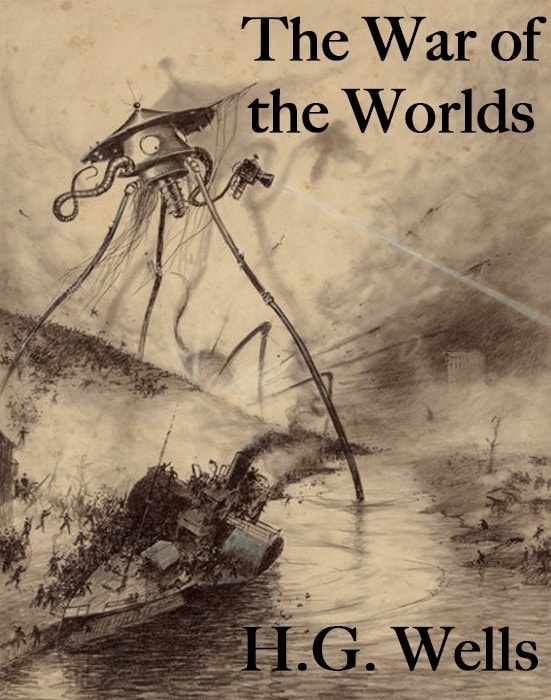
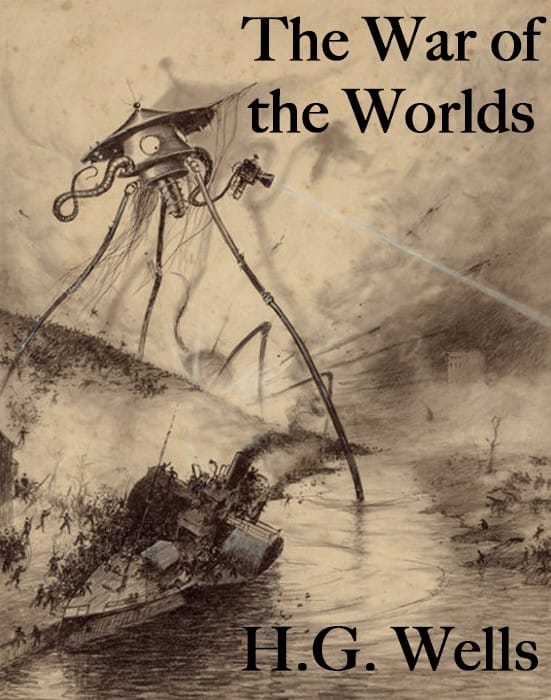
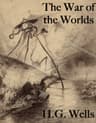
Imagine watching the sky fall, and what falls from it isn't a meteor but the end of your world. This is the vertigo H.G. Wells creates in The War of the Worlds: a first-person account of the Martian invasion seen from the ground in Surrey and Essex, where an unnamed narrator and his brother watch civilization crumble. The Martians arrive in cylinders, emerge in their three-legged fighting machines, and unleash heat-rays and black smoke that turn English towns to ash. What makes this 1898 novel still pulse is its terror not from monsters, but from the sickening realization that we are not the apex of creation. Wells wrote this as commentary on British imperialism, imagining how it would feel to be the colonized rather than the colonizer, and the result is a meditation on evolutionary vulnerability that feels startlingly contemporary. The narrator survives by luck, by hiding, by fleeing, witnessing both the worst of human panic and the strange resilience that keeps us breathing even when hope is gone. The Martians are not defeated by human ingenuity but by something entirely beyond our control, and that twist has haunted readers for over a century. This is where science fiction became a literature of cosmic dread.
Editions


X-Ray
“No one would have believed in the last years of the nineteenth century that this world was being watched keenly and closely by intelligences greater than man's and yet as mortal as his own; that as men busied themselves about their various concerns they were scrutinised and studied, perhaps almost as narrowly as a man with a microscope might scrutinise the transient creatures that swarm and multiply in a drop of water.”
— H. G. Wells
“Be a man!... What good is religion if it collapses under calamity? Think of what earthquakes and floods, wars and volcanoes, have done before to men! Did you think that God had exempted [us]? He is not an insurance agent.”
— H. G. Wells
“This isn't a war," said the artilleryman. "It never was a war, any more than there's war between man and ants.”
— H. G. Wells
Link to this book
Add a free, dofollow link to Lex on your blog, forum, syllabus, or reading list.

<a href="https://lex-books.com/book/the-war-of-the-worlds-a2289e78-8bd6-4067-8c80-fd8c1225ea97"><img src="https://lex-books.com/badges/read-on-lex.svg" alt="Read The War of the Worlds by H. G. Wells free on Lex" width="160" height="40"></a>[](https://lex-books.com/book/the-war-of-the-worlds-a2289e78-8bd6-4067-8c80-fd8c1225ea97)[url=https://lex-books.com/book/the-war-of-the-worlds-a2289e78-8bd6-4067-8c80-fd8c1225ea97][img]https://lex-books.com/badges/read-on-lex.svg[/img][/url]Read The War of the Worlds by H. G. Wells free on Lex: https://lex-books.com/book/the-war-of-the-worlds-a2289e78-8bd6-4067-8c80-fd8c1225ea97Cite this book
Reading this edition for a paper or guide? Copy a citation.
Wells, H. G.. The War of the Worlds. Lex, lex-books.com/book/the-war-of-the-worlds-a2289e78-8bd6-4067-8c80-fd8c1225ea97.Wells, H. G. (1898). The War of the Worlds. Lex. https://lex-books.com/book/the-war-of-the-worlds-a2289e78-8bd6-4067-8c80-fd8c1225ea97Wells, H. G.. The War of the Worlds. Lex. https://lex-books.com/book/the-war-of-the-worlds-a2289e78-8bd6-4067-8c80-fd8c1225ea97.