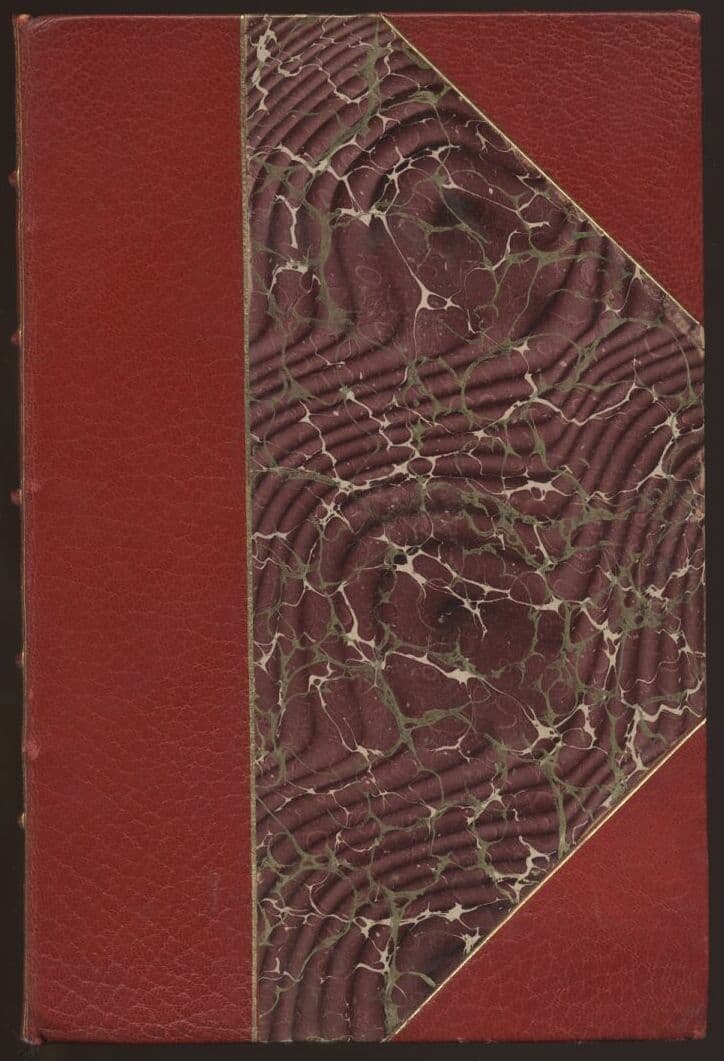
The First Men in the Moon
1901
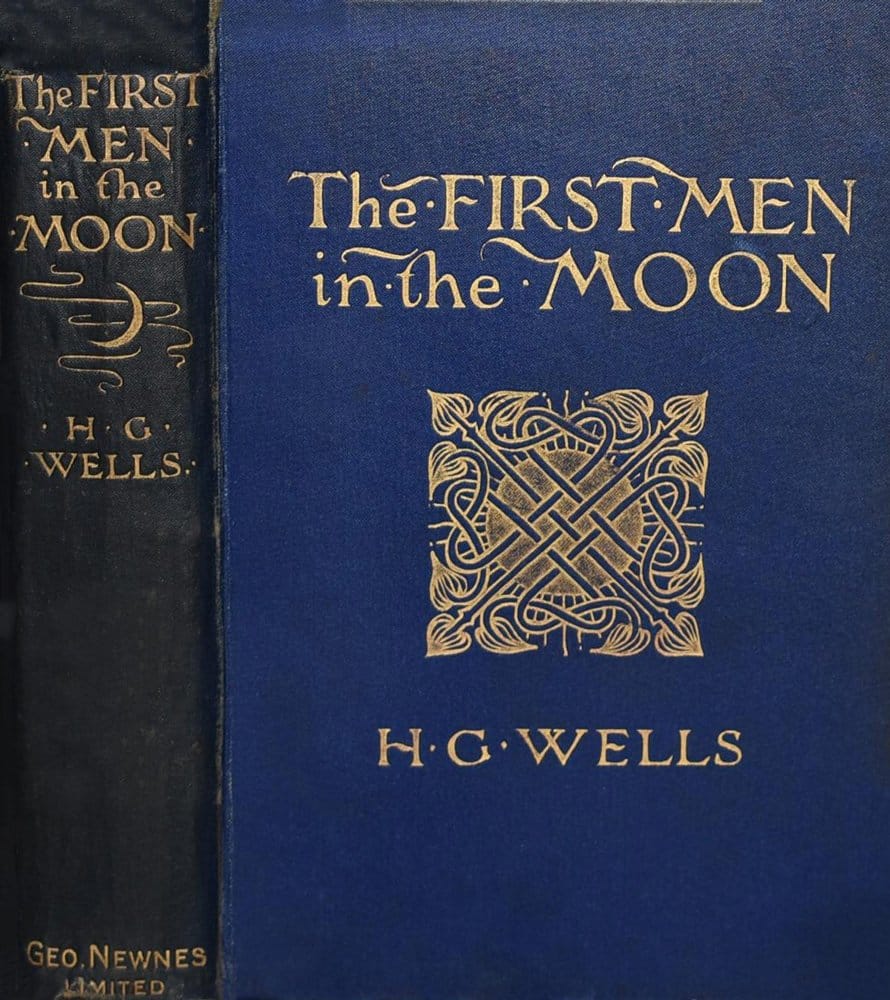
Two unlikely companions board a handcrafted sphere and fly to the Moon, expecting to return wealthy. What they find is a civilization that makes Earth's industrial madness look quaint: the Selenites, insect-like beings who have hollowed out their lunar world into a perfectly ordered hierarchy where every individual is born into a caste, a purpose, a life scripted from birth. H.G. Wells wrote this in 1901, and he wrote it as a mirror held up to Victorian England, not to praise the machinery of progress, but to show what happens when human beings become cogs in their own design. Bedford wants profit; Cavor wants knowledge. Their competing ambitions might destroy them before the Moon itself does. This is science fiction in its most ambitious form: a adventure story that doubles as a ruthless satirical pamphlet about class, specialisation, and the cost of treating people as instruments. The prose hums with the electricity of a writer who believed fiction could change how you see the world.
Editions

X-Ray
“So utterly at variance is Destiny with all the little plans of men.””
— H. G. Wells
“What is this spirit in man that urges him forever to depart from happiness and security, to toil, to place himself in danger, even to risk a reasonable certainty of death? It dawned upon me up there in the moon as a thing I ought always to have known, that man is not made simply to go about being safe and comfortable and well fed and amused. Against his interest, against his happiness he is constantly being driven to do unreasonable things. Some force not himself impels him and go he must.””
— H. G. Wells
“One can't always be magnificent, but simplicity is always a possible alternative.””
— H. G. Wells
“Over me, about me, closing in on me, embracing me ever nearer, was the Eternal, that which was before the beginning and that which triumphs over the end; that enormous void in which all light and life and being is but the thin and vanishing splendour of a falling star, the cold, the stillness, the silence, - the infinite and final Night of space.””
— H. G. Wells
“Sooner or later it must come out, even if other men rediscover it. And then...Governments and powers will struggle to get hither, they will fight against one another and against these moon people. It will only spread warfare and multiply the occasions of war. In a little while, in a very little while if I tell my secret, this planet to it's deepest galleries will be strewn with human dead. Other things are doubtful, but this is certain...It is not as though man had any use for the moon. What good would the moon be to men? Even of their own planet what have they made but a battleground and theatre of infinite folly? Small as his world is, and short as his time, he has still in his little life down there far more than he can do. No! Science has toiled too long forging weapons for fools to use. It is time she held her hand. Let him find it out for himself again-in a thousand years' time.””
— H. G. Wells
“What good would the moon be to men? Even of their own planet what have they made but a battleground and theatre of infinite folly? Small as his world is, and short as his time, he has still in his little life down there far more than he can do.””
— H. G. Wells
“He sighed and looked about him. 'This is no world for men,' he said. 'And yet in a way...it appeals.””
— H. G. Wells
“He showed it to me with all the confiding zest of a man who has been living too much alone. This seclusion was overflowing now in an excess of confidence, and I had the good luck to be the recipient.””
— H. G. Wells
“It's this accursed science.... It's the very Devil. The medieval priests and persecutors were right and the Moderns are all wrong. You tamper with it--and it offers you gifts. And directly you take them it knocks you to pieces in some unexpected way. Old passions and new weapons--now it upsets your religion, now it upsets your social ideas, now it whirls you off to desolation and misery!””
— H. G. Wells
Link to this book
Add a free, dofollow link to Lex on your blog, forum, syllabus, or reading list.

<a href="https://lex-books.com/book/the-first-men-in-the-moon-6716a84f-94df-4531-8436-4d2e354d32c4"><img src="https://lex-books.com/badges/read-on-lex.svg" alt="Read The First Men in the Moon by H. G. Wells free on Lex" width="160" height="40"></a>[](https://lex-books.com/book/the-first-men-in-the-moon-6716a84f-94df-4531-8436-4d2e354d32c4)[url=https://lex-books.com/book/the-first-men-in-the-moon-6716a84f-94df-4531-8436-4d2e354d32c4][img]https://lex-books.com/badges/read-on-lex.svg[/img][/url]Read The First Men in the Moon by H. G. Wells free on Lex: https://lex-books.com/book/the-first-men-in-the-moon-6716a84f-94df-4531-8436-4d2e354d32c4Cite this book
Reading this edition for a paper or guide? Copy a citation.
Wells, H. G.. The First Men in the Moon. Lex, lex-books.com/book/the-first-men-in-the-moon-6716a84f-94df-4531-8436-4d2e354d32c4.Wells, H. G. (1901). The First Men in the Moon. Lex. https://lex-books.com/book/the-first-men-in-the-moon-6716a84f-94df-4531-8436-4d2e354d32c4Wells, H. G.. The First Men in the Moon. Lex. https://lex-books.com/book/the-first-men-in-the-moon-6716a84f-94df-4531-8436-4d2e354d32c4.