In the Days of the Comet
1906
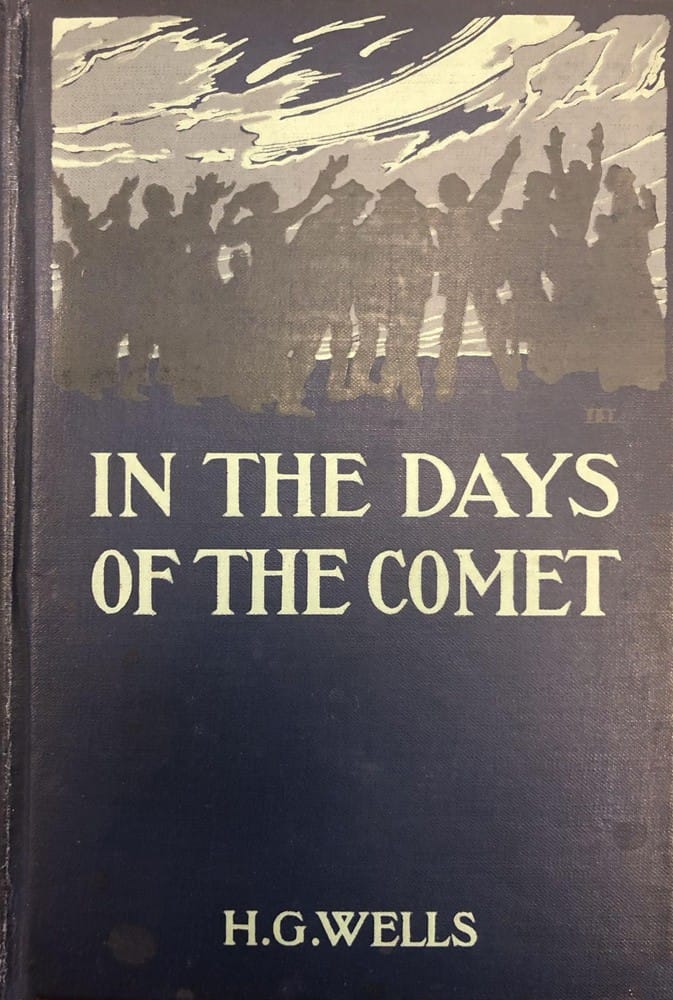
A gray-haired man watches the horizon, remembering the day everything changed. Before the comet, he was Willie Leadford, trapped in a dead-end job and a doomed romance with Nettie Stuart. Then the celestial visitor passed overhead, and the nitrogen in Earth's atmosphere transformed into something new: a gas that healed rather than harmed, that made violence feel as unnatural as breathing water. The great Change came, and with it, humanity's baser impulses simply... evaporated. Wells imagined something strange and beautiful here - not the alien invasion or dystopian future that made him famous, but a genuine utopia. The world's old cruelties become incomprehensible to the transformed humans who now inhabit it. Yet the novel's heart lies in the narrator's personal grief: he lost Nettie before the Change, chose poorly in his youth, and now must live forever in a world where his regrets are no longer necessary but also no longer erasable. It's a bittersweet meditation on whether humanity deserves salvation, and what we'd do with it if we got it.
Editions
Link to this book
Add a free, dofollow link to Lex on your blog, forum, syllabus, or reading list.

<a href="https://lex-books.com/book/in-the-days-of-the-comet-228fcfbe-e660-48db-b481-f9e84e7b2ca5"><img src="https://lex-books.com/badges/read-on-lex.svg" alt="Read In the Days of the Comet by H. G. Wells free on Lex" width="160" height="40"></a>[](https://lex-books.com/book/in-the-days-of-the-comet-228fcfbe-e660-48db-b481-f9e84e7b2ca5)[url=https://lex-books.com/book/in-the-days-of-the-comet-228fcfbe-e660-48db-b481-f9e84e7b2ca5][img]https://lex-books.com/badges/read-on-lex.svg[/img][/url]Read In the Days of the Comet by H. G. Wells free on Lex: https://lex-books.com/book/in-the-days-of-the-comet-228fcfbe-e660-48db-b481-f9e84e7b2ca5Cite this book
Reading this edition for a paper or guide? Copy a citation.
Wells, H. G.. In the Days of the Comet. Lex, lex-books.com/book/in-the-days-of-the-comet-228fcfbe-e660-48db-b481-f9e84e7b2ca5.Wells, H. G. (1906). In the Days of the Comet. Lex. https://lex-books.com/book/in-the-days-of-the-comet-228fcfbe-e660-48db-b481-f9e84e7b2ca5Wells, H. G.. In the Days of the Comet. Lex. https://lex-books.com/book/in-the-days-of-the-comet-228fcfbe-e660-48db-b481-f9e84e7b2ca5.