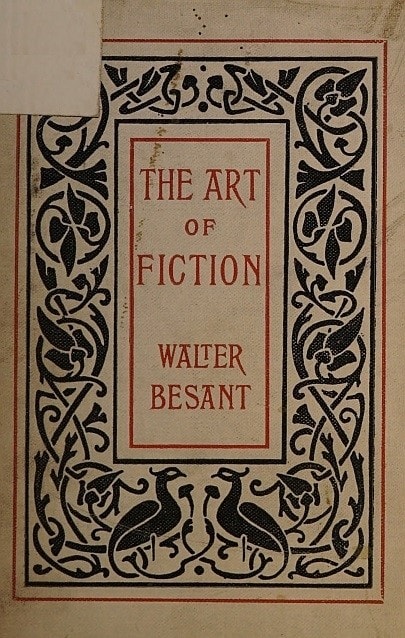
The Art of Fiction
1884
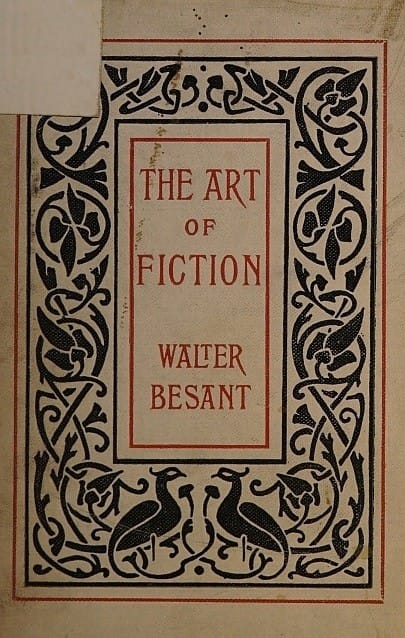
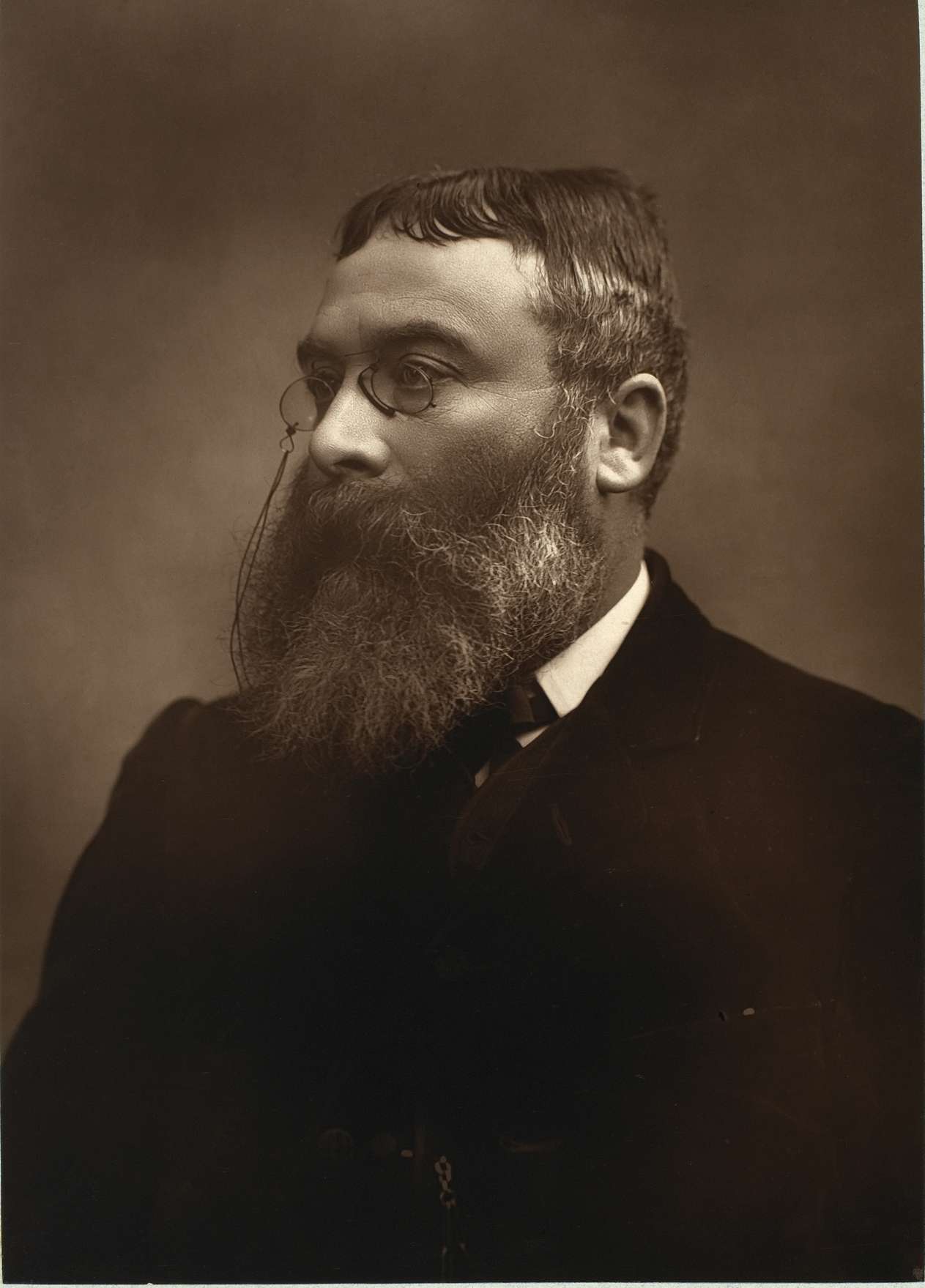
The Art of Fiction, published in 1884 by Walter Besant, is a lecture-essay that explores the craft of novel-writing and literary criticism during the Victorian era. Besant argues that fiction is a fine art comparable to painting and music, emphasizing that it is governed by learnable laws while also requiring innate talent. The work outlines practical rules for writers, including the importance of human interest and character development, and offers guidance for aspiring authors on revising their work and navigating the publishing world.
Editions
X-Ray
“Try to be one of those on whom nothing is lost.””
— Walter Besant
“What is character but the determination of incident? What is incident but the illustration of character?””
— Walter Besant
“Nothing, of course, will ever take the place of the good old fashion of 'liking' a work of art or not liking it; the more improved criticism will not abolish that primitive, that ultimate, test.””
— Walter Besant
“The power to guess the unseen from the seen, to trace the implication of things, to judge the whole piece by the pattern, the condition of feeling life, in general, so completely that you are well on your way to knowing any particular corner of it-this cluster of gifts may almost be said to constitute experience, and they occur in country and in town, and in the most differing stages of education.””
— Walter Besant
“Art lives upon discussion, upon experiment, upon curiosity, upon variety of attempt, upon the exchange of views and the comparison of standpoints.””
— Walter Besant
“A novel is in its broadest definition a personal, a direct impression of life: that, to begin with, constitutes its value, which is greater or less according to the intensity of the impression””
— Walter Besant
“It is as difficult to suppose a person intending to write a modern English, as to suppose him writing an ancient English, novel; that is a label which begs the question. One writes the novel, one paints the picture, of one's language and of one's time, and calling it modern English will not, alas! make the difficult task any easier.””
— Walter Besant
“The old superstition about fiction being 'wicked' has doubtless died out in England; but the spirit of it lingers in a certain oblique regard directed toward any story which does not more or less admit that it is only a joke. Even the most jocular novel feels in some degree the weight of the proscription that was formerly directed against literary levity; the jocularity does not always succeed in passing for gravity. It is still expected, though perhaps people are ashamed to say it, that a production which is after all only a 'make believe' (for what else is a 'story'?) shall be in some degree apologetic-shall renounce the pretension of attempting really to compete with life. This, of course, any sensible wide-awake story declines to do, for it quickly perceives that the tolerance granted to it on such a condition is only an attempt to stifle it, disguised in the form of generosity. ””
— Walter Besant
“The Art of Fiction requires first of all the power of description, truth, and fidelity, observation, selection, clearness of conception and of outline, dramatic grouping, directness of purpose, a profound belief on the part of the story-teller in the reality of his story, and beauty of workmanship. It is, moreover, an Art which requires of those who follow it seriously that they must be unceasingly occupied in studying the ways of mankind, the social laws, the religions, philosophies, tendencies, thoughts, prejudices, superstitions of men and women. They must consider as many of the forces which act upon classes and upon individuals as they can discover; they should be always trying to put themselves into the place of another; they must be as inquisitive and as watchful as a detective, as suspicious as a criminal lawyer, as eager for knowledge as a physicist, and withal fully possessed of that spirit to which nothing appears mean, nothing contemptible, nothing unworthy of study, which belongs to human nature.””
— Walter Besant
Link to this book
Add a free, dofollow link to Lex on your blog, forum, syllabus, or reading list.

<a href="https://lex-books.com/book/the-art-of-fiction-944bf723-1f0b-44cd-800e-9b1304df3ea1"><img src="https://lex-books.com/badges/read-on-lex.svg" alt="Read The Art of Fiction by Walter Besant free on Lex" width="160" height="40"></a>[](https://lex-books.com/book/the-art-of-fiction-944bf723-1f0b-44cd-800e-9b1304df3ea1)[url=https://lex-books.com/book/the-art-of-fiction-944bf723-1f0b-44cd-800e-9b1304df3ea1][img]https://lex-books.com/badges/read-on-lex.svg[/img][/url]Read The Art of Fiction by Walter Besant free on Lex: https://lex-books.com/book/the-art-of-fiction-944bf723-1f0b-44cd-800e-9b1304df3ea1Cite this book
Reading this edition for a paper or guide? Copy a citation.
Besant, Walter. The Art of Fiction. Lex, lex-books.com/book/the-art-of-fiction-944bf723-1f0b-44cd-800e-9b1304df3ea1.Besant, W. (1884). The Art of Fiction. Lex. https://lex-books.com/book/the-art-of-fiction-944bf723-1f0b-44cd-800e-9b1304df3ea1Besant, Walter. The Art of Fiction. Lex. https://lex-books.com/book/the-art-of-fiction-944bf723-1f0b-44cd-800e-9b1304df3ea1.