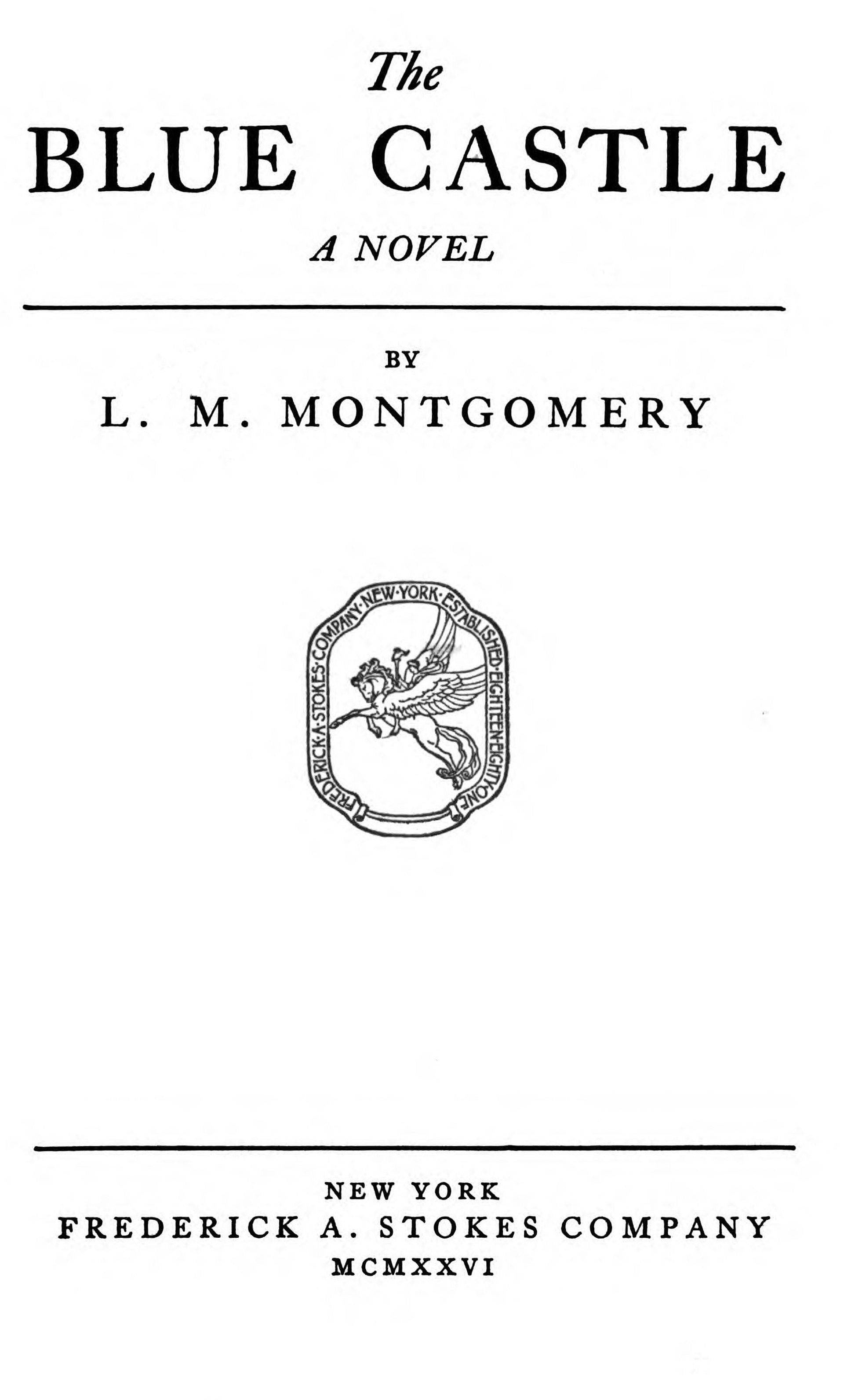
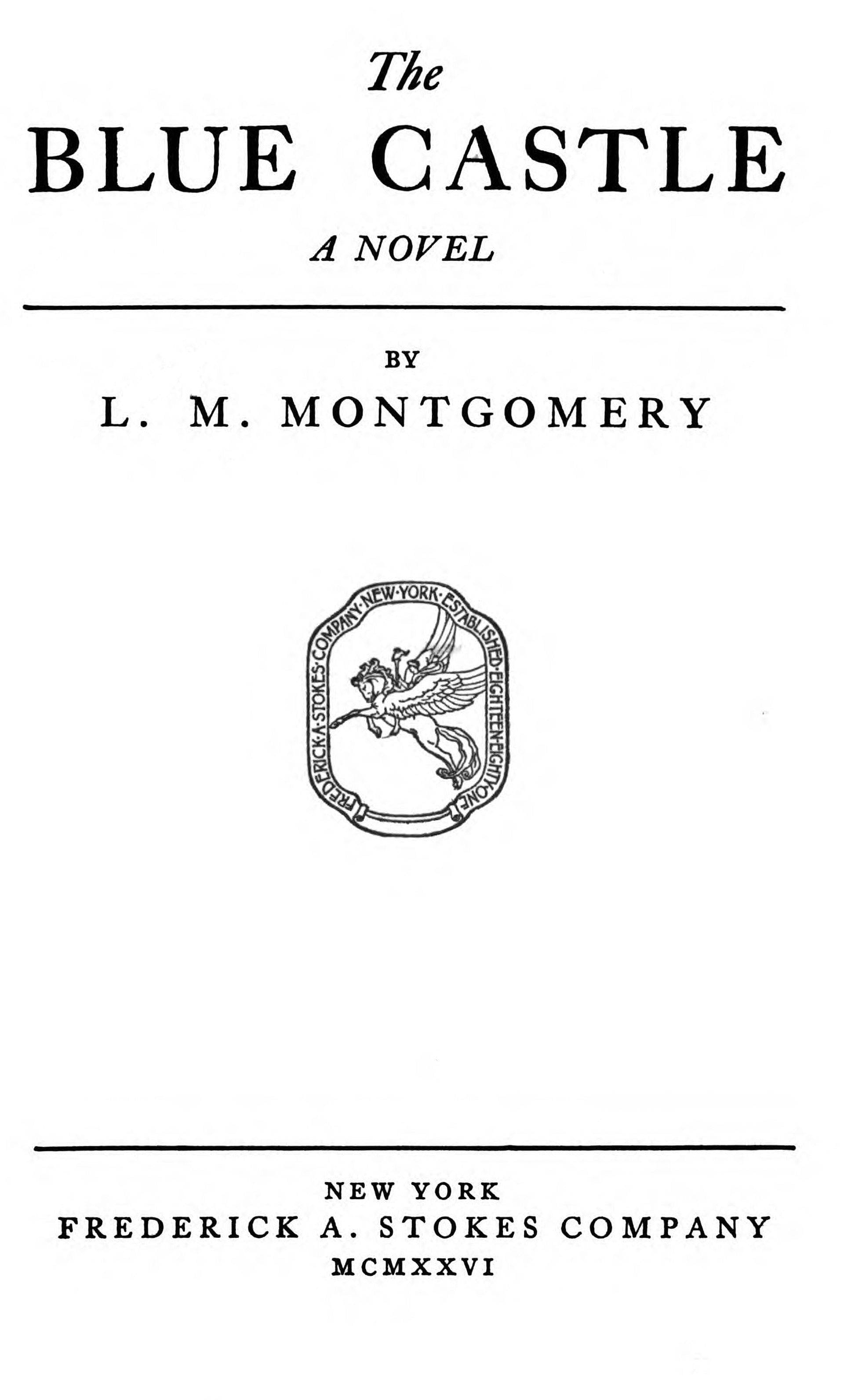
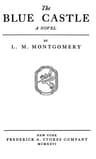
The Blue Castle: A Novel
1926
At twenty-nine, Valancy Stirling has spent her entire life being quietly erased by her domineering family, dismissed as a hopeless old maid whose only escape is a private fantasy: a shimmering Blue Castle somewhere beyond the reach of her suffocating relatives. Then a devastating diagnosis gives her an unexpected gift: the certainty of imminent death. With nothing left to lose, Valancy finally speaks her mind, defies her family, and marries a man she barely knows. But here is the novel's beautiful twist: the life she claims in defiance turns out to be exactly the one she was meant to live. L.M. Montgomery, best known for Anne of Green Gables, wrote this adult fairy tale with the same lyrical tenderness but sharpened by a mature understanding of how societies grind down unmarried women. The prose hums with quiet humor and deep feeling as Valancy discovers that courage was within her all along, and that the Blue Castle was never a fantasy at all, but a map. This is a book about the radical act of choosing yourself, told with the kind of grace that makes you believe transformaton is possible.
Editions

X-Ray
“If you can sit in silence with a person for half an hour and yet be entirely comfortable, you and that person can be friends. If you cannot, friends you'll never be and you need not waste time in trying.””
— L. M. Montgomery
“Fear is the original sin. Almost all of the evil in the world has its origin in the fact that some one is afraid of something.It is a cold slimy serpent coiling about you. It is horrible to live with fear; and it is of all things degrading.””
— L. M. Montgomery
“Isn't it better to have your heart broken than to have it wither up? Before it could be broken it must have felt something splendid. That would be worth the pain.””
— L. M. Montgomery
“It was three o'clock in the morning – the wisest and most accursed hour of the clock. But sometimes it sets us free.””
— L. M. Montgomery
“That's all the freedom we can hope for - the freedom to choose our prison.””
— L. M. Montgomery
“Love you! Girl, you're in the very core of my heart. I hold you there like a jewel. Didn't I promise you I'd never tell you a lie? Love you! I love you with all there is of me to love. Heart, soul, brain. Every fibre of body and spirit thrilling to the sweetness of you. There's nobody in the world for me but you, Valancy.””
— L. M. Montgomery
“Rebellion flamed up in her soul as the dark hours passed by – not because she had no future but because she had no past.””
— L. M. Montgomery
“We don't know where we're going, but isn't is fun to go?””
— L. M. Montgomery
“Just to love! She did not ask to be loved. It was rapture enough just to sit there beside him in silence, alone in the summer night in the white splendor of moonshine, with the wind blowing down on them out of the pine woods.””
— L. M. Montgomery
About The Blue Castle: A Novel
Chapter Summaries
- 1
- On her 29th birthday, Valancy Stirling awakens to the reality of her unfulfilled life as an unmarried woman in a society that views spinsters as failures. She reflects on her oppressive family and dreams of her imaginary Blue Castle.
- 2
- Valancy follows her rigid morning routine, examining herself critically in the mirror and feeling the weight of her family's expectations and her own perceived inadequacies.
- 3
- During a typical oppressive breakfast, Valancy secretly reads John Foster's nature writing, which provides her with glimpses of a different world and way of thinking.
Key Themes
- Freedom vs. Conformity
- The novel explores the tension between individual freedom and social expectations. Valancy's transformation from a repressed spinster to an independent woman illustrates the cost of conformity and the liberation that comes from rejecting societal constraints.
- Fear as Life's Prison
- John Foster's philosophy that 'fear is the original sin' becomes central to Valancy's journey. The novel shows how fear of judgment, poverty, and social ostracism can imprison the soul and prevent authentic living.
- The Power of Love and Compassion
- Through her care for Cissy Gay and her love for Barney, Valancy discovers that giving and receiving love transforms both giver and receiver. Love becomes the antidote to a meaningless existence.
Characters
- Valancy Stirling(protagonist)
- A 29-year-old unmarried woman who has lived a repressed life under her domineering family. After receiving a terminal heart diagnosis, she rebels against her family's expectations and finds freedom and love.
- Barney Snaith(major)
- A mysterious man living on an island in Muskoka, rumored to be a criminal but actually kind-hearted. He becomes Valancy's love interest and represents freedom from social conventions.
- Mrs. Frederick Stirling(antagonist)
- Valancy's controlling mother who has dominated her daughter's life through fear and manipulation. She represents the oppressive social expectations Valancy must overcome.
- Cissy Gay(major)
- A dying young woman who was ostracized by society after having an illegitimate child. Valancy becomes her companion and caregiver, finding purpose in helping her.
- Roaring Abel Gay(major)
- Cissy's father, a colorful, hard-drinking carpenter who becomes Valancy's employer. Despite his rough exterior, he's fundamentally decent and protective of Valancy.
- Cousin Stickles(minor)
- Christine Stickles, a spinster relative who lives with the Stirlings and helps maintain the oppressive household atmosphere.
Link to this book
Add a free, dofollow link to Lex on your blog, forum, syllabus, or reading list.

<a href="https://lex-books.com/book/the-blue-castle-a-novel-8f89f7a9-a037-4d27-beac-bff9d902cb77"><img src="https://lex-books.com/badges/read-on-lex.svg" alt="Read The Blue Castle: A Novel by L. M. Montgomery free on Lex" width="160" height="40"></a>[](https://lex-books.com/book/the-blue-castle-a-novel-8f89f7a9-a037-4d27-beac-bff9d902cb77)[url=https://lex-books.com/book/the-blue-castle-a-novel-8f89f7a9-a037-4d27-beac-bff9d902cb77][img]https://lex-books.com/badges/read-on-lex.svg[/img][/url]Read The Blue Castle: A Novel by L. M. Montgomery free on Lex: https://lex-books.com/book/the-blue-castle-a-novel-8f89f7a9-a037-4d27-beac-bff9d902cb77Cite this book
Reading this edition for a paper or guide? Copy a citation.
Montgomery, L. M.. The Blue Castle: A Novel. Lex, lex-books.com/book/the-blue-castle-a-novel-8f89f7a9-a037-4d27-beac-bff9d902cb77.Montgomery, L. M. (1926). The Blue Castle: A Novel. Lex. https://lex-books.com/book/the-blue-castle-a-novel-8f89f7a9-a037-4d27-beac-bff9d902cb77Montgomery, L. M.. The Blue Castle: A Novel. Lex. https://lex-books.com/book/the-blue-castle-a-novel-8f89f7a9-a037-4d27-beac-bff9d902cb77.