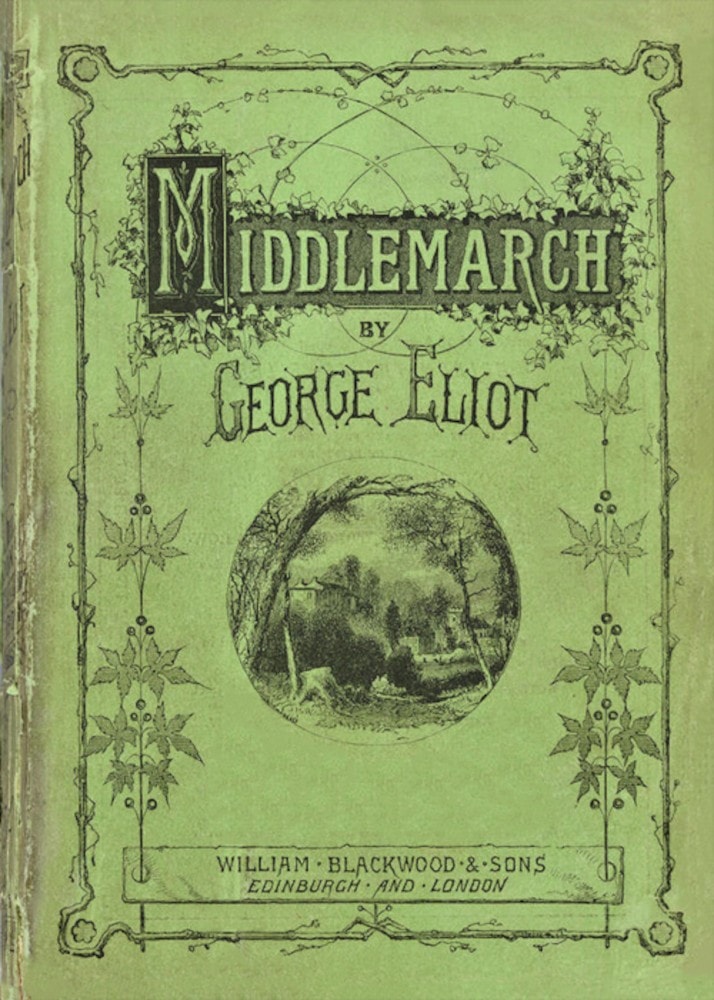
Middlemarch
1871
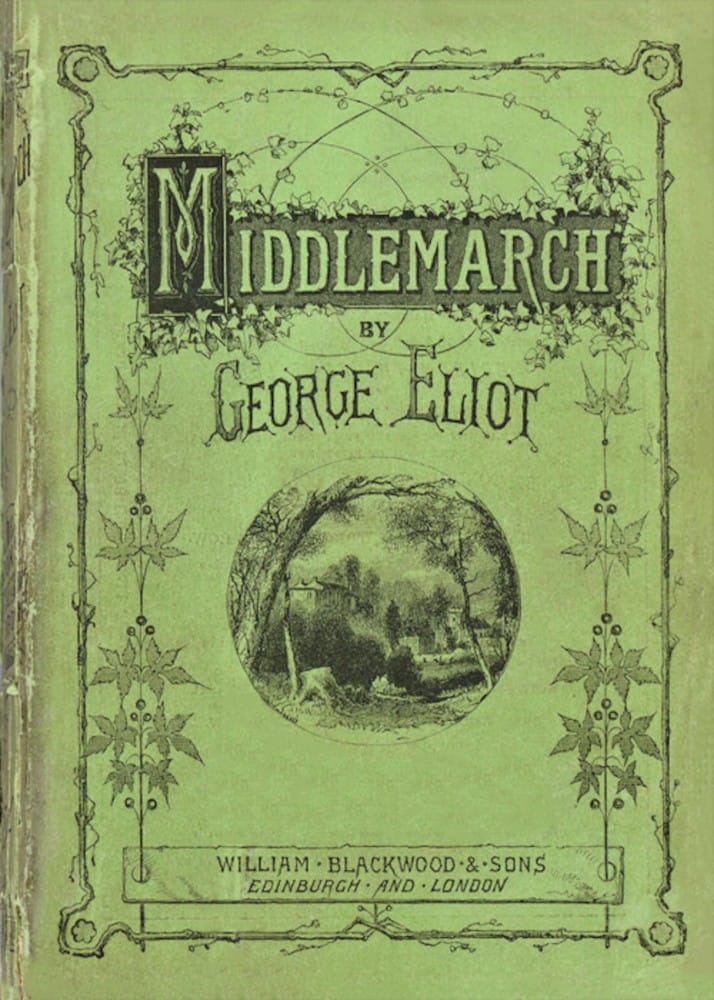
Middlemarch is a panoramic portrait of a provincial English town whose inhabitants dream big and pay the price for it. At its heart is Dorothea Brooke, a fiercely intelligent young woman whose hunger for meaning leads her into a marriage with the aging scholar Casaubon, a union that traps her noble aspirations in a prison of disappointment. Meanwhile, the ambitious Dr. Lydgate arrives with plans to revolutionize medicine, only to find his ideals undermined by a community resistant to change and a beautiful wife whose charm conceals a hollow vanity. These stories intertwine with those of merchants, politicians, and clergymen, each negotiating the gap between who they wish to be and who circumstance allows them to become. George Eliot writes with ruthless compassion about the small tragedies of ordinary lives, the ways good intentions curdle into self-deception, and how revolutions in the soul happen quietly, without anyone noticing. It is a novel for readers who understand that the most profound human dramas unfold not on battlefields but in sitting rooms, where people struggle to be better than their circumstances permit.
Editions




X-Ray
“It is a narrow mind which cannot look at a subject from various points of view.””
— George Eliot
“But the effect of her being on those around her was incalculably diffusive: for the growing good of the world is partly dependent on unhistoric acts; and that things are not so ill with you and me as they might have been, is half owing to the number who lived faithfully a hidden life, and rest in unvisited tombs.””
— George Eliot
“It is always fatal to have music or poetry interrupted.””
— George Eliot
“If we had a keen vision and feeling of all ordinary human life, it would be like hearing the grass grow and the squirrel's heart beat, and we should die of that roar which lies on the other side of silence.””
— George Eliot
“And, of course men know best about everything, except what women know better.””
— George Eliot
“We mortals, men and women, devour many a disappointment between breakfast and dinner-time; keep back the tears and look a little pale about the lips, and in answer to inquiries say, "Oh, nothing!" Pride helps; and pride is not a bad thing when it only urges us to hide our hurts”
— George Eliot
“..for the growing good of the world is partly dependent on unhistoric acts; and that things are not so ill with you and me as they might have been, is half owing to the number who lived faithfully a hidden life, and rest in unvisited tombs.””
— George Eliot
“What loneliness is more lonely than distrust?””
— George Eliot
“But what we call our despair is often only the painful eagerness of unfed hope.””
— George Eliot
About Middlemarch
Chapter Summaries
- Prelude
- Eliot introduces the theme of unfulfilled female potential through the example of Saint Theresa, suggesting that many women with great aspirations find no outlet for their spiritual and intellectual energy in modern society. This sets up Dorothea as a latter-day Theresa seeking her epic life.
- 1
- Introduction to Dorothea and Celia Brooke, establishing Dorothea's unconventional beauty, religious intensity, and idealistic nature. The sisters divide their mother's jewelry, revealing their different temperaments and Dorothea's conflicted relationship with worldly pleasures.
- 2
- At dinner, Dorothea meets Mr. Casaubon and is immediately impressed by his learning and serious purpose. Sir James Chettam courts Dorothea, but she is more interested in Casaubon's intellectual conversation about his great work on mythology.
Key Themes
- Marriage and Gender Roles
- Eliot explores the limited options available to women and how marriage can either fulfill or destroy individual potential. Dorothea's choice of Casaubon over Sir James illustrates the conflict between romantic idealism and practical considerations.
- Idealism vs. Reality
- The novel examines how noble aspirations often clash with mundane realities. Dorothea's desire to contribute to great works is thwarted by social constraints and her own naivety about human nature.
- Social Change and Reform
- Set during a period of social transformation, the novel explores various reform movements from medical innovation to political change. Characters like Lydgate represent the new professional class challenging old ways.
Characters
- Dorothea Brooke(protagonist)
- A passionate, idealistic young woman of nineteen with strong religious convictions and a desire to do good in the world. She is intelligent but naive, seeking a marriage that will allow her to contribute to great works and learn from a superior mind.
- Celia Brooke(major)
- Dorothea's younger sister, described as having more common sense and being more conventional. She is pretty, practical, and serves as a foil to Dorothea's intensity and idealism.
- Edward Casaubon(major)
- A middle-aged scholar and clergyman working on 'The Key to all Mythologies.' He is learned but pedantic, physically unappealing, and emotionally cold. Despite his scholarly reputation, he represents intellectual sterility.
- Mr. Brooke(major)
- Uncle and guardian to Dorothea and Celia, a well-meaning but ineffectual gentleman with scattered interests and opinions. He is indecisive and tends to take up causes without following through.
- Sir James Chettam(major)
- A young, handsome baronet who initially courts Dorothea but is rejected. He is kind-hearted, conventional, and genuinely cares for the Brooke sisters' welfare, later transferring his affections to Celia.
- Mrs. Cadwallader(major)
- The sharp-tongued wife of the local rector, a woman of high birth but modest means. She serves as a social commentator and matchmaker, with strong opinions about suitable marriages and social propriety.
Link to this book
Add a free, dofollow link to Lex on your blog, forum, syllabus, or reading list.

<a href="https://lex-books.com/book/middlemarch-f67bd18c-fb81-4a5a-9d0f-730217860a77"><img src="https://lex-books.com/badges/read-on-lex.svg" alt="Read Middlemarch by George Eliot free on Lex" width="160" height="40"></a>[](https://lex-books.com/book/middlemarch-f67bd18c-fb81-4a5a-9d0f-730217860a77)[url=https://lex-books.com/book/middlemarch-f67bd18c-fb81-4a5a-9d0f-730217860a77][img]https://lex-books.com/badges/read-on-lex.svg[/img][/url]Read Middlemarch by George Eliot free on Lex: https://lex-books.com/book/middlemarch-f67bd18c-fb81-4a5a-9d0f-730217860a77Cite this book
Reading this edition for a paper or guide? Copy a citation.
Eliot, George. Middlemarch. Lex, lex-books.com/book/middlemarch-f67bd18c-fb81-4a5a-9d0f-730217860a77.Eliot, G. (1871). Middlemarch. Lex. https://lex-books.com/book/middlemarch-f67bd18c-fb81-4a5a-9d0f-730217860a77Eliot, George. Middlemarch. Lex. https://lex-books.com/book/middlemarch-f67bd18c-fb81-4a5a-9d0f-730217860a77.