The Obstacle Is the Way (Comprehensive Summary)
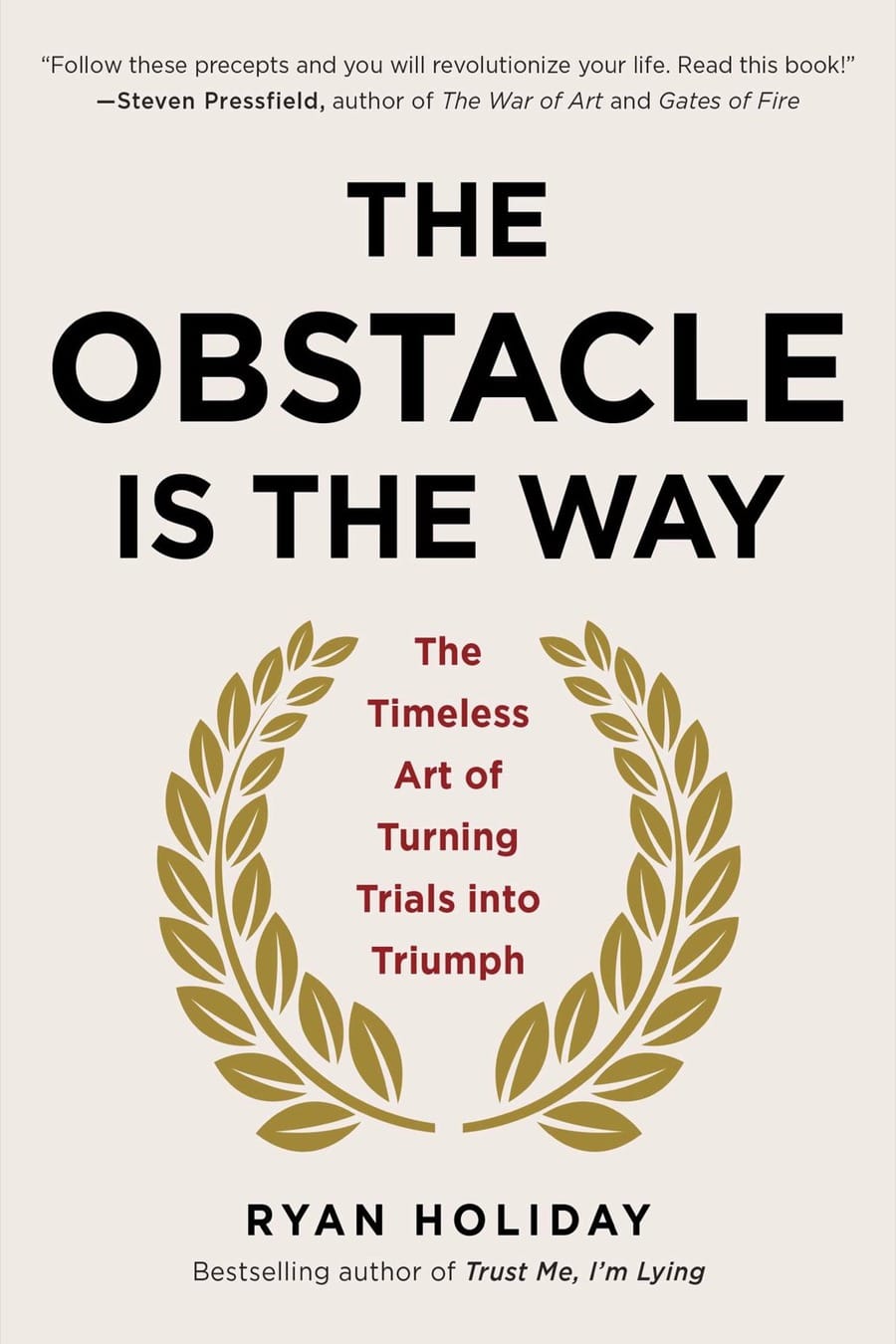
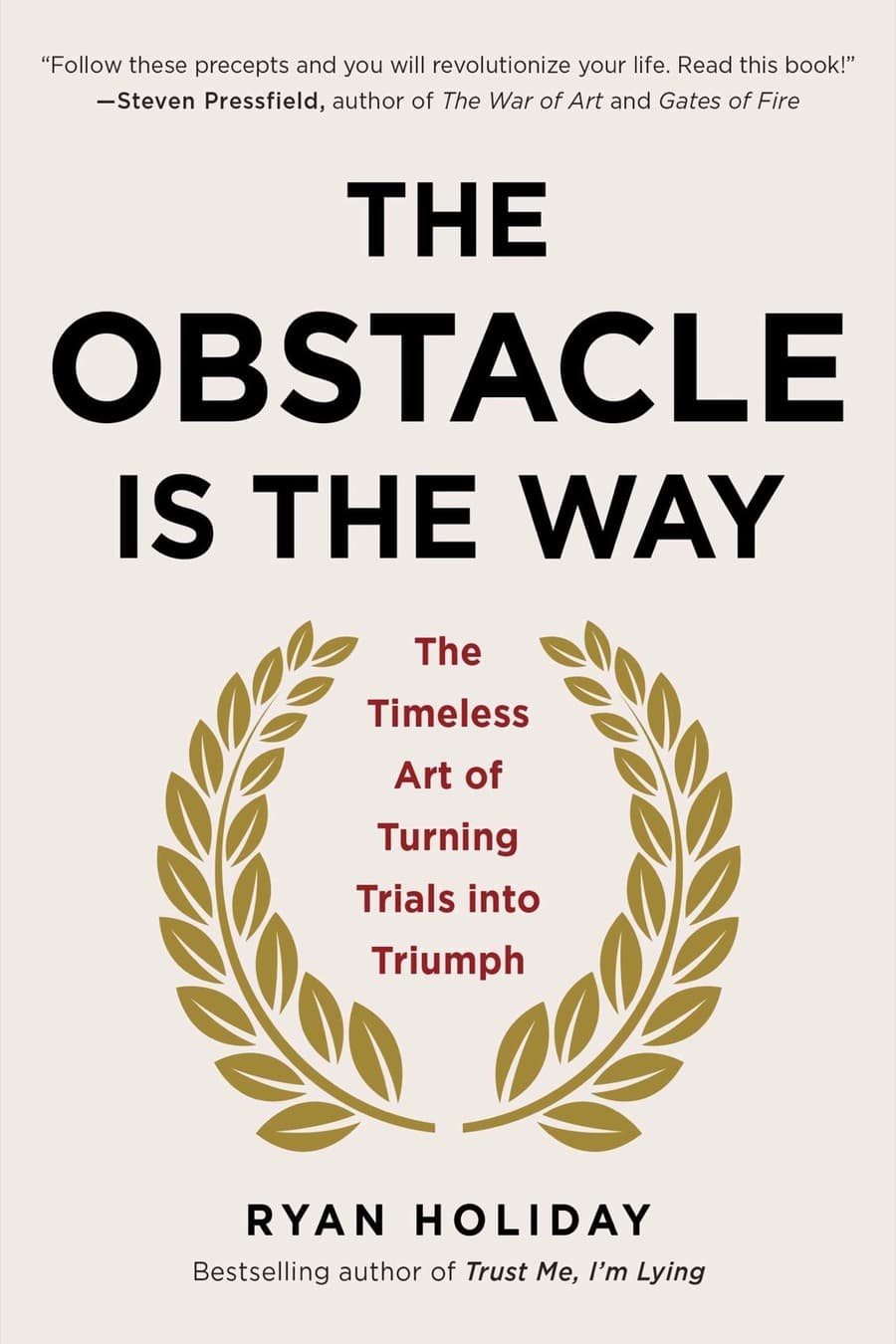
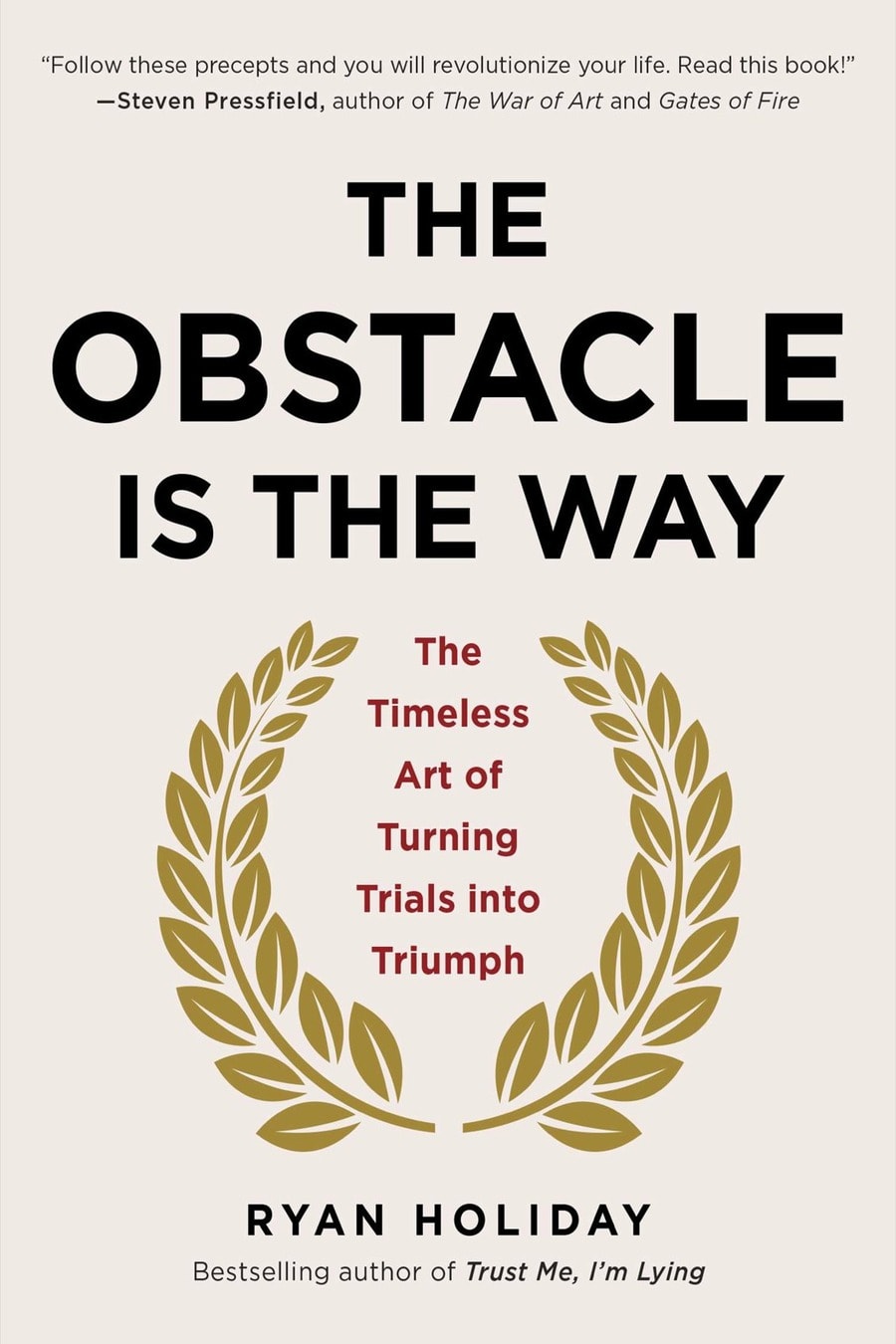
The Obstacle Is the Way by Ryan Holiday. This Lexicon distills the book's key arguments, evidence, and conclusions into a concise original work.
Editions

X-Ray
The last of Rome's Five Good Emperors and author of the Meditations, Marcus Aurelius serves as the book's philosophical anchor. His ability to maintain Stoic composure during war, personal loss, and political betrayal — including the rebellion of Avidius Cassius — exemplifies the book's central thesis that obstacles become the way.
The American oil magnate whose calm, observational response to the Panic of 1857 is used as the primary case study for disciplined perception. Rockefeller's ability to learn from others' panic rather than succumb to it enabled him to eventually control 90 percent of the oil market.
The sixteenth U.S. president, whose lifelong battle with depression and a series of personal and political failures forged the resilience and compassion that defined his Civil War leadership. Holiday uses Lincoln as the central example of the Discipline of the Will.
The American inventor whose iterative approach to failure — treating each unsuccessful experiment as a lesson rather than a defeat — is cited repeatedly as a model of reframed perception, persistence, and amor fati. His response to a catastrophic laboratory fire exemplifies the love of fate.
About The Obstacle Is the Way (Comprehensive Summary)
Chapter Summaries
- Preface
- Holiday introduces Marcus Aurelius as the philosophical anchor of the book, situating him during a period of war and personal strife. He highlights the central Stoic phrase 'The impediment to action advances action,' which frames the book's core argument. Holiday traces this mindset through history, from American pioneers to civil rights leaders, demonstrating its universality. He positions the book as an accessible guide for anyone willing to transform their relationship with adversity.
- Introduction
- Holiday acknowledges the universal experience of paralysis in the face of obstacles and contrasts it with the disciplined responses of historical figures like Rockefeller, Lincoln, and Edison. He introduces the book's three-part framework — perception, action, and will — as the practical engine for transforming adversity into advantage. A Zen parable about a boulder hiding treasure beneath it encapsulates the book's central message. Holiday frames the work not as inspirational anecdote-collecting but as a practical guide rooted in Stoic philosophy.
- Chapter 1
- Holiday lays the philosophical groundwork for the book, arguing that obstacles are not hindrances but essential components of growth. He draws on Marcus Aurelius and Frederick the Great as exemplars of the Stoic mindset, showing that adversity builds character and fortitude. The chapter challenges the modern preference for quick fixes, insisting that true achievement requires enduring hardship. Holiday introduces action as the critical Stoic response to any obstacle.
Key Themes
- Obstacle as Opportunity
- The book's central and defining theme holds that every obstacle — physical, emotional, systemic, or circumstantial — contains within it the seed of an opportunity for growth, innovation, or moral development. Holiday argues this is not optimistic spin but a disciplined perceptual practice rooted in Stoic philosophy.
- Perception and Reframing
- Holiday treats perception not as a passive lens but as an active, trainable discipline that determines whether a given situation becomes an obstacle or an opportunity. The ability to reframe — to see the same event differently — is presented as the foundational skill from which all other Stoic practices flow.
- Stoic Philosophy and Amor Fati
- Stoicism — particularly its emphasis on controlling responses rather than events, accepting fate, and cultivating virtue through adversity — is the philosophical backbone of the entire book. The concept of amor fati (love of fate) represents its highest expression: not merely tolerating what happens but actively embracing it.
Characters
- Marcus Aurelius(supporting)
- The last of Rome's Five Good Emperors and author of the Meditations, Marcus Aurelius serves as the book's philosophical anchor. His ability to maintain Stoic composure during war, personal loss, and political betrayal — including the rebellion of Avidius Cassius — exemplifies the book's central thesis that obstacles become the way.
- John D. Rockefeller(supporting)
- The American oil magnate whose calm, observational response to the Panic of 1857 is used as the primary case study for disciplined perception. Rockefeller's ability to learn from others' panic rather than succumb to it enabled him to eventually control 90 percent of the oil market.
- Abraham Lincoln(supporting)
- The sixteenth U.S. president, whose lifelong battle with depression and a series of personal and political failures forged the resilience and compassion that defined his Civil War leadership. Holiday uses Lincoln as the central example of the Discipline of the Will.
- Thomas Edison(supporting)
- The American inventor whose iterative approach to failure — treating each unsuccessful experiment as a lesson rather than a defeat — is cited repeatedly as a model of reframed perception, persistence, and amor fati. His response to a catastrophic laboratory fire exemplifies the love of fate.
- Theodore Roosevelt(supporting)
- The twenty-sixth U.S. president, whose transformation from a sickly, asthmatic child into a paragon of physical and mental toughness is used to illustrate the construction of the Inner Citadel. His dictum about wearing out versus rusting out also anchors the 'Get Moving' chapter.
- Rubin Carter(supporting)
- A professional boxer wrongfully imprisoned for triple homicide who refused to adopt a victim mentality, instead studying law and philosophy during nearly two decades of incarceration. His story is the central case study for recognizing and exercising personal power under extreme oppression.
Link to this book
Add a free, dofollow link to Lex on your blog, forum, syllabus, or reading list.

<a href="https://lex-books.com/book/the-obstacle-is-the-way-comprehensive-summary-cda7ad99-ac96-538a-8962-8c304ffecb1b"><img src="https://lex-books.com/badges/read-on-lex.svg" alt="Read The Obstacle Is the Way (Comprehensive Summary) by Ryan Holiday free on Lex" width="160" height="40"></a>[](https://lex-books.com/book/the-obstacle-is-the-way-comprehensive-summary-cda7ad99-ac96-538a-8962-8c304ffecb1b)[url=https://lex-books.com/book/the-obstacle-is-the-way-comprehensive-summary-cda7ad99-ac96-538a-8962-8c304ffecb1b][img]https://lex-books.com/badges/read-on-lex.svg[/img][/url]Read The Obstacle Is the Way (Comprehensive Summary) by Ryan Holiday free on Lex: https://lex-books.com/book/the-obstacle-is-the-way-comprehensive-summary-cda7ad99-ac96-538a-8962-8c304ffecb1bCite this book
Reading this edition for a paper or guide? Copy a citation.
Holiday, Ryan. The Obstacle Is the Way (Comprehensive Summary). Lex, lex-books.com/book/the-obstacle-is-the-way-comprehensive-summary-cda7ad99-ac96-538a-8962-8c304ffecb1b.Holiday, R. (n.d.). The Obstacle Is the Way (Comprehensive Summary). Lex. https://lex-books.com/book/the-obstacle-is-the-way-comprehensive-summary-cda7ad99-ac96-538a-8962-8c304ffecb1bHoliday, Ryan. The Obstacle Is the Way (Comprehensive Summary). Lex. https://lex-books.com/book/the-obstacle-is-the-way-comprehensive-summary-cda7ad99-ac96-538a-8962-8c304ffecb1b.