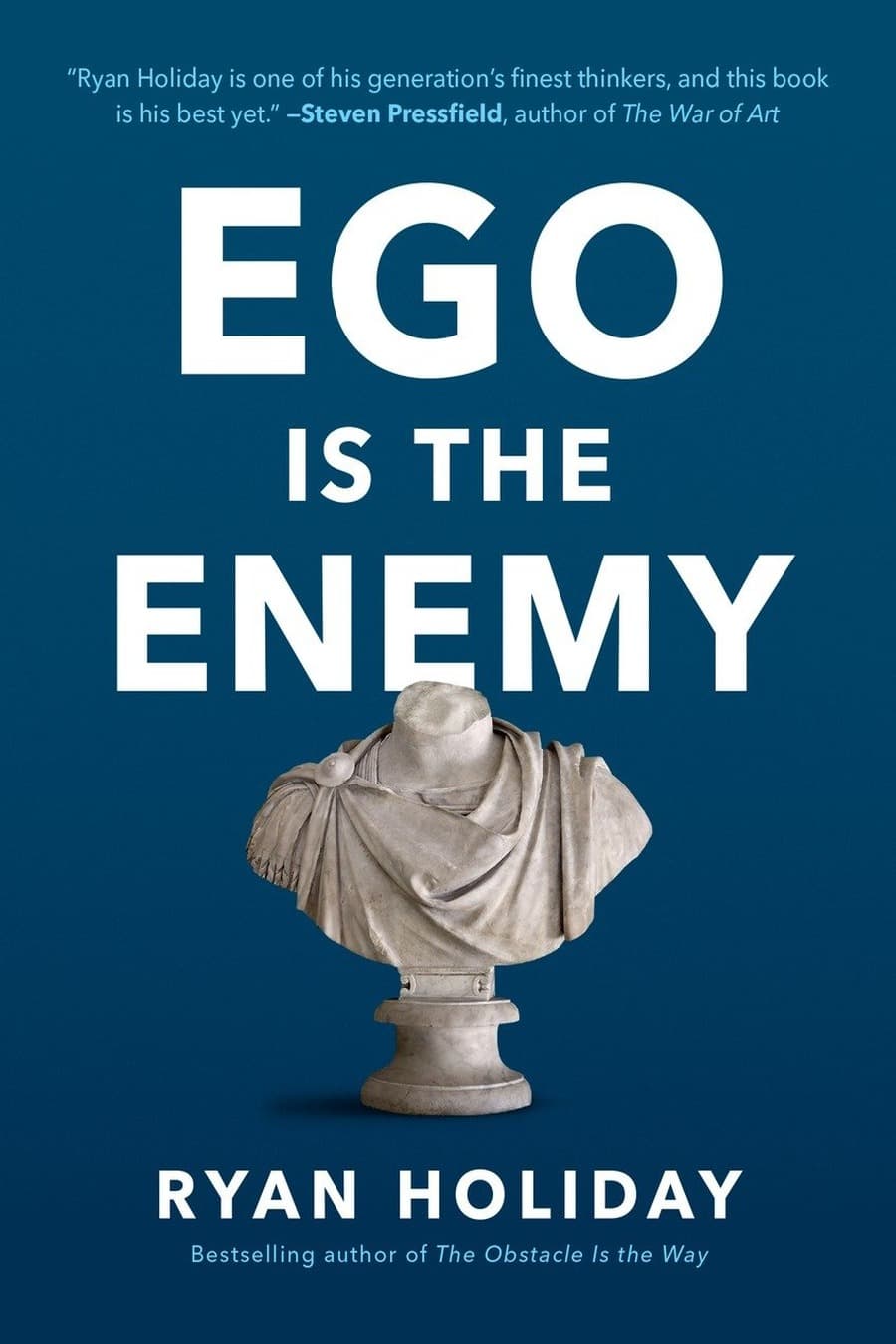
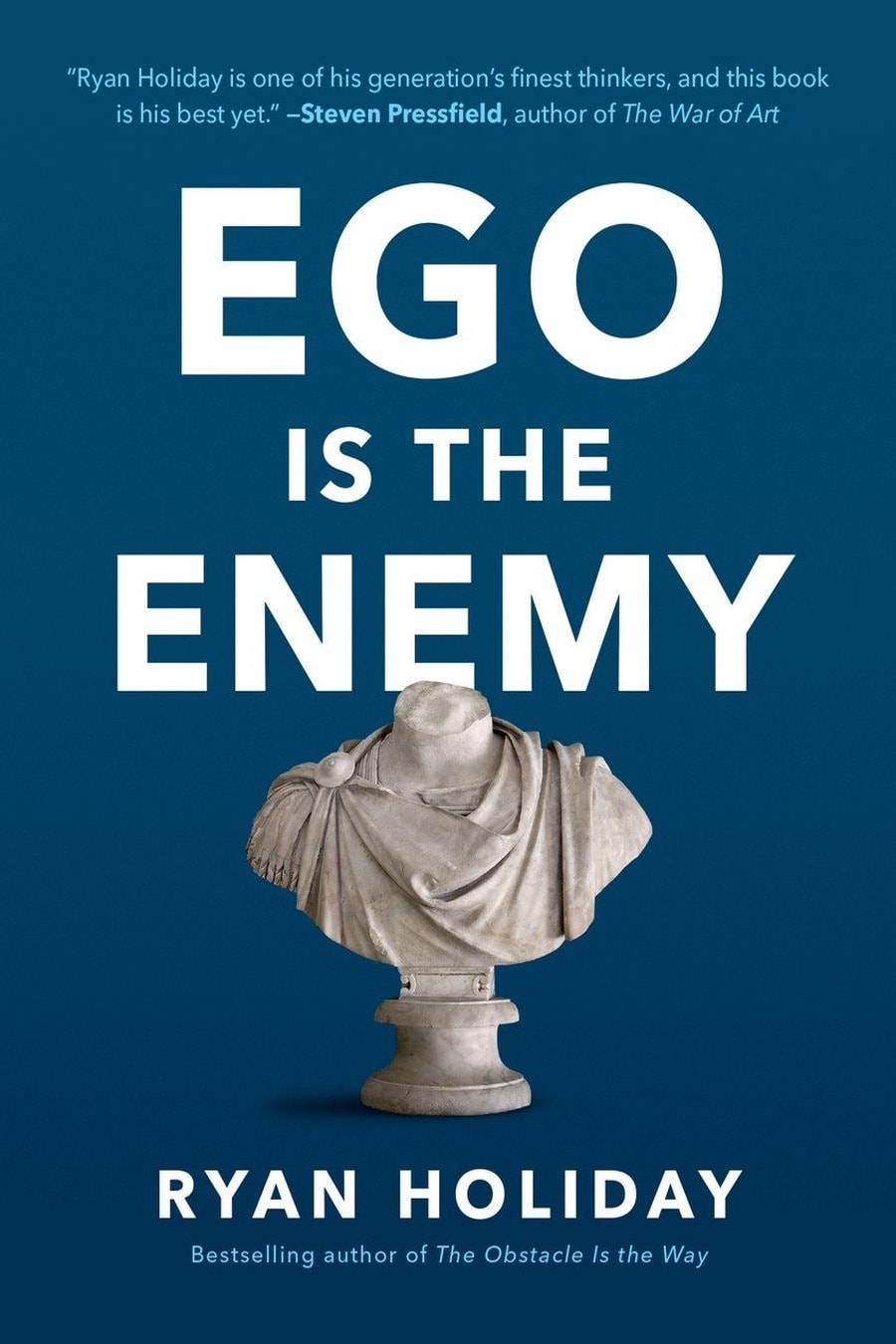
Ego Is the Enemy (Comprehensive Summary)
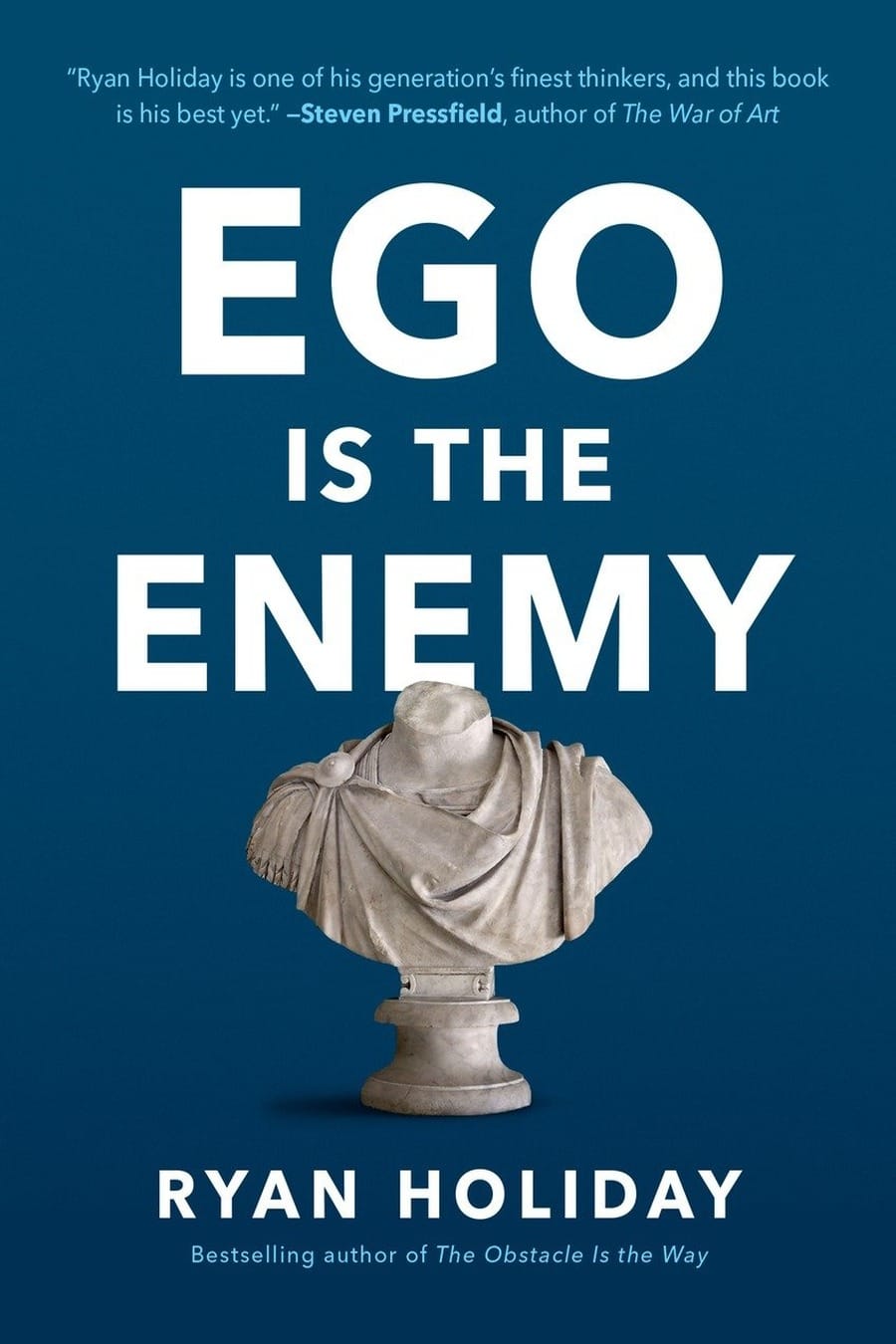
Ego Is the Enemy by Ryan Holiday. This Lexicon distills the book's key arguments, evidence, and conclusions into a concise original work.
Editions

X-Ray
The author who shares his personal journey and insights on ego, serving as the primary voice and guide throughout the book.
A historical figure whose military triumphs were followed by a political downfall, used to illustrate how success can lead to ego-driven mistakes.
A historical figure who remained grounded despite fame, serving as a contrast to Grant and an example of prioritizing personal contentment over public accolades.
The Persian emperor whose delusional behavior in response to setbacks exemplifies how unchecked ego can lead to irrational decisions and failure in leadership.
About Ego Is the Enemy (Comprehensive Summary)
Chapter Summaries
- 1
- Ryan Holiday introduces the concept of ego as a formidable obstacle to personal and professional growth, drawing on his own rapid rise and the pitfalls of success. He defines ego as an unhealthy belief in one's importance, contrasting it with humility and highlighting its amplification in the digital age. The chapter concludes with a call for self-reflection to manage ego for genuine achievement.
- 2
- Holiday delves into how success can disconnect individuals from their foundational principles, using historical figures like Ulysses S. Grant and William Tecumseh Sherman to illustrate contrasting responses to fame. He emphasizes that ego often leads to pursuing goals misaligned with true values and discusses its destructive impact on leadership, advocating for 'euthymia' and an internal scorecard. The chapter urges readers to cultivate humility and self-awareness to navigate success with integrity.
- 3
- This chapter outlines the book's structure, breaking down how ego impacts three main stages of life: Aspire, Success, and Failure. It details the foundational mindset needed for growth (being a student, avoiding early pride), how to manage ego during achievement (maintaining humility, self-management), and how to navigate setbacks (confronting ego, using an internal scorecard). The outline serves as a roadmap for understanding ego's pervasive influence and the continuous effort required to combat it.
Key Themes
- The Destructive Nature of Ego
- Ego is presented as a formidable adversary, an inflated sense of self that leads to arrogance, self-centered ambition, and a disconnection from reality. It ultimately undermines potential and can derail even the most promising careers and lives.
- The Importance of Humility
- Humility is championed as the essential counterbalance to ego, enabling individuals to remain open to learning, accept feedback, and collaborate effectively. Cultivating humility is crucial for navigating ambition and success without falling prey to ego's destructive tendencies.
- Ambition vs. Ego
- The book distinguishes between healthy ambition, which is essential for achievement, and ego, which is ambition gone awry. It warns that ambition can easily morph into ego, leading individuals to pursue goals misaligned with their true values and resulting in dissatisfaction.
Characters
- Ryan Holiday(narrator)
- The author who shares his personal journey and insights on ego, serving as the primary voice and guide throughout the book.
- Ulysses S. Grant(supporting)
- A historical figure whose military triumphs were followed by a political downfall, used to illustrate how success can lead to ego-driven mistakes.
- William Tecumseh Sherman(supporting)
- A historical figure who remained grounded despite fame, serving as a contrast to Grant and an example of prioritizing personal contentment over public accolades.
- Xerxes(supporting)
- The Persian emperor whose delusional behavior in response to setbacks exemplifies how unchecked ego can lead to irrational decisions and failure in leadership.
- John DeLorean(supporting)
- A contemporary example whose inability to manage his ego and leadership complexities led to the collapse of his car company.
- Dwight D. Eisenhower(supporting)
- A historical figure presented as a model for effective leadership, emphasizing organization and delegation to maintain clarity and purpose without succumbing to ego.
Link to this book
Add a free, dofollow link to Lex on your blog, forum, syllabus, or reading list.

<a href="https://lex-books.com/book/ego-is-the-enemy-comprehensive-summary-7e4b7837-0a17-5a5f-a0f2-19d1a88e02ae"><img src="https://lex-books.com/badges/read-on-lex.svg" alt="Read Ego Is the Enemy (Comprehensive Summary) by Ryan Holiday free on Lex" width="160" height="40"></a>[](https://lex-books.com/book/ego-is-the-enemy-comprehensive-summary-7e4b7837-0a17-5a5f-a0f2-19d1a88e02ae)[url=https://lex-books.com/book/ego-is-the-enemy-comprehensive-summary-7e4b7837-0a17-5a5f-a0f2-19d1a88e02ae][img]https://lex-books.com/badges/read-on-lex.svg[/img][/url]Read Ego Is the Enemy (Comprehensive Summary) by Ryan Holiday free on Lex: https://lex-books.com/book/ego-is-the-enemy-comprehensive-summary-7e4b7837-0a17-5a5f-a0f2-19d1a88e02aeCite this book
Reading this edition for a paper or guide? Copy a citation.
Holiday, Ryan. Ego Is the Enemy (Comprehensive Summary). Lex, lex-books.com/book/ego-is-the-enemy-comprehensive-summary-7e4b7837-0a17-5a5f-a0f2-19d1a88e02ae.Holiday, R. (n.d.). Ego Is the Enemy (Comprehensive Summary). Lex. https://lex-books.com/book/ego-is-the-enemy-comprehensive-summary-7e4b7837-0a17-5a5f-a0f2-19d1a88e02aeHoliday, Ryan. Ego Is the Enemy (Comprehensive Summary). Lex. https://lex-books.com/book/ego-is-the-enemy-comprehensive-summary-7e4b7837-0a17-5a5f-a0f2-19d1a88e02ae.