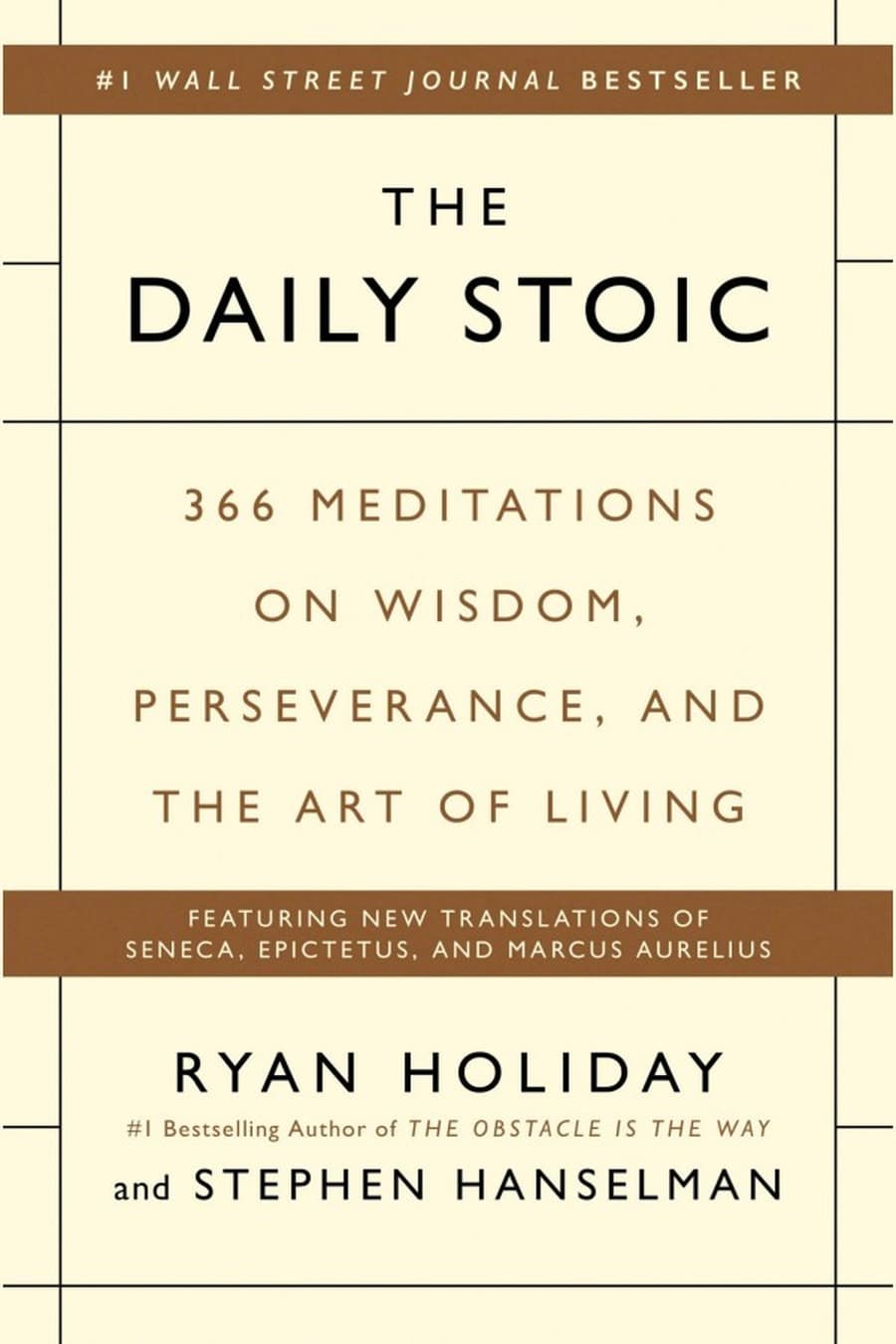
The Daily Stoic (Comprehensive Summary)
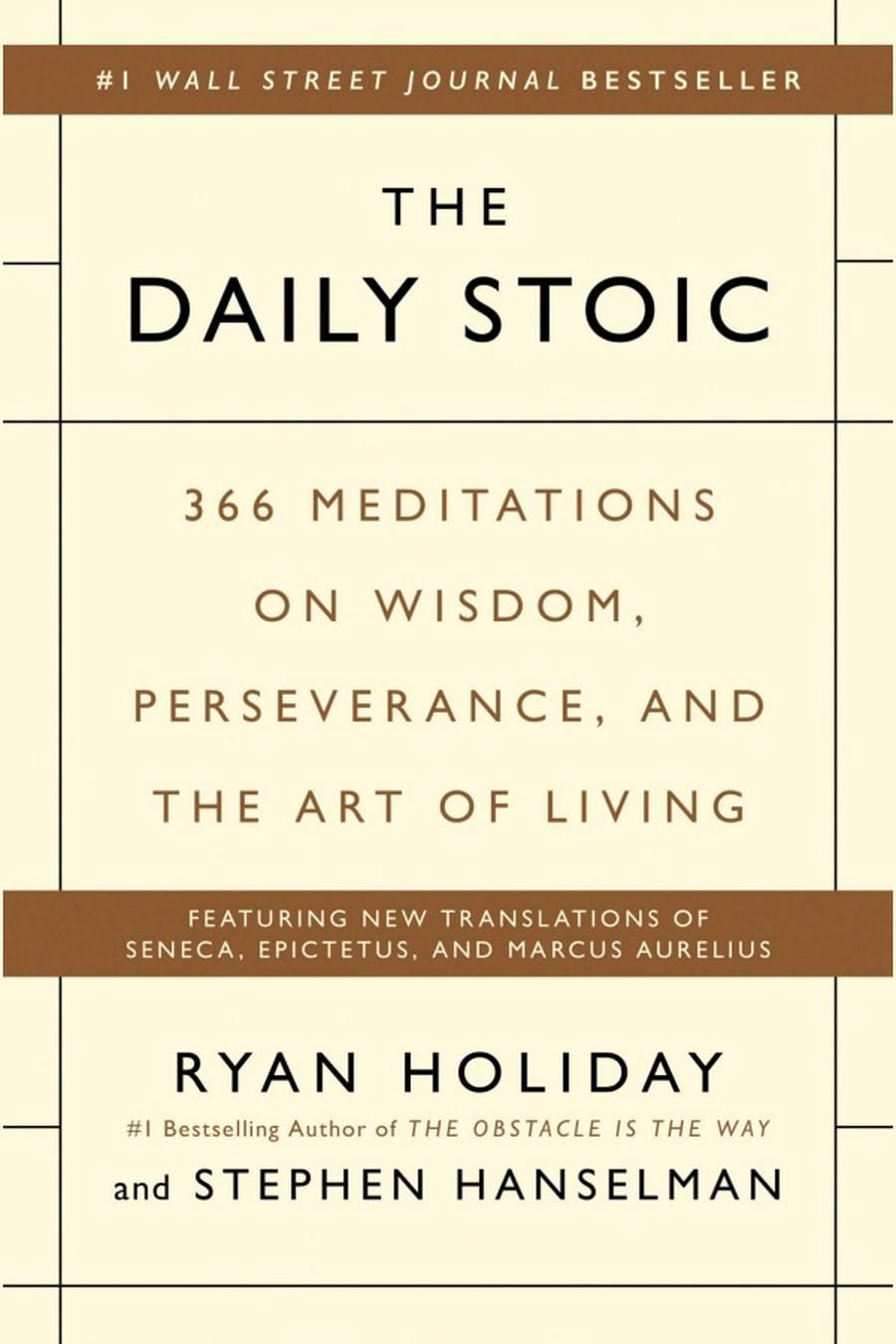
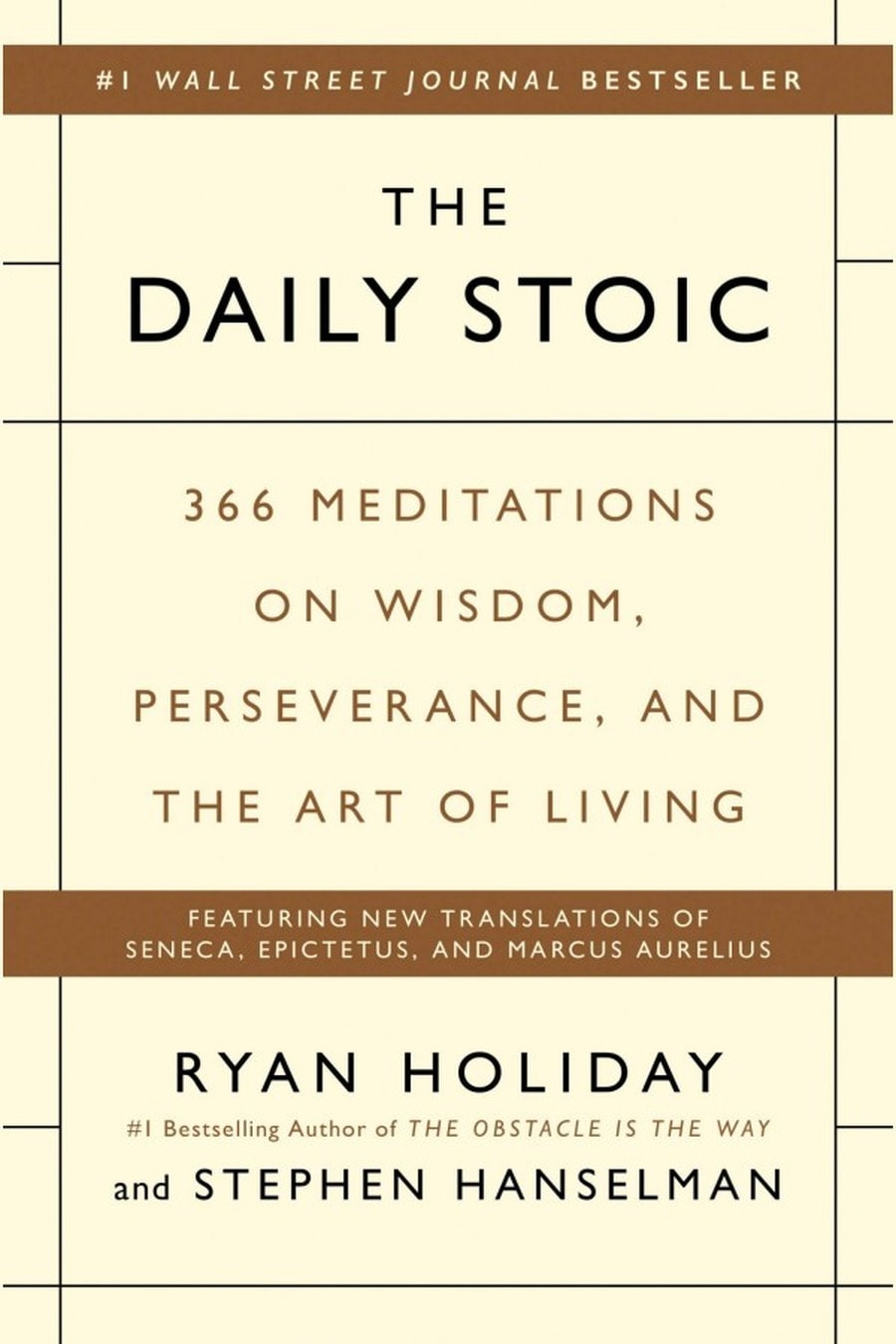
The Daily Stoic by Ryan Holiday is a modern interpretation of Stoic philosophy, offering daily meditations and practical wisdom drawn from ancient Stoic thinkers like Marcus Aurelius, Seneca, and Epictetus. Holiday, a prominent author and speaker, distills these teachings into accessible insights that encourage readers to cultivate resilience, mindfulness, and virtue in their daily lives. This Lexicon edition encapsulates the core principles of Stoicism, providing a concise guide to applying these timeless lessons in contemporary contexts.
Editions

X-Ray
The author and narrator of The Daily Stoic, Holiday synthesizes Stoic philosophy for a modern audience through daily meditations and practical commentary. He draws on historical figures and contemporary examples to make ancient wisdom accessible and actionable.
Roman emperor and Stoic philosopher whose Meditations serve as a primary source throughout the book. Aurelius exemplifies the Stoic ideal of a philosopher-king who applies philosophical principles under the pressures of leadership and power.
A former slave who became one of the most influential Stoic philosophers, whose Discourses and Enchiridion are central sources throughout the book. His teachings on the dichotomy of control, freedom, and self-mastery form the philosophical backbone of many chapters.
Roman statesman, playwright, and Stoic philosopher whose letters and essays are frequently cited throughout the book. Seneca's reflections on time, wealth, desire, and the examined life provide practical wisdom for daily living.
About The Daily Stoic (Comprehensive Summary)
Chapter Summaries
- Chapter 1
- Holiday introduces Stoicism as a practical philosophy for modern life, drawing on Marcus Aurelius, Seneca, and Epictetus. He establishes the core tenet of focusing on what is within one's control while accepting what is not. The chapter frames a year-long daily practice of Stoic reflection and dispels the misconception that Stoicism means emotional detachment.
- Chapter 2
- Holiday deepens the exploration of Stoicism's foundational distinction between what is and is not within our control, centering on Epictetus's teachings. He argues that frustration and anxiety stem from attempting to govern external circumstances. The chapter emphasizes redirecting energy toward one's own actions, thoughts, and responses as the path to resilience and well-being.
- Chapter 3
- Holiday argues that awareness—of one's thoughts, emotions, and impulses—is the lens through which Stoic practice operates. Drawing on Marcus Aurelius and Epictetus, he presents self-examination and daily reflection as tools for creating space between stimulus and response. Practical exercises such as journaling and meditation are recommended to combat modern distraction.
Key Themes
- Control and Acceptance
- The dichotomy between what is within one's control (thoughts, choices, responses) and what is not (external events, others' actions, outcomes) is the foundational principle of the entire book. Holiday returns to this distinction in nearly every chapter, arguing that most human suffering stems from attempting to govern the uncontrollable.
- Virtue and Character
- Throughout the book, Holiday argues that the four cardinal virtues—wisdom, self-control, justice, and courage—are the only reliable sources of fulfillment and the true measure of a person's worth. Character, expressed through choices and actions rather than possessions or status, is presented as the foundation of a meaningful life.
- Self-Discipline and Habit
- Holiday argues throughout the book that self-mastery—over impulses, desires, anger, and habits—is the practical work of Stoic philosophy. He draws on Aristotle's principle that 'we are what we repeatedly do' to argue that character is built through consistent, intentional practice rather than isolated acts of willpower.
Characters
- Ryan Holiday(narrator)
- The author and narrator of The Daily Stoic, Holiday synthesizes Stoic philosophy for a modern audience through daily meditations and practical commentary. He draws on historical figures and contemporary examples to make ancient wisdom accessible and actionable.
- Marcus Aurelius(supporting)
- Roman emperor and Stoic philosopher whose Meditations serve as a primary source throughout the book. Aurelius exemplifies the Stoic ideal of a philosopher-king who applies philosophical principles under the pressures of leadership and power.
- Epictetus(supporting)
- A former slave who became one of the most influential Stoic philosophers, whose Discourses and Enchiridion are central sources throughout the book. His teachings on the dichotomy of control, freedom, and self-mastery form the philosophical backbone of many chapters.
- Seneca(supporting)
- Roman statesman, playwright, and Stoic philosopher whose letters and essays are frequently cited throughout the book. Seneca's reflections on time, wealth, desire, and the examined life provide practical wisdom for daily living.
- Musonius Rufus(supporting)
- A Roman Stoic philosopher and teacher of Epictetus, cited in the book for his teachings on habit, philosophy as lived practice, and the alignment of conduct with sound teaching.
- Zeno of Citium(supporting)
- The founder of Stoicism, who first taught his philosophy in the Stoa Poikile (Painted Porch) in Athens around the early third century BC. Referenced primarily for historical context and his teaching that self-deception is a barrier to knowledge.
Link to this book
Add a free, dofollow link to Lex on your blog, forum, syllabus, or reading list.

<a href="https://lex-books.com/book/the-daily-stoic-comprehensive-summary-eb0ef053-1ba4-515e-8462-64c0bb69a67f"><img src="https://lex-books.com/badges/read-on-lex.svg" alt="Read The Daily Stoic (Comprehensive Summary) by Ryan Holiday free on Lex" width="160" height="40"></a>[](https://lex-books.com/book/the-daily-stoic-comprehensive-summary-eb0ef053-1ba4-515e-8462-64c0bb69a67f)[url=https://lex-books.com/book/the-daily-stoic-comprehensive-summary-eb0ef053-1ba4-515e-8462-64c0bb69a67f][img]https://lex-books.com/badges/read-on-lex.svg[/img][/url]Read The Daily Stoic (Comprehensive Summary) by Ryan Holiday free on Lex: https://lex-books.com/book/the-daily-stoic-comprehensive-summary-eb0ef053-1ba4-515e-8462-64c0bb69a67fCite this book
Reading this edition for a paper or guide? Copy a citation.
Holiday, Ryan. The Daily Stoic (Comprehensive Summary). Lex, lex-books.com/book/the-daily-stoic-comprehensive-summary-eb0ef053-1ba4-515e-8462-64c0bb69a67f.Holiday, R. (n.d.). The Daily Stoic (Comprehensive Summary). Lex. https://lex-books.com/book/the-daily-stoic-comprehensive-summary-eb0ef053-1ba4-515e-8462-64c0bb69a67fHoliday, Ryan. The Daily Stoic (Comprehensive Summary). Lex. https://lex-books.com/book/the-daily-stoic-comprehensive-summary-eb0ef053-1ba4-515e-8462-64c0bb69a67f.