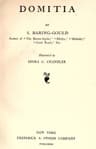
Domitia
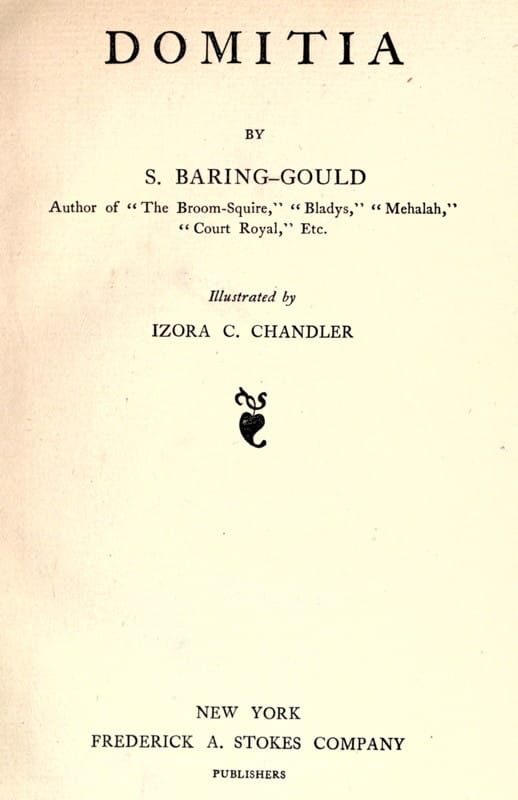
At the crowded port of Cenchræae, a young girl named Domitia Longina waits with breathless anticipation to welcome her father home. General Corbulo, Rome's celebrated commander, has returned from military campaigns abroad, and the harbor buzzes with the grandeur of his approaching bireme. But beneath the excitement of reunion lies a current of unease. Emperor Nero's court is a viper's nest of rival factions and calculating ambition, and Corbulo's rising glory makes him as dangerous as he is renowned. Domitia, vibrant and affectionate, finds herself tangled in the complex dynamics between her parents while political forces beyond her understanding close in around her family. S. Baring-Gould, better known for his medieval and folkloric works, turns his considerable narrative gifts toward ancient Rome in this 1898 novel. The result is a richly atmospheric portrait of a family navigating the treacherous waters of imperial politics, where loyalty to Rome can be rewarded with suicide warrants and love is constantly tested against the demands of ambition. The novel excels in its domestic scenes, grounding the grand political drama in the intimate relationships between a father and daughter, a wife and husband, showing how the machinery of empire grinds up those closest to it. For readers who savor historical fiction that prioritizes character and atmosphere over spectacle, Domitia offers a absorbing portrait of a world where every embrace might conceal a dagger and every victory draws the emperor's suspicious eye.
Editions
Link to this book
Add a free, dofollow link to Lex on your blog, forum, syllabus, or reading list.

<a href="https://lex-books.com/book/domitia-0f313e1c-02d7-4288-8383-45c41549ba02"><img src="https://lex-books.com/badges/read-on-lex.svg" alt="Read Domitia by S. Baring-Gould free on Lex" width="160" height="40"></a>[](https://lex-books.com/book/domitia-0f313e1c-02d7-4288-8383-45c41549ba02)[url=https://lex-books.com/book/domitia-0f313e1c-02d7-4288-8383-45c41549ba02][img]https://lex-books.com/badges/read-on-lex.svg[/img][/url]Read Domitia by S. Baring-Gould free on Lex: https://lex-books.com/book/domitia-0f313e1c-02d7-4288-8383-45c41549ba02Cite this book
Reading this edition for a paper or guide? Copy a citation.
Baring-Gould, S.. Domitia. Lex, lex-books.com/book/domitia-0f313e1c-02d7-4288-8383-45c41549ba02.Baring-Gould, S. (n.d.). Domitia. Lex. https://lex-books.com/book/domitia-0f313e1c-02d7-4288-8383-45c41549ba02Baring-Gould, S.. Domitia. Lex. https://lex-books.com/book/domitia-0f313e1c-02d7-4288-8383-45c41549ba02.