The Lost and Hostile Gospels: An Essay on the Toledoth Jeschu, and the Petrine and Pauline Gospels of the First Three Centuries of Which Fragments Remain
1874
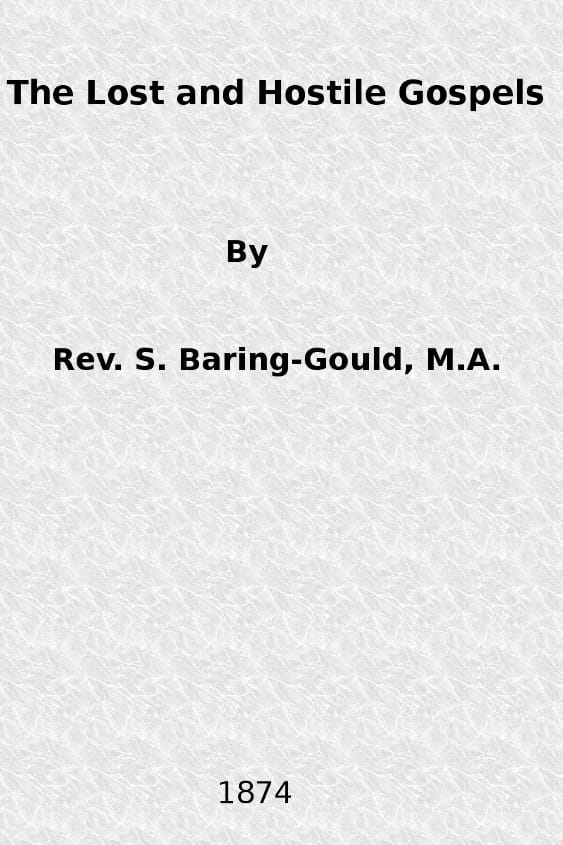
The Lost and Hostile Gospels: An Essay on the Toledoth Jeschu, and the Petrine and Pauline Gospels of the First Three Centuries of Which Fragments Remain
1874
In the shadows of the four canonical Gospels lies a forgotten library of competing voices, and S. Baring-Gould was one of the first Victorian scholars to dust off its locked doors. This 1874 essay ventures into the forbidden archives of early Christianity: the Toledoth Jeschu, a Jewish anti-gospel that mocked the Nazarene's origins; the Petrine and Pauline Gospels that competed for authority before being declared heretical; fragmentary texts like the Gospel of the Egyptians and the Gospel of Truth that once stirred fierce theological debates. Baring-Gould examines why the historian Josephus is silent on Jesus, why Talmudic writers opposed Christianity, and how the early church resembled the Essenes in secret practice. He traces how certain texts achieved canonical status while others were systematically destroyed or buried. This is not dry bibliography but an archaeological dig into the theological politics of the first three centuries, revealing a faith far more contested, chaotic, and alive than any Sunday school poster suggests. For readers fascinated by what orthodoxy suppressed, this essay remains a compelling portal into Christianity's buried archives.
Editions
Link to this book
Add a free, dofollow link to Lex on your blog, forum, syllabus, or reading list.

<a href="https://lex-books.com/book/the-lost-and-hostile-gospels-an-essay-on-the-toledoth-jeschu-and-the-petrine-and-a910894c-6c0c-48bc-9038-a24adcca8c6a"><img src="https://lex-books.com/badges/read-on-lex.svg" alt="Read The Lost and Hostile Gospels: An Essay on the Toledoth Jeschu, and the Petrine and Pauline Gospels of the First Three Centuries of Which Fragments Remain by S. Baring-Gould free on Lex" width="160" height="40"></a>[](https://lex-books.com/book/the-lost-and-hostile-gospels-an-essay-on-the-toledoth-jeschu-and-the-petrine-and-a910894c-6c0c-48bc-9038-a24adcca8c6a)[url=https://lex-books.com/book/the-lost-and-hostile-gospels-an-essay-on-the-toledoth-jeschu-and-the-petrine-and-a910894c-6c0c-48bc-9038-a24adcca8c6a][img]https://lex-books.com/badges/read-on-lex.svg[/img][/url]Read The Lost and Hostile Gospels: An Essay on the Toledoth Jeschu, and the Petrine and Pauline Gospels of the First Three Centuries of Which Fragments Remain by S. Baring-Gould free on Lex: https://lex-books.com/book/the-lost-and-hostile-gospels-an-essay-on-the-toledoth-jeschu-and-the-petrine-and-a910894c-6c0c-48bc-9038-a24adcca8c6aCite this book
Reading this edition for a paper or guide? Copy a citation.
Baring-Gould, S.. The Lost and Hostile Gospels: An Essay on the Toledoth Jeschu, and the Petrine and Pauline Gospels of the First Three Centuries of Which Fragments Remain. Lex, lex-books.com/book/the-lost-and-hostile-gospels-an-essay-on-the-toledoth-jeschu-and-the-petrine-and-a910894c-6c0c-48bc-9038-a24adcca8c6a.Baring-Gould, S. (1874). The Lost and Hostile Gospels: An Essay on the Toledoth Jeschu, and the Petrine and Pauline Gospels of the First Three Centuries of Which Fragments Remain. Lex. https://lex-books.com/book/the-lost-and-hostile-gospels-an-essay-on-the-toledoth-jeschu-and-the-petrine-and-a910894c-6c0c-48bc-9038-a24adcca8c6aBaring-Gould, S.. The Lost and Hostile Gospels: An Essay on the Toledoth Jeschu, and the Petrine and Pauline Gospels of the First Three Centuries of Which Fragments Remain. Lex. https://lex-books.com/book/the-lost-and-hostile-gospels-an-essay-on-the-toledoth-jeschu-and-the-petrine-and-a910894c-6c0c-48bc-9038-a24adcca8c6a.