Con La Pluma Y Con El Sable: Crónica De 1820 a 1823
1915
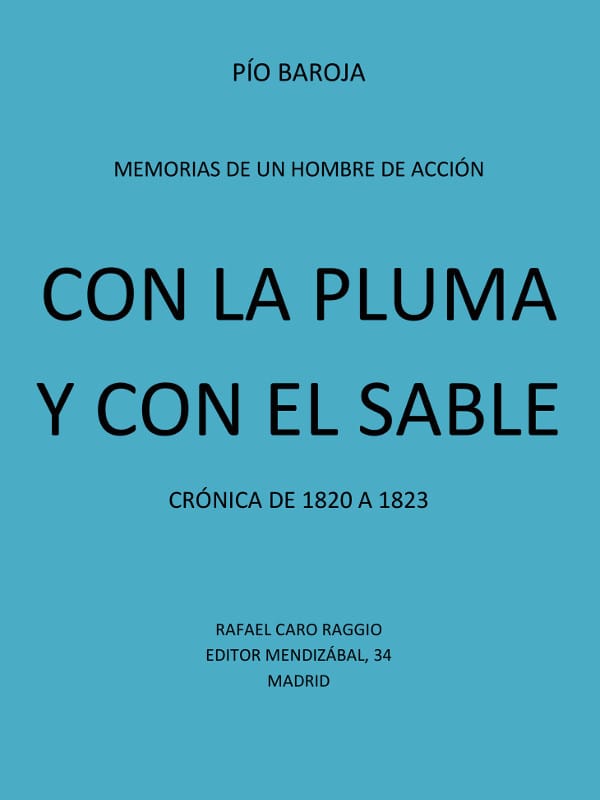
In the summer of 1820, the liberal revolution triumphs in Spain. Eugenio de Aviraneta, returning from Mexican exile, arrives in the small Castilian town of Aranda de Duero with dreams of transforming his nation through reason and reform. But the forces arrayed against him are ancient and ruthless: a clergy that commands souls, absolutist guerrillas who answer to no law, and a king who smiles while conspiring with foreign powers to destroy his own people. Baroja, writing in the shadow of World War I, uses Aviraneta's doomed crusade to examine what happens when idealism meets the machinery of reaction. The liberal experiment of 1820-1823, the so-called Liberal Triennium, collapses not through military defeat alone but through betrayal from within and invasion from without. The French army of the "Hundred Thousand Sons of Saint Louis" arrives in 1823 to restore the crown to Fernando VII, ushering in a decade of terror where liberals are murdered with impunity. Aviraneta flees again, this time to France, his revolution buried beneath the boots of foreign soldiers and the silence of a complicit throne. This is historical fiction as Baroja understood it: not a celebration of the past, but an autopsy of failure, examining the bones of a liberal dream that Spain could never quite bring itself to live.
Editions
Link to this book
Add a free, dofollow link to Lex on your blog, forum, syllabus, or reading list.

<a href="https://lex-books.com/book/con-la-pluma-y-con-el-sable-cr-nica-de-1820-a-1823-4c28f3bb-1bbe-45ef-8c2c-72c906fbcf7c"><img src="https://lex-books.com/badges/read-on-lex.svg" alt="Read Con La Pluma Y Con El Sable: Crónica De 1820 a 1823 by Pío Baroja free on Lex" width="160" height="40"></a>[](https://lex-books.com/book/con-la-pluma-y-con-el-sable-cr-nica-de-1820-a-1823-4c28f3bb-1bbe-45ef-8c2c-72c906fbcf7c)[url=https://lex-books.com/book/con-la-pluma-y-con-el-sable-cr-nica-de-1820-a-1823-4c28f3bb-1bbe-45ef-8c2c-72c906fbcf7c][img]https://lex-books.com/badges/read-on-lex.svg[/img][/url]Read Con La Pluma Y Con El Sable: Crónica De 1820 a 1823 by Pío Baroja free on Lex: https://lex-books.com/book/con-la-pluma-y-con-el-sable-cr-nica-de-1820-a-1823-4c28f3bb-1bbe-45ef-8c2c-72c906fbcf7cCite this book
Reading this edition for a paper or guide? Copy a citation.
Baroja, Pío. Con La Pluma Y Con El Sable: Crónica De 1820 a 1823. Lex, lex-books.com/book/con-la-pluma-y-con-el-sable-cr-nica-de-1820-a-1823-4c28f3bb-1bbe-45ef-8c2c-72c906fbcf7c.Baroja, P. (1915). Con La Pluma Y Con El Sable: Crónica De 1820 a 1823. Lex. https://lex-books.com/book/con-la-pluma-y-con-el-sable-cr-nica-de-1820-a-1823-4c28f3bb-1bbe-45ef-8c2c-72c906fbcf7cBaroja, Pío. Con La Pluma Y Con El Sable: Crónica De 1820 a 1823. Lex. https://lex-books.com/book/con-la-pluma-y-con-el-sable-cr-nica-de-1820-a-1823-4c28f3bb-1bbe-45ef-8c2c-72c906fbcf7c.