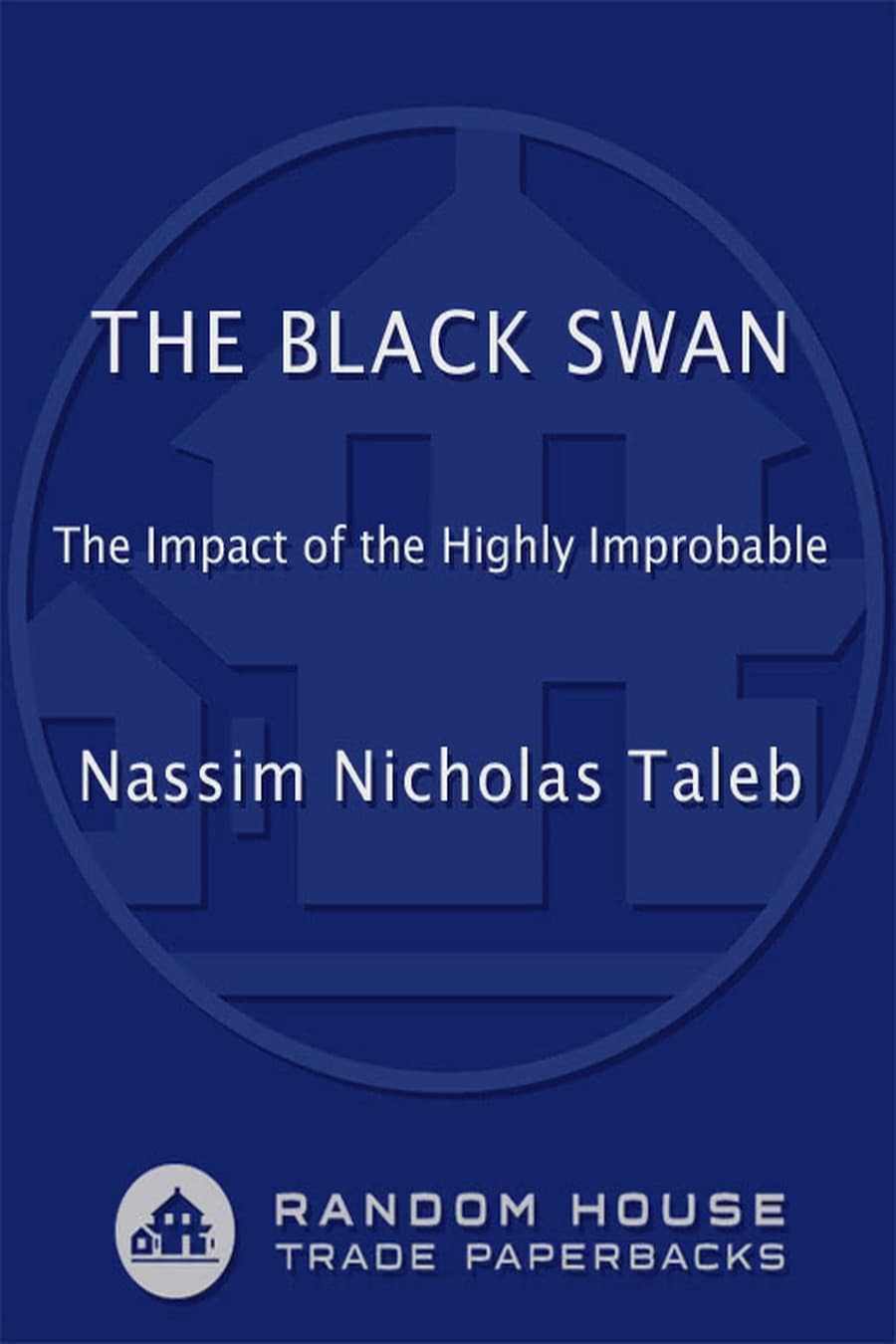
The Black Swan (Comprehensive Summary)
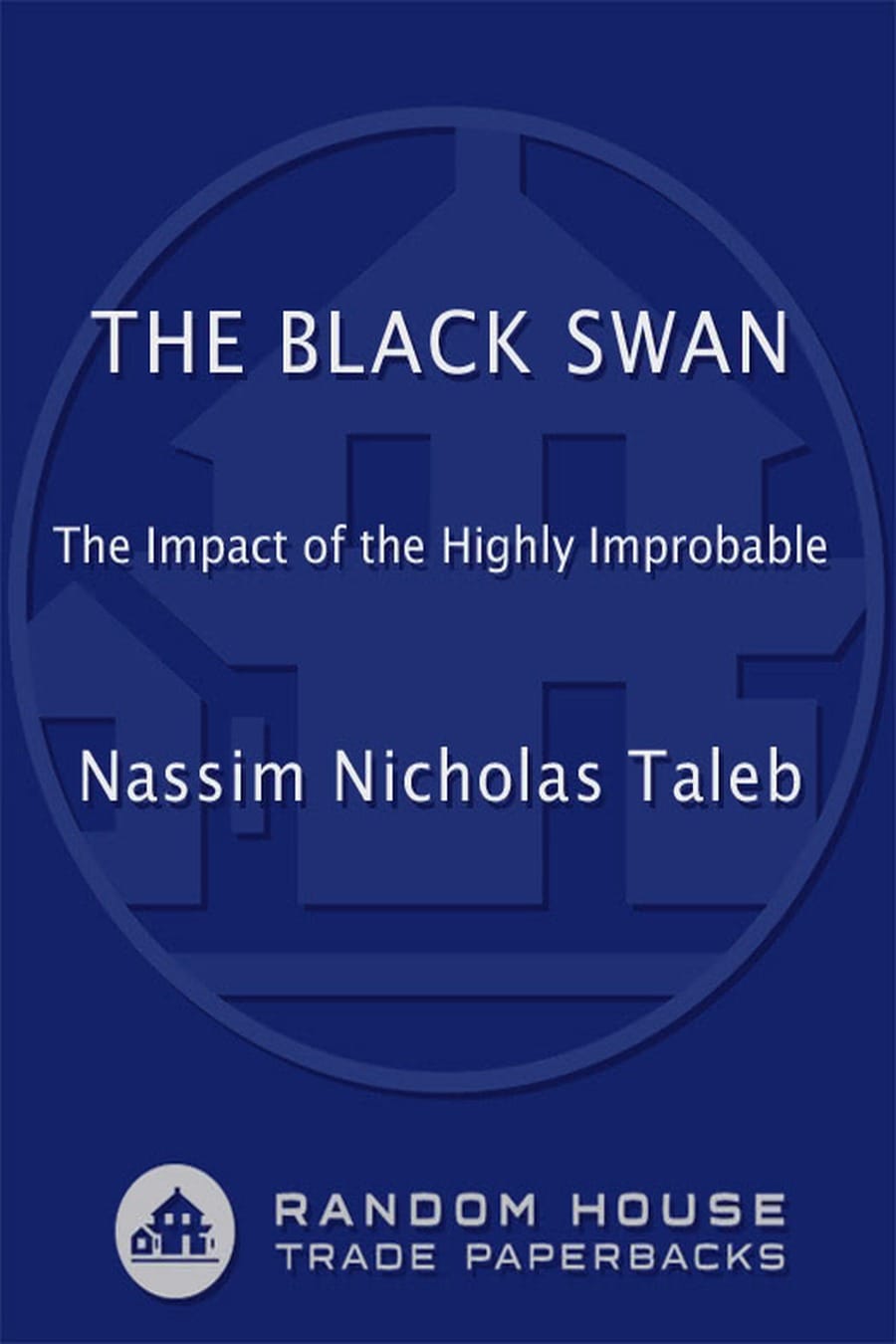
The Black Swan by Nassim Nicholas Taleb. This Lexicon distills the book's key arguments, evidence, and conclusions into a concise original work.
Editions

X-Ray
The author and narrator, a philosopher, trader, and professor who explores the nature of unpredictability, risk, and human knowledge.
A fictional novelist whose journey exemplifies unpredictable success and the challenges of defying conventional literary norms.
A street-smart character representing practical, intuitive knowledge that questions theoretical assumptions in real-world scenarios.
An academic character representing conventional, theoretical knowledge that strictly adheres to mathematical principles.
About The Black Swan (Comprehensive Summary)
Chapter Summaries
- 1
- This chapter introduces 'black swan events' as unpredictable, high-consequence occurrences, critiquing the prevailing reliance on statistical models and forecasts. Taleb emphasizes the limitations of human knowledge, the tendency to underestimate rare events, and the dangers of 'intellectual hubris' in misjudging risks.
- PROLOGUE
- The prologue sets the stage by using the black swan metaphor to illustrate how a single observation can overturn long-held beliefs, defining Black Swans as outliers with significant impact, rationalized in hindsight. Taleb critiques traditional predictive models and introduces 'anti-knowledge' as crucial for understanding the unpredictable nature of the world.
- 3
- This chapter delves into knowledge and randomness, introducing the 'antilibrary' as a metaphor for unknown knowledge and contrasting it with conventional views. Taleb distinguishes between known and unknown randomness, critiques generalization from limited experiences, and foreshadows cognitive biases that hinder understanding of Black Swans.
Key Themes
- Unpredictability of Black Swan Events
- This is the foundational theme, defining Black Swans as rare, high-impact events that are rationalized only in hindsight. Taleb argues that these events, rather than predictable occurrences, fundamentally shape history, economics, and individual lives, challenging our illusion of control.
- Limitations of Human Knowledge and Prediction
- Taleb consistently critiques intellectual hubris, overconfidence, and the inherent inability of human models and experts to accurately forecast complex systems. He emphasizes that what we don't know (anti-knowledge) is often more consequential than what we do know, advocating for humility in the face of uncertainty.
- Cognitive Biases and Fallacies
- The book extensively explores various cognitive shortcuts that distort our perception of reality, including confirmation bias, the narrative fallacy (imposing stories on randomness), the ludic fallacy (equating real-world uncertainty with games), and retrospective distortion, all of which blind us to Black Swans.
Characters
- Nassim Nicholas Taleb(narrator)
- The author and narrator, a philosopher, trader, and professor who explores the nature of unpredictability, risk, and human knowledge.
- Yevgenia Krasnova(protagonist)
- A fictional novelist whose journey exemplifies unpredictable success and the challenges of defying conventional literary norms.
- Fat Tony(supporting)
- A street-smart character representing practical, intuitive knowledge that questions theoretical assumptions in real-world scenarios.
- Dr. John(supporting)
- An academic character representing conventional, theoretical knowledge that strictly adheres to mathematical principles.
- Michel de Montaigne(supporting)
- A philosopher whose introspective and skeptical approach to knowledge embodies the ideal of an epistemocrat.
- Seneca(supporting)
- A Stoic philosopher whose teachings on embracing fate and cultivating inner strength profoundly influence Taleb's concept of 'amor fati'.
Link to this book
Add a free, dofollow link to Lex on your blog, forum, syllabus, or reading list.

<a href="https://lex-books.com/book/the-black-swan-comprehensive-summary-5fa4e907-4638-578b-aa45-27b31363cccc"><img src="https://lex-books.com/badges/read-on-lex.svg" alt="Read The Black Swan (Comprehensive Summary) by Nassim Nicholas Taleb free on Lex" width="160" height="40"></a>[](https://lex-books.com/book/the-black-swan-comprehensive-summary-5fa4e907-4638-578b-aa45-27b31363cccc)[url=https://lex-books.com/book/the-black-swan-comprehensive-summary-5fa4e907-4638-578b-aa45-27b31363cccc][img]https://lex-books.com/badges/read-on-lex.svg[/img][/url]Read The Black Swan (Comprehensive Summary) by Nassim Nicholas Taleb free on Lex: https://lex-books.com/book/the-black-swan-comprehensive-summary-5fa4e907-4638-578b-aa45-27b31363ccccCite this book
Reading this edition for a paper or guide? Copy a citation.
Taleb, Nassim Nicholas. The Black Swan (Comprehensive Summary). Lex, lex-books.com/book/the-black-swan-comprehensive-summary-5fa4e907-4638-578b-aa45-27b31363cccc.Taleb, N. N. (n.d.). The Black Swan (Comprehensive Summary). Lex. https://lex-books.com/book/the-black-swan-comprehensive-summary-5fa4e907-4638-578b-aa45-27b31363ccccTaleb, Nassim Nicholas. The Black Swan (Comprehensive Summary). Lex. https://lex-books.com/book/the-black-swan-comprehensive-summary-5fa4e907-4638-578b-aa45-27b31363cccc.