Antifragile (Comprehensive Summary)

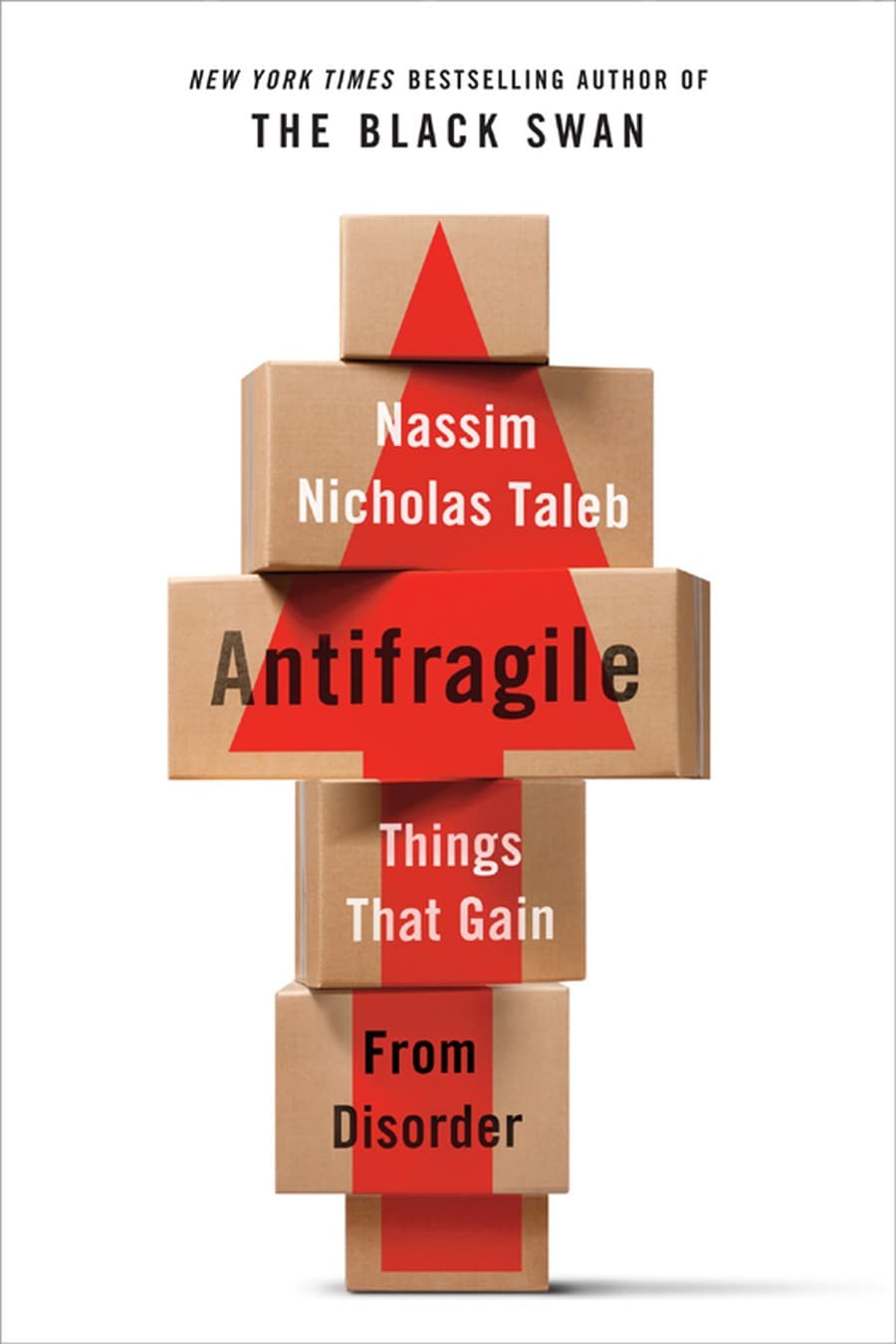
Antifragile by Nassim Nicholas Taleb. This Lexicon distills the book's key arguments, evidence, and conclusions into a concise original work.
Editions
Ebooks

Antifragile (Comprehensive Summary)Current
96 pages
X-Ray
Nassim Nicholas TalebNarrator
The author and narrator, a philosopher and practitioner in risk and volatility who introduces and explores the concept of antifragility.
JohnSupporting
A bank clerk whose steady income represents predictable but ultimately fragile employment.
GeorgeSupporting
A taxi driver whose fluctuating income represents variable but antifragile employment.
Thales of MiletusSupporting
An ancient philosopher whose strategic foresight in securing olive presses illustrates the concept of optionality and asymmetry.
This section is only available for premium usersUnlock character maps, chapter summaries, themes & moreTry Free for 7 Days
About Antifragile (Comprehensive Summary)
Chapter Summaries
- PROLOGUE
- Taleb introduces antifragility as the ability to thrive amid chaos, using the metaphor of wind energizing a fire, distinguishing it from resilience and robustness. He emphasizes its role in complex systems, the value of embracing randomness and errors, and introduces 'skin in the game' while critiquing modern interventions that suppress volatility, leading to fragility.
- 1
- Taleb introduces antifragility as a framework for understanding how systems respond to volatility, distinguishing it from fragile (harmed by stress) and robust (withstands stress) systems. He argues that antifragile entities benefit from disorder, challenging conventional wisdom and drawing examples from biology, economics, and history, while also using mythological references like Damocles and Hydra to illustrate these concepts. The chapter sets the stage for rethinking risk and uncertainty, emphasizing the cognitive blind spot regarding antifragility and introducing precursor concepts like Mithridatization and hormesis.
- 2
- Taleb explores overcompensation and overreaction as mechanisms of antifragility, introducing post-traumatic growth and arguing that innovation often arises from necessity rather than comfort. He critiques comfort and safety, highlighting how a lack of challenge degrades performance, and discusses redundancy and the 'Lucretius problem' in risk management. The chapter also examines the antifragility of social movements and information, noting how suppression can lead to greater strength.
Key Themes
- Antifragility, Fragility, and Robustness
- This core theme distinguishes entities that break under stress (fragile), withstand it without change (robust), or benefit from it (antifragile), challenging conventional wisdom that prioritizes stability. Taleb argues that recognizing these categories is crucial for navigating risk and uncertainty in all aspects of life.
- Uncertainty, Randomness, and Black Swans
- The book explores the pervasive nature of unpredictability, categorizing randomness into Mediocristan (predictable) and Extremistan (unpredictable, high-impact events). Taleb critiques reliance on predictive models that fail to account for 'Black Swans,' advocating for systems that can adapt to the unknown rather than attempting to forecast it.
- Optionality and Asymmetry
- Taleb emphasizes the value of having choices and the ability to adapt, defining optionality as the inherent benefit of positioning oneself for disproportionately high gains with limited downside risk. This asymmetry is a key mechanism for achieving antifragility, allowing individuals and systems to capitalize on volatility.
Characters
- Nassim Nicholas Taleb(narrator)
- The author and narrator, a philosopher and practitioner in risk and volatility who introduces and explores the concept of antifragility.
- John(supporting)
- A bank clerk whose steady income represents predictable but ultimately fragile employment.
- George(supporting)
- A taxi driver whose fluctuating income represents variable but antifragile employment.
- Thales of Miletus(supporting)
- An ancient philosopher whose strategic foresight in securing olive presses illustrates the concept of optionality and asymmetry.
- Seneca(supporting)
- A Stoic philosopher and successful businessman whose practical wisdom and teachings on managing adversity align with antifragility.
- Nero Tulip(protagonist)
- An intellectual character who grapples with philosophical insights, loneliness, and the complexities of fragility in the modern world.
Link to this book
Add a free, dofollow link to Lex on your blog, forum, syllabus, or reading list.

HTML
<a href="https://lex-books.com/book/antifragile-comprehensive-summary-8d4d71d4-ff0f-567a-baba-7658f2bacbad"><img src="https://lex-books.com/badges/read-on-lex.svg" alt="Read Antifragile (Comprehensive Summary) by Nassim Nicholas Taleb free on Lex" width="160" height="40"></a>Markdown
[](https://lex-books.com/book/antifragile-comprehensive-summary-8d4d71d4-ff0f-567a-baba-7658f2bacbad)BBCode
[url=https://lex-books.com/book/antifragile-comprehensive-summary-8d4d71d4-ff0f-567a-baba-7658f2bacbad][img]https://lex-books.com/badges/read-on-lex.svg[/img][/url]Plain link
Read Antifragile (Comprehensive Summary) by Nassim Nicholas Taleb free on Lex: https://lex-books.com/book/antifragile-comprehensive-summary-8d4d71d4-ff0f-567a-baba-7658f2bacbadCite this book
Reading this edition for a paper or guide? Copy a citation.
MLA
Taleb, Nassim Nicholas. Antifragile (Comprehensive Summary). Lex, lex-books.com/book/antifragile-comprehensive-summary-8d4d71d4-ff0f-567a-baba-7658f2bacbad.APA
Taleb, N. N. (n.d.). Antifragile (Comprehensive Summary). Lex. https://lex-books.com/book/antifragile-comprehensive-summary-8d4d71d4-ff0f-567a-baba-7658f2bacbadChicago
Taleb, Nassim Nicholas. Antifragile (Comprehensive Summary). Lex. https://lex-books.com/book/antifragile-comprehensive-summary-8d4d71d4-ff0f-567a-baba-7658f2bacbad.