Stonehenge and Other British Stone Monuments Astronomically Considered
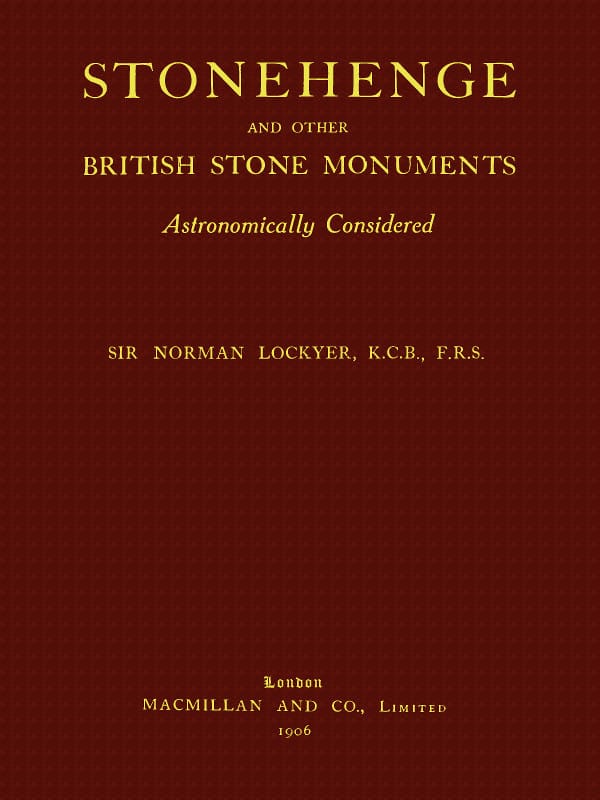
In 1906, Nobel Prize-winning astronomer Norman Lockyer turned his scientific gaze on the ancient stones of Britain and found something revolutionary: evidence that our ancestors were sophisticated observers of the heavens. This pioneering work argues that Stonehenge and similar monuments were not merely tombs or temples but precision astronomical instruments, aligned with the sun's movements and the cycles of the moon to mark the seasons and predict celestial events. Lockyer brings the rigor of a working scientist to the standing stones, measuring alignments, calculating declinations, and reconstructing the astronomical knowledge that could have guided neolithic and bronze age builders. The result is a book that transformed how we think about prehistoric Britain and launched an entire field of study. Over a century later, Lockyer's central insight remains valid: these monuments were built by people who watched the sky with extraordinary care. For anyone who has stood at Stonehenge at sunrise and wondered what our ancestors knew, this book offers a compelling, scientifically grounded answer.
Editions
Link to this book
Add a free, dofollow link to Lex on your blog, forum, syllabus, or reading list.

<a href="https://lex-books.com/book/stonehenge-and-other-british-stone-monuments-astronomically-considered-e7c3ef13-22bd-4a89-8784-60133eeb1733"><img src="https://lex-books.com/badges/read-on-lex.svg" alt="Read Stonehenge and Other British Stone Monuments Astronomically Considered by Norman Lockyer free on Lex" width="160" height="40"></a>[](https://lex-books.com/book/stonehenge-and-other-british-stone-monuments-astronomically-considered-e7c3ef13-22bd-4a89-8784-60133eeb1733)[url=https://lex-books.com/book/stonehenge-and-other-british-stone-monuments-astronomically-considered-e7c3ef13-22bd-4a89-8784-60133eeb1733][img]https://lex-books.com/badges/read-on-lex.svg[/img][/url]Read Stonehenge and Other British Stone Monuments Astronomically Considered by Norman Lockyer free on Lex: https://lex-books.com/book/stonehenge-and-other-british-stone-monuments-astronomically-considered-e7c3ef13-22bd-4a89-8784-60133eeb1733Cite this book
Reading this edition for a paper or guide? Copy a citation.
Lockyer, Norman. Stonehenge and Other British Stone Monuments Astronomically Considered. Lex, lex-books.com/book/stonehenge-and-other-british-stone-monuments-astronomically-considered-e7c3ef13-22bd-4a89-8784-60133eeb1733.Lockyer, N. (n.d.). Stonehenge and Other British Stone Monuments Astronomically Considered. Lex. https://lex-books.com/book/stonehenge-and-other-british-stone-monuments-astronomically-considered-e7c3ef13-22bd-4a89-8784-60133eeb1733Lockyer, Norman. Stonehenge and Other British Stone Monuments Astronomically Considered. Lex. https://lex-books.com/book/stonehenge-and-other-british-stone-monuments-astronomically-considered-e7c3ef13-22bd-4a89-8784-60133eeb1733.