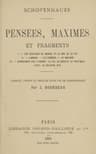
Pensées, Maximes Et Fragments
1880
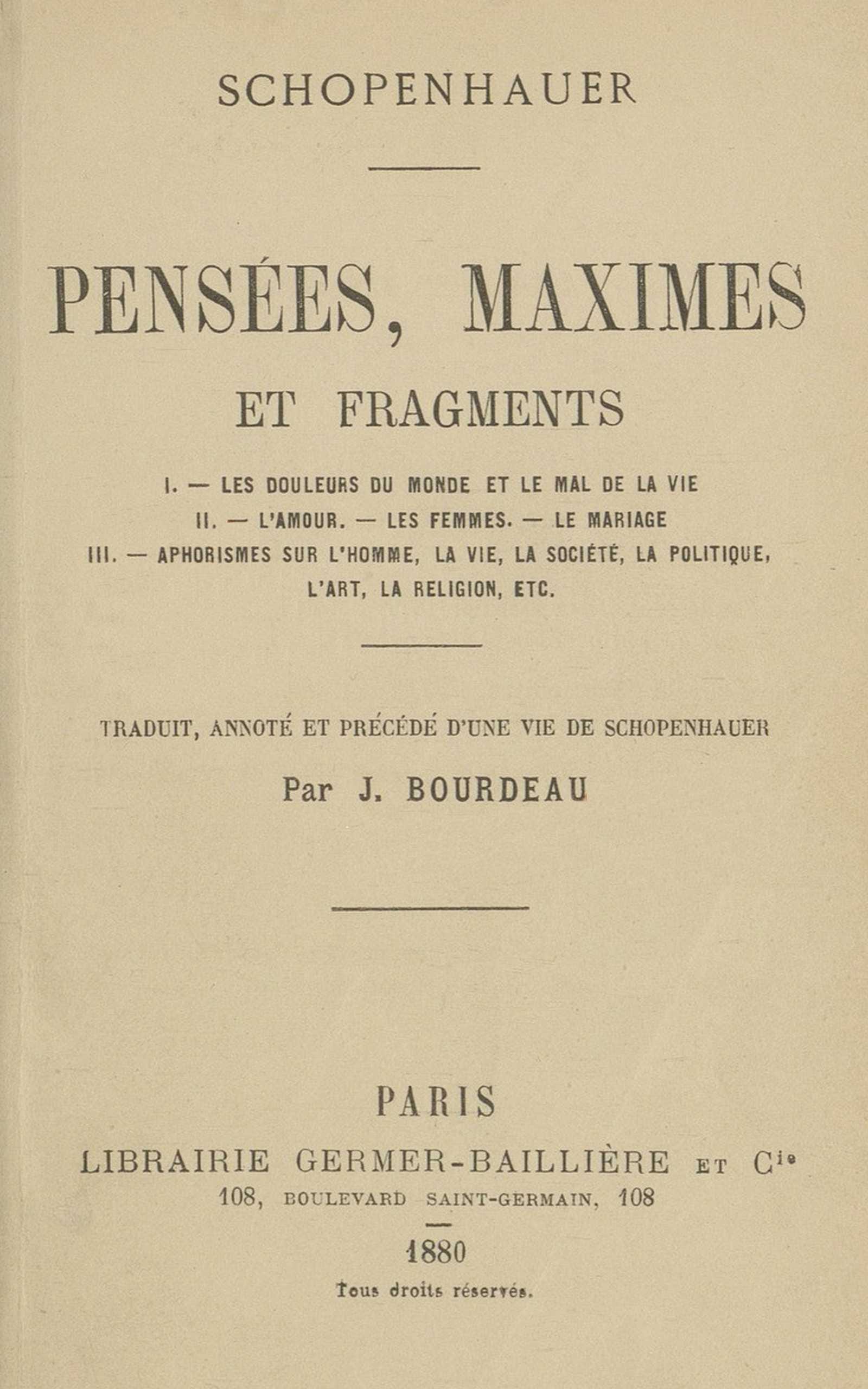
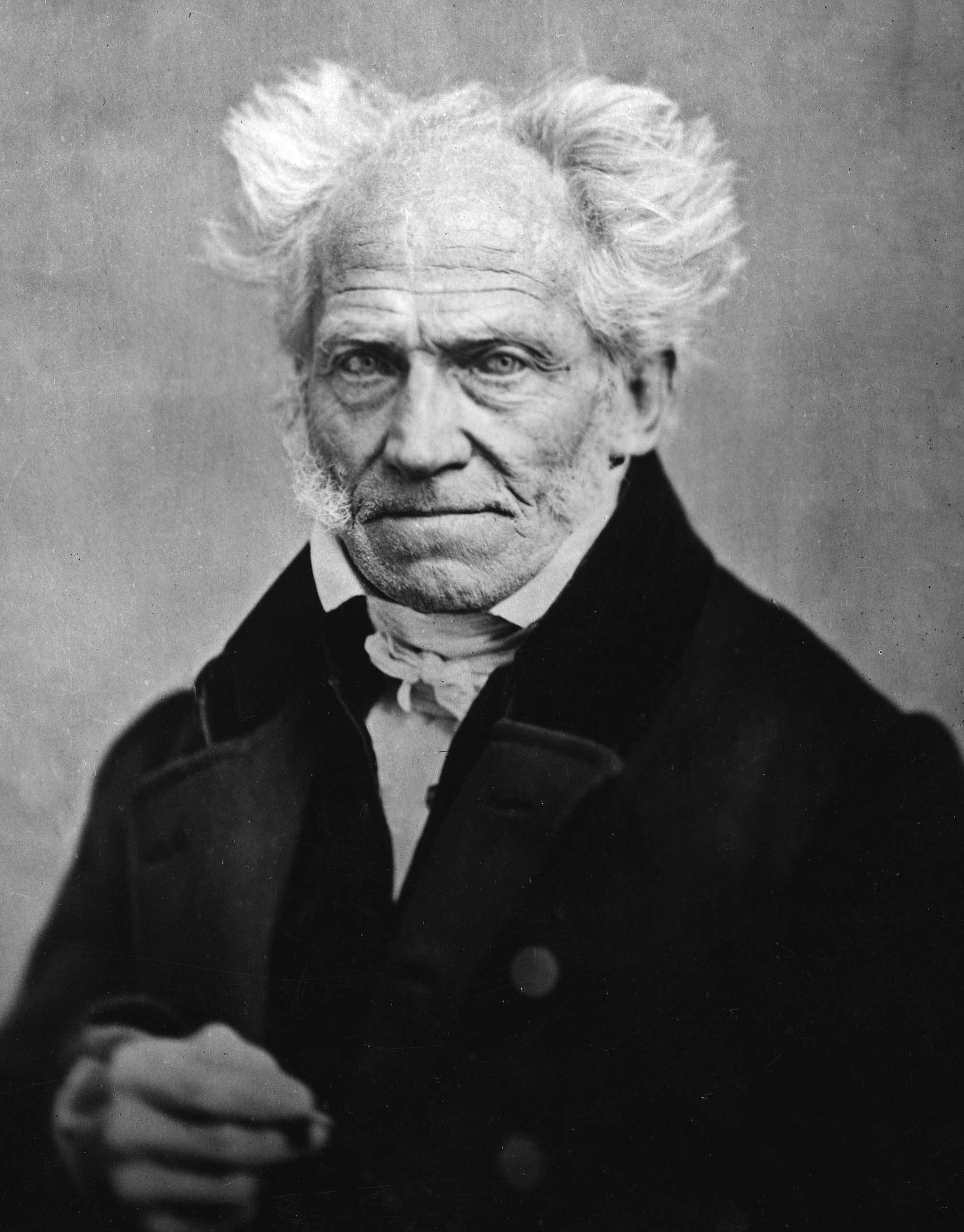
Pensées, maximes et fragments by Arthur Schopenhauer is a collection of philosophical aphorisms and fragments written in the mid-19th century. It distills a starkly pessimistic view of existence—pain as fundamental, pleasure as merely the absence of pain—alongside critiques of love, society, politics, religion, and culture, and it points toward compassion, resignation, and ascetic renunciation as the only real relief from the will. Framed for general readers, it couples bite-sized maxims with lucid, often caustic prose that lays out Schopenhauer’s ethics and metaphysics in accessible form. The opening of the volume unfolds with a substantial biographical preface by J. Bourdeau, sketching Schopenhauer’s life from his merchant family origins and wide travels to his studies under the spell of Kant and Plato, his failed Berlin lectures during Hegel’s ascendancy, his retreat to Frankfurt, and his disciplined, eccentric bachelor routines. It highlights his temperament (acerbic, fearful, combative), his late fame, his love of animals, his polemics against professors, theologians, demagogues, and romantic illusions, and the tension between his preached asceticism and his comfortable habits. The preface also notes his style, borrowings, and the “cult” that grew around him. After this, the first section, “Douleurs du monde,” lays out his core theses: existence is structured by suffering; pleasure is negative while pain is positive; life is a ceaseless struggle swinging between torment and boredom; human consciousness magnifies misery beyond that of animals; optimism and theodicies are untenable; and the world is best seen as a penal colony. The text contrasts the tragic arc of whole lives with the comic pettiness of daily detail, attacks the “best of all possible worlds” claim, and underscores the ubiquity of death and frustration. It then turns toward resignation and renunciation, introducing compassion that breaks the illusion of separateness and gestures toward ascetic quieting of the will as the path to deliverance.
Editions
Link to this book
Add a free, dofollow link to Lex on your blog, forum, syllabus, or reading list.

<a href="https://lex-books.com/book/pens-es-maximes-et-fragments-346cbf3f-9510-4bf2-949e-ee71d34dba65"><img src="https://lex-books.com/badges/read-on-lex.svg" alt="Read Pensées, Maximes Et Fragments by Arthur Schopenhauer free on Lex" width="160" height="40"></a>[](https://lex-books.com/book/pens-es-maximes-et-fragments-346cbf3f-9510-4bf2-949e-ee71d34dba65)[url=https://lex-books.com/book/pens-es-maximes-et-fragments-346cbf3f-9510-4bf2-949e-ee71d34dba65][img]https://lex-books.com/badges/read-on-lex.svg[/img][/url]Read Pensées, Maximes Et Fragments by Arthur Schopenhauer free on Lex: https://lex-books.com/book/pens-es-maximes-et-fragments-346cbf3f-9510-4bf2-949e-ee71d34dba65Cite this book
Reading this edition for a paper or guide? Copy a citation.
Schopenhauer, Arthur. Pensées, Maximes Et Fragments. Lex, lex-books.com/book/pens-es-maximes-et-fragments-346cbf3f-9510-4bf2-949e-ee71d34dba65.Schopenhauer, A. (1880). Pensées, Maximes Et Fragments. Lex. https://lex-books.com/book/pens-es-maximes-et-fragments-346cbf3f-9510-4bf2-949e-ee71d34dba65Schopenhauer, Arthur. Pensées, Maximes Et Fragments. Lex. https://lex-books.com/book/pens-es-maximes-et-fragments-346cbf3f-9510-4bf2-949e-ee71d34dba65.