In Praise of Folly
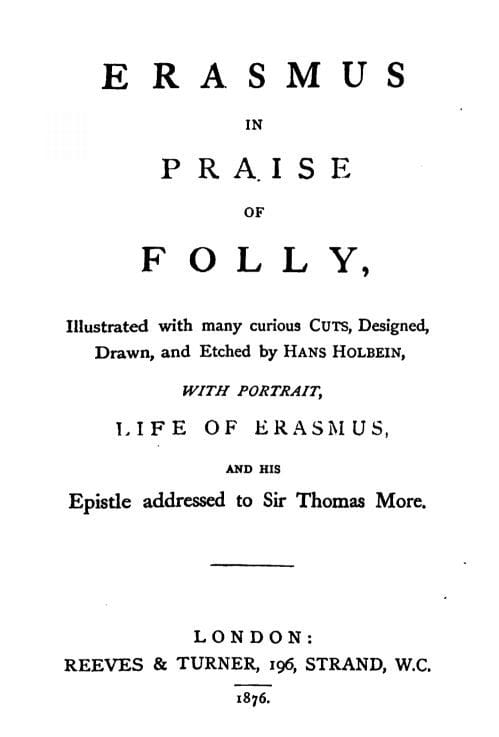
In 1509, traveling through Italy with his friend Thomas More, Erasmus composed a dangerous book disguised as praise. The personified goddess Folly takes the podium and delivers a dazzling self-aggrandizing speech, but what begins as courtly entertainment mutates into something far more subversive. She celebrates lovers, princes, pedants, and courtiers with razor-sharp irony, then turns her attention to the Church: to indulgent bishops, money-grubbing indulgences sellers, and the superstitious faithful who mistake ritual for righteousness. Yet Erasmus's true target is deeper than church corruption. As Folly's oration spirals outward, she exposes humanity's most cherished self-deceptions, the illusions we cling to, the absurdities we call wisdom, the vanity we mistake for virtue. The brilliance lies in what seems like a simple joke: the final turn reveals that Christian wisdom itself appears as folly to the worldly wise. The cross is foolishness to Greeks and scandal to Jews, yet it holds the only real wisdom. Five centuries later, this Renaissance masterpiece still cuts. It is for anyone who suspects that the people most certain of their own enlightenment might be the most thoroughly fooled.
Editions
Link to this book
Add a free, dofollow link to Lex on your blog, forum, syllabus, or reading list.

<a href="https://lex-books.com/book/in-praise-of-folly-cf43108e-4818-4937-abe3-ddd448cba409"><img src="https://lex-books.com/badges/read-on-lex.svg" alt="Read In Praise of Folly by Desiderius Erasmus free on Lex" width="160" height="40"></a>[](https://lex-books.com/book/in-praise-of-folly-cf43108e-4818-4937-abe3-ddd448cba409)[url=https://lex-books.com/book/in-praise-of-folly-cf43108e-4818-4937-abe3-ddd448cba409][img]https://lex-books.com/badges/read-on-lex.svg[/img][/url]Read In Praise of Folly by Desiderius Erasmus free on Lex: https://lex-books.com/book/in-praise-of-folly-cf43108e-4818-4937-abe3-ddd448cba409Cite this book
Reading this edition for a paper or guide? Copy a citation.
Erasmus, Desiderius. In Praise of Folly. Lex, lex-books.com/book/in-praise-of-folly-cf43108e-4818-4937-abe3-ddd448cba409.Erasmus, D. (n.d.). In Praise of Folly. Lex. https://lex-books.com/book/in-praise-of-folly-cf43108e-4818-4937-abe3-ddd448cba409Erasmus, Desiderius. In Praise of Folly. Lex. https://lex-books.com/book/in-praise-of-folly-cf43108e-4818-4937-abe3-ddd448cba409.
![Two Dyaloges (c. 1549): Wrytten in Laten by the Famous Clerke, D. Erasm[US] of Roterodame, One Called Polyphemus or the Gospeller, the Other Dysposyng of Thynges and Names, Translated in to Englyshe by Edmonde Becke.](/_next/image?url=https%3A%2F%2Fd3b2n8gj62qnwr.cloudfront.net%2FCOVERS%2Fgutenberg_covers75k%2Febook-14500.png&w=3840&q=75)