English Bards and Scotch Reviewers
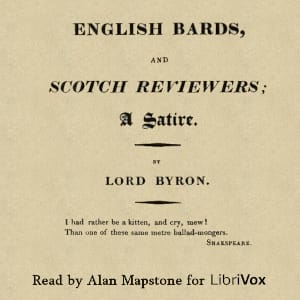
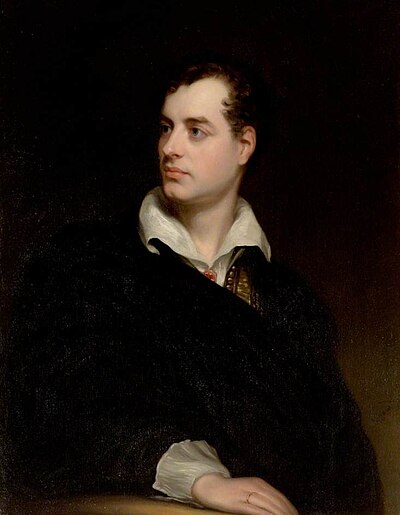
When the young Lord Byron received a brutal review of his first poetry collection in the Edinburgh Review, he did not quietly accept the criticism. Instead, he unleashed this ferociously funny satirical poem in 1809, written in heroic couplets that deliberately echo Pope's The Dunciad. The result is a no-holds-barred assault on the era's most celebrated poets Wordsworth, Coleridge, and Southey, along with the critics who dared to judge the 21-year-old aristocrat. Byron's wit cuts like a blade through literary pretension, and the poem announced him as a formidable voice in English letters - one who could destroy an enemy with a couplet as surely as he could move readers with a stanza. Yet even Byron eventually regretted the work's more vicious passages, suppressing it after its fifth edition. Today it stands as a fascinating window into early 19th-century literary politics, and as proof that the man who would become the Romantic era's most famous poet could be as savagely funny as he was later sublime.
Editions

Link to this book
Add a free, dofollow link to Lex on your blog, forum, syllabus, or reading list.

<a href="https://lex-books.com/book/english-bards-and-scotch-reviewers-63bb3ccb-9a11-41ba-b8e5-814c8d560a9b"><img src="https://lex-books.com/badges/read-on-lex.svg" alt="Read English Bards and Scotch Reviewers by George Gordon Byron, Baron Byron free on Lex" width="160" height="40"></a>[](https://lex-books.com/book/english-bards-and-scotch-reviewers-63bb3ccb-9a11-41ba-b8e5-814c8d560a9b)[url=https://lex-books.com/book/english-bards-and-scotch-reviewers-63bb3ccb-9a11-41ba-b8e5-814c8d560a9b][img]https://lex-books.com/badges/read-on-lex.svg[/img][/url]Read English Bards and Scotch Reviewers by George Gordon Byron, Baron Byron free on Lex: https://lex-books.com/book/english-bards-and-scotch-reviewers-63bb3ccb-9a11-41ba-b8e5-814c8d560a9bCite this book
Reading this edition for a paper or guide? Copy a citation.
George Gordon Byron, Baron Byron. English Bards and Scotch Reviewers. Lex, lex-books.com/book/english-bards-and-scotch-reviewers-63bb3ccb-9a11-41ba-b8e5-814c8d560a9b.George Gordon Byron, B. B. (n.d.). English Bards and Scotch Reviewers. Lex. https://lex-books.com/book/english-bards-and-scotch-reviewers-63bb3ccb-9a11-41ba-b8e5-814c8d560a9bGeorge Gordon Byron, Baron Byron. English Bards and Scotch Reviewers. Lex. https://lex-books.com/book/english-bards-and-scotch-reviewers-63bb3ccb-9a11-41ba-b8e5-814c8d560a9b.