Thinking, Fast and Slow (Comprehensive Summary)
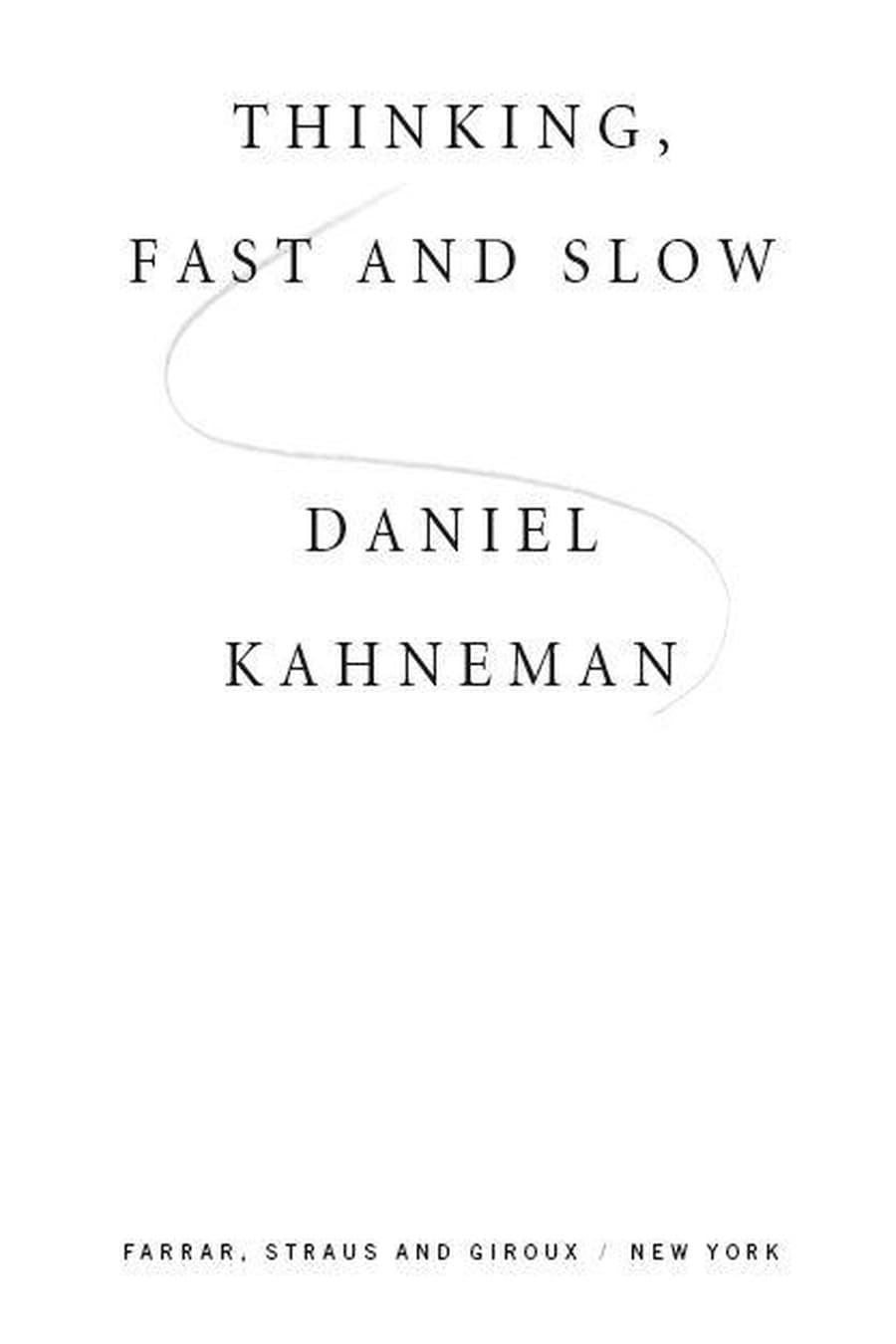
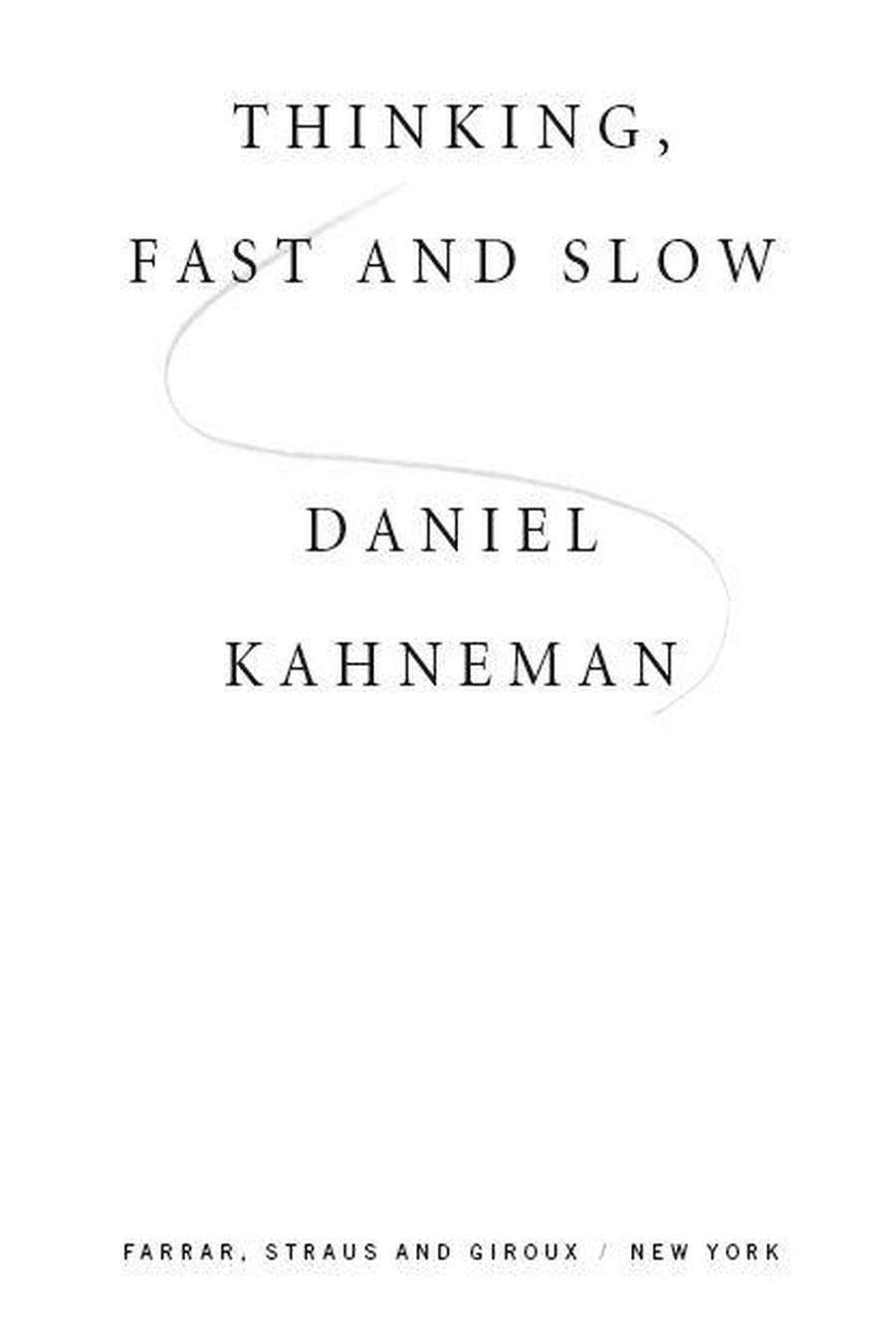
Thinking, Fast and Slow by Daniel Kahneman. This Lexicon distills the book's key arguments, evidence, and conclusions into a concise original work.
Editions

X-Ray
Nobel Prize-winning psychologist and the author-narrator of the book, Kahneman draws on decades of research to explain the cognitive mechanisms underlying human judgment and decision-making. His personal anecdotes—from Israeli military service to academic collaborations—ground the book's abstract concepts in lived experience.
Kahneman's primary research collaborator, Tversky is described as possessing exceptional logical rigor that complemented Kahneman's more intuitive psychological sensibility. Together they produced the heuristics-and-biases research program and Prospect Theory, fundamentally reshaping psychology and economics.
A psychologist specializing in Naturalistic Decision Making, Klein is Kahneman's 'adversarial collaborator' whose research on expert intuition—particularly among firefighters—provides a counterpoint to Kahneman's skepticism about intuitive judgment. Their collaboration produces a nuanced framework for when intuition can and cannot be trusted.
Behavioral economist and originator of mental accounting theory, Thaler's observations about the endowment effect and irrational financial behavior are central to several chapters. His concept of libertarian paternalism, developed with Cass Sunstein, informs Kahneman's policy recommendations in the conclusions.
About Thinking, Fast and Slow (Comprehensive Summary)
Chapter Summaries
- Introduction
- Kahneman traces the origins of his interest in judgment and decision-making to a 1969 seminar with Amos Tversky, whose collaboration produced landmark research on cognitive biases and heuristics. He introduces the concept of systematic errors in human intuition, particularly the availability heuristic, and explains how their joint work challenged prevailing notions of human rationality. The introduction outlines the book's five-part structure, previewing the dual-system model, statistical reasoning, overconfidence, economic theory, and the distinction between the experiencing and remembering selves. Kahneman frames the book as an effort to enrich the vocabulary people use to discuss judgment, enabling better conversations and decisions.
- The Characters of the Story
- Kahneman introduces System 1 and System 2 as the two central characters of human cognition—System 1 being fast, automatic, and intuitive, while System 2 is slow, deliberate, and effortful. He illustrates System 1 through the immediate emotional response to an angry face and System 2 through the concentrated effort required to solve a multiplication problem. The chapter explores how cognitive illusions, such as the Müller-Lyer illusion, reveal the limits of System 1, and how the 'Invisible Gorilla' experiment demonstrates the dangers of inattentional blindness. Kahneman argues that while the division of labor between the two systems is generally efficient, System 1's biases can cause significant errors in complex or unfamiliar situations.
- Attention and Effort
- Kahneman examines how mental effort manifests physically, using the Add-1 task and pupil dilation research to demonstrate that cognitive load can be quantitatively measured. He shows that as tasks grow more demanding, pupils dilate proportionally, providing a physiological window into System 2's engagement. The chapter introduces selective attention, explaining how high cognitive demand can render people effectively blind to other stimuli. Kahneman also discusses the law of least effort, arguing that humans naturally gravitate toward the least cognitively demanding path available.
Key Themes
- Dual-Process Thinking
- The entire book is organized around the distinction between System 1 (fast, automatic, intuitive) and System 2 (slow, deliberate, effortful). Kahneman shows that most cognitive errors arise not from irrationality per se but from the architecture of these two systems and the conditions under which each dominates.
- Cognitive Bias and Heuristics
- Kahneman catalogues a wide range of systematic errors—anchoring, availability, representativeness, the halo effect, WYSIATI, and more—showing that these are not random mistakes but predictable products of the heuristics humans use to simplify complex judgments. The biases are consistent across cultures, education levels, and even expert populations.
- Loss Aversion and Prospect Theory
- Loss aversion—the finding that losses hurt roughly twice as much as equivalent gains feel good—is the psychological engine behind Prospect Theory and explains a vast range of economic anomalies, from the endowment effect to risk-seeking in the domain of losses. Kahneman shows that this asymmetry is deeply rooted in evolutionary biology and shapes behavior from golf putting to corporate mergers.
Characters
- Daniel Kahneman(narrator)
- Nobel Prize-winning psychologist and the author-narrator of the book, Kahneman draws on decades of research to explain the cognitive mechanisms underlying human judgment and decision-making. His personal anecdotes—from Israeli military service to academic collaborations—ground the book's abstract concepts in lived experience.
- Amos Tversky(supporting)
- Kahneman's primary research collaborator, Tversky is described as possessing exceptional logical rigor that complemented Kahneman's more intuitive psychological sensibility. Together they produced the heuristics-and-biases research program and Prospect Theory, fundamentally reshaping psychology and economics.
- Gary Klein(supporting)
- A psychologist specializing in Naturalistic Decision Making, Klein is Kahneman's 'adversarial collaborator' whose research on expert intuition—particularly among firefighters—provides a counterpoint to Kahneman's skepticism about intuitive judgment. Their collaboration produces a nuanced framework for when intuition can and cannot be trusted.
- Richard Thaler(supporting)
- Behavioral economist and originator of mental accounting theory, Thaler's observations about the endowment effect and irrational financial behavior are central to several chapters. His concept of libertarian paternalism, developed with Cass Sunstein, informs Kahneman's policy recommendations in the conclusions.
- Paul Slovic(supporting)
- A psychologist whose research on risk perception and the affect heuristic is central to the chapters on availability and risk. Slovic argues that laypeople's risk judgments incorporate legitimate ethical and emotional dimensions that expert analysis often ignores, and he advocates for mutual respect between expert and public perspectives on risk.
- Paul Meehl(supporting)
- A psychologist whose 1954 book 'Clinical vs. Statistical Prediction' demonstrated that simple statistical algorithms consistently outperform trained clinical experts. Meehl's work is the foundation of Kahneman's chapter on intuitions versus formulas and his broader argument for algorithm-assisted decision-making.
Link to this book
Add a free, dofollow link to Lex on your blog, forum, syllabus, or reading list.

<a href="https://lex-books.com/book/thinking-fast-and-slow-comprehensive-summary-c003908e-e4ff-5999-9b2a-02c5e79cb2a6"><img src="https://lex-books.com/badges/read-on-lex.svg" alt="Read Thinking, Fast and Slow (Comprehensive Summary) by Daniel Kahneman free on Lex" width="160" height="40"></a>[](https://lex-books.com/book/thinking-fast-and-slow-comprehensive-summary-c003908e-e4ff-5999-9b2a-02c5e79cb2a6)[url=https://lex-books.com/book/thinking-fast-and-slow-comprehensive-summary-c003908e-e4ff-5999-9b2a-02c5e79cb2a6][img]https://lex-books.com/badges/read-on-lex.svg[/img][/url]Read Thinking, Fast and Slow (Comprehensive Summary) by Daniel Kahneman free on Lex: https://lex-books.com/book/thinking-fast-and-slow-comprehensive-summary-c003908e-e4ff-5999-9b2a-02c5e79cb2a6Cite this book
Reading this edition for a paper or guide? Copy a citation.
Kahneman, Daniel. Thinking, Fast and Slow (Comprehensive Summary). Lex, lex-books.com/book/thinking-fast-and-slow-comprehensive-summary-c003908e-e4ff-5999-9b2a-02c5e79cb2a6.Kahneman, D. (n.d.). Thinking, Fast and Slow (Comprehensive Summary). Lex. https://lex-books.com/book/thinking-fast-and-slow-comprehensive-summary-c003908e-e4ff-5999-9b2a-02c5e79cb2a6Kahneman, Daniel. Thinking, Fast and Slow (Comprehensive Summary). Lex. https://lex-books.com/book/thinking-fast-and-slow-comprehensive-summary-c003908e-e4ff-5999-9b2a-02c5e79cb2a6.