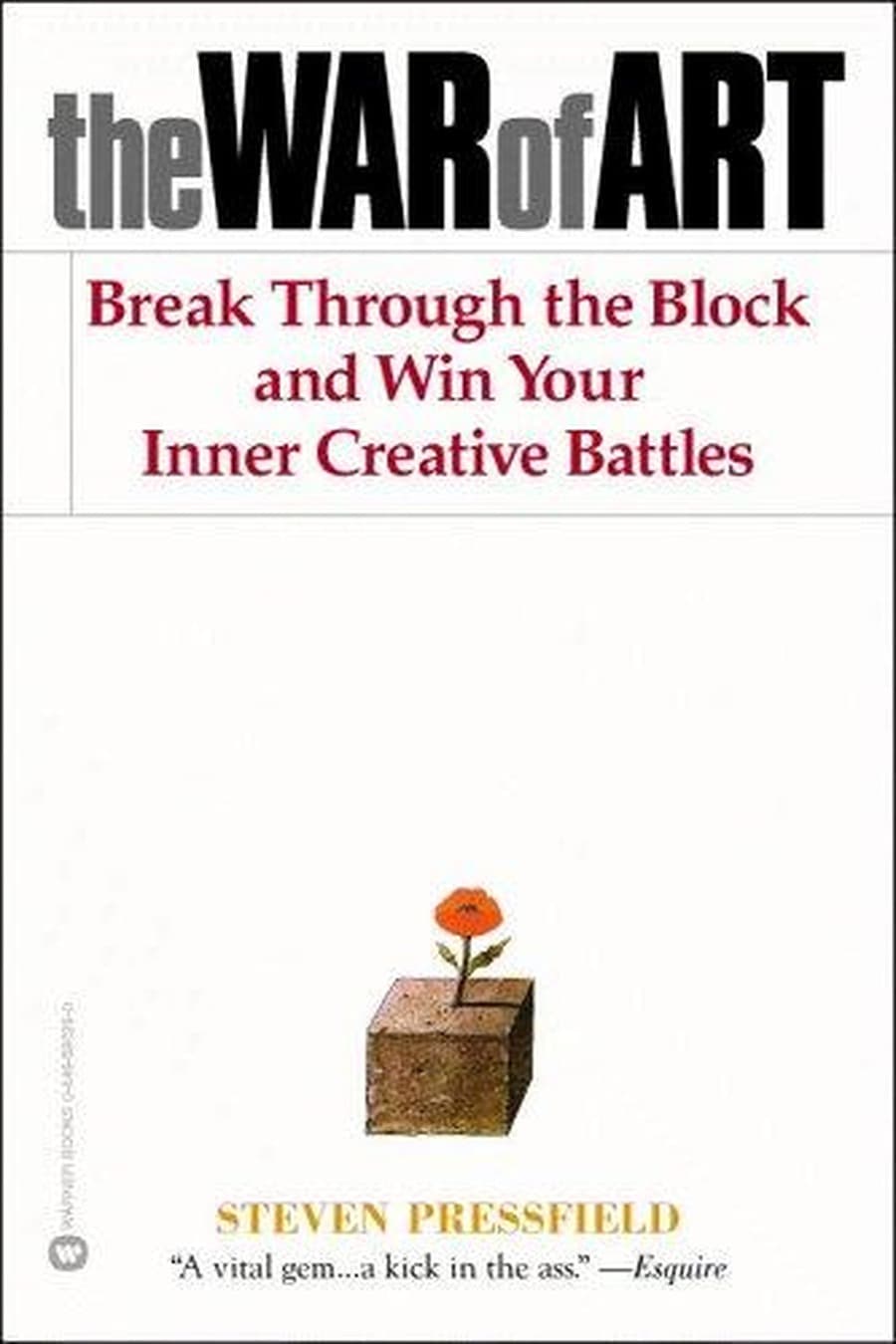
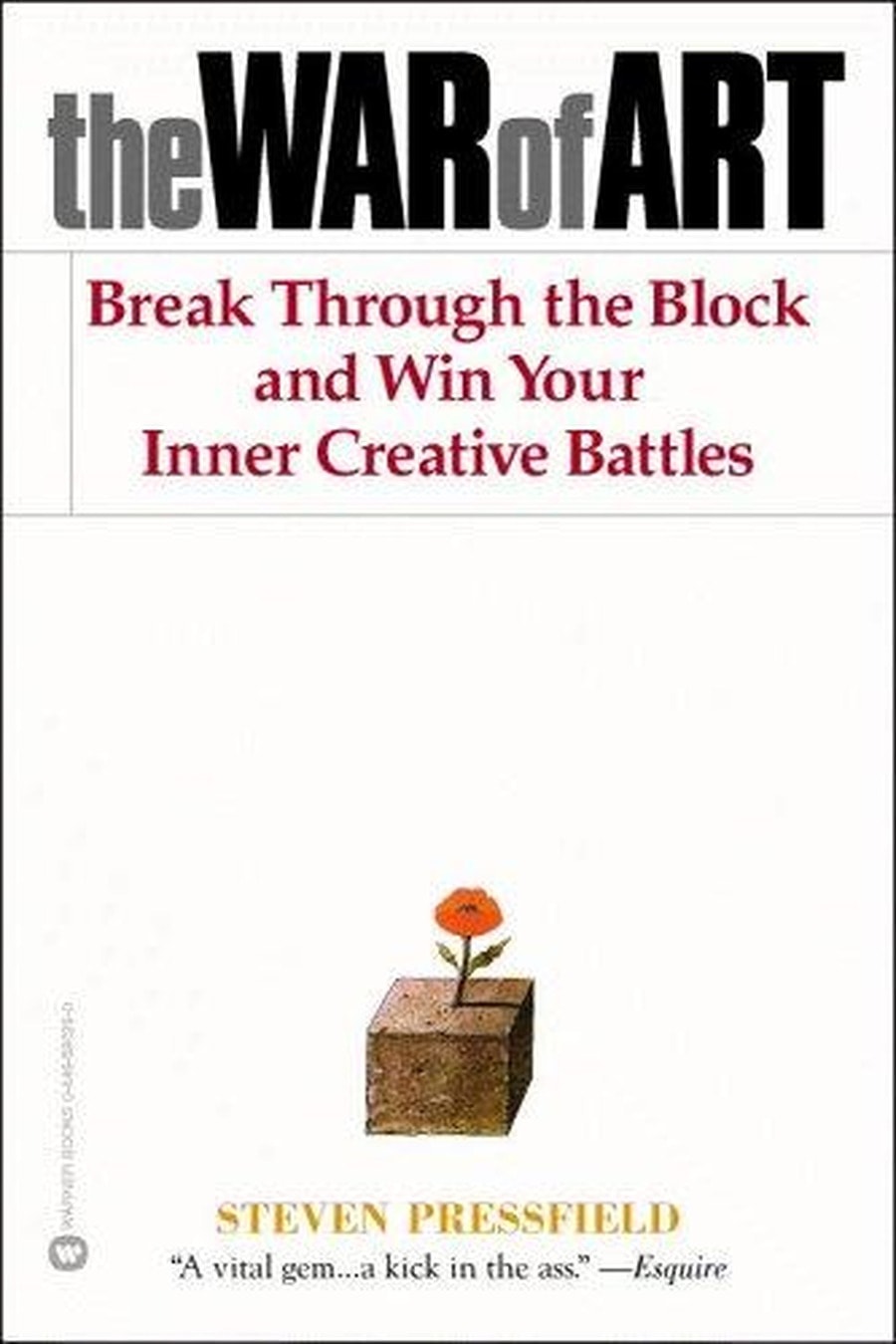
The War of Art (Comprehensive Summary)
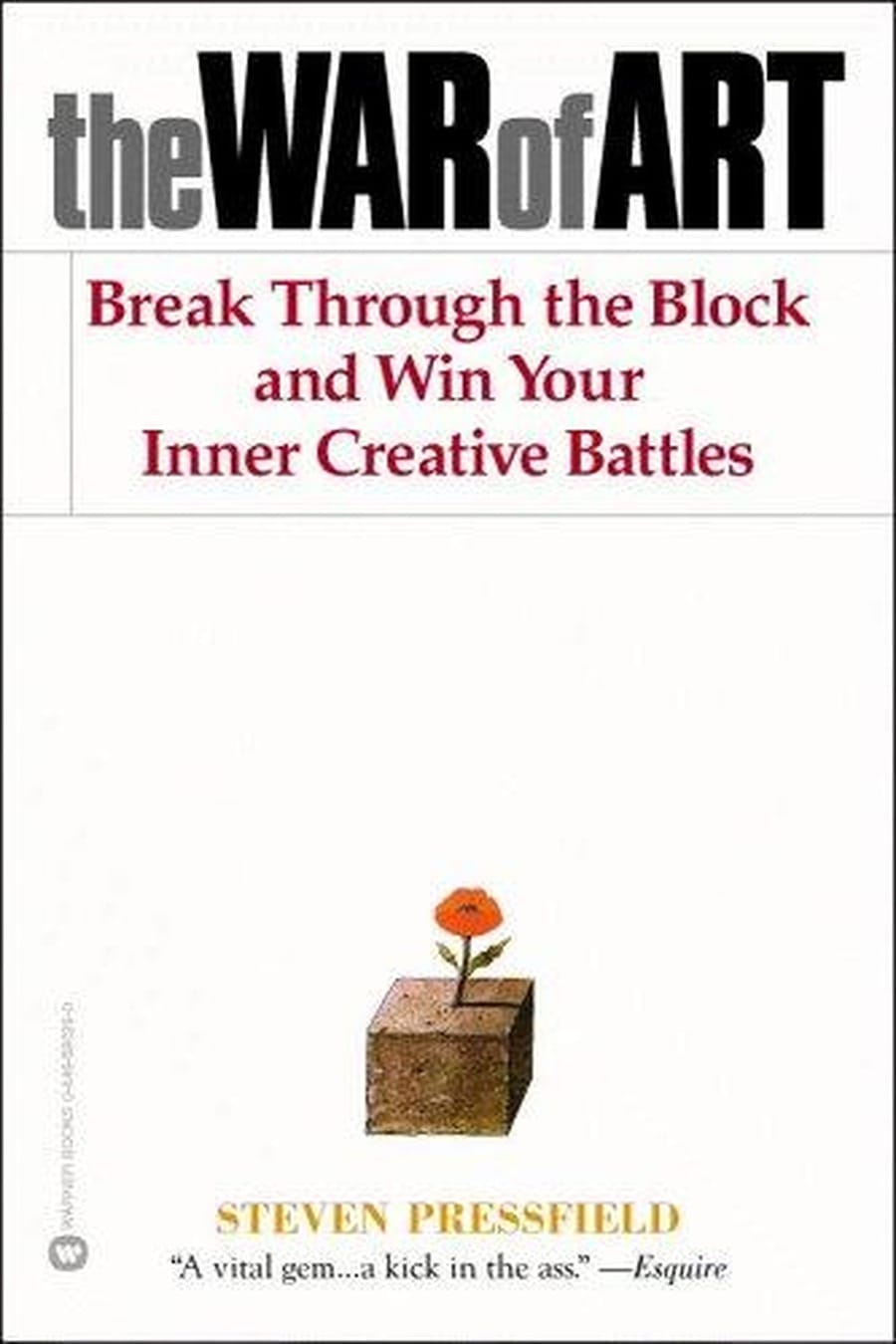
The War of Art by Steven Pressfield. This Lexicon distills the book's key arguments, evidence, and conclusions into a concise original work.
Editions

X-Ray
The author and narrator, who shares personal anecdotes and insights on creativity, struggle, and overcoming 'Resistance'.
An inner adversary, equated with the Kabbalistic 'yetzer hara,' that relentlessly seeks to thwart individual self-actualization, creativity, and personal growth.
A spiritual teacher whose teachings on action over contemplation are referenced to combat the inertia fostered by Resistance.
A successful screenwriter ('Braveheart') and friend of Pressfield, known for his 'little successes' technique to build momentum.
About The War of Art (Comprehensive Summary)
Chapter Summaries
- 1
- Steven Pressfield introduces the 'shadow Self,' an inner adversary he calls 'Resistance,' equating it with the Kabbalistic 'yetzer hara.' This force actively thwarts personal growth and creativity, operating insidiously to prevent self-actualization. Recognizing this inner enemy is the first step in overcoming it.
- 2
- Pressfield expands on Resistance, describing it as a universal force that intensifies with the significance of one's creative goals. He distinguishes between 'amateurs' paralyzed by Resistance and 'professionals' who confront it with discipline. Consistency, routine, and reframing fear as a signal are crucial for overcoming this adversary.
- 3
- This chapter explores the intrinsic connection between art and life, asserting that artists' narratives reflect their personal struggles. Pressfield encourages readers to view themselves as heroes on a quest to chase dreams, confronting inner demons (Resistance). He emphasizes immediacy, urging individuals to treat every day as 'Day One' for creative commitment.
Key Themes
- The Nature of Resistance
- Resistance is portrayed as an omnipresent, malevolent, and insidious inner adversary, akin to a disease, that actively thwarts personal growth and creativity. It is a universal force that affects everyone, particularly potent in the face of ambition and aspiration.
- Professionalism vs. Amateurism
- The book draws a sharp distinction between amateurs, who are paralyzed by Resistance, and professionals, who confront it head-on with discipline and commitment. Turning pro involves a fundamental mindset shift, embracing discomfort and consistent effort over casual habits.
- Discipline and Routine
- Consistency and routine are presented as essential tools for combating Resistance and fostering a productive mindset. Establishing a regular practice, treating creative work as a non-negotiable part of life, and accumulating 'little successes' build resilience and diminish Resistance's power.
Characters
- Steven Pressfield(narrator)
- The author and narrator, who shares personal anecdotes and insights on creativity, struggle, and overcoming 'Resistance'.
- Resistance(antagonist)
- An inner adversary, equated with the Kabbalistic 'yetzer hara,' that relentlessly seeks to thwart individual self-actualization, creativity, and personal growth.
- Paramahansa Yogananda(supporting)
- A spiritual teacher whose teachings on action over contemplation are referenced to combat the inertia fostered by Resistance.
- Randy Wallace(supporting)
- A successful screenwriter ('Braveheart') and friend of Pressfield, known for his 'little successes' technique to build momentum.
- Norm Stahl(supporting)
- Pressfield's mentor who introduced him to the 'foolscap method' for outlining novels, a pivotal tool for clarity and focus.
- Herman Melville(supporting)
- The author of 'Moby Dick,' used as an example to illustrate how even grand narratives can begin with a simple foolscap outline.
Link to this book
Add a free, dofollow link to Lex on your blog, forum, syllabus, or reading list.

<a href="https://lex-books.com/book/the-war-of-art-comprehensive-summary-0e85073a-900d-5aed-94c4-efb35dd7db62"><img src="https://lex-books.com/badges/read-on-lex.svg" alt="Read The War of Art (Comprehensive Summary) by Steven Pressfield free on Lex" width="160" height="40"></a>[](https://lex-books.com/book/the-war-of-art-comprehensive-summary-0e85073a-900d-5aed-94c4-efb35dd7db62)[url=https://lex-books.com/book/the-war-of-art-comprehensive-summary-0e85073a-900d-5aed-94c4-efb35dd7db62][img]https://lex-books.com/badges/read-on-lex.svg[/img][/url]Read The War of Art (Comprehensive Summary) by Steven Pressfield free on Lex: https://lex-books.com/book/the-war-of-art-comprehensive-summary-0e85073a-900d-5aed-94c4-efb35dd7db62Cite this book
Reading this edition for a paper or guide? Copy a citation.
Pressfield, Steven. The War of Art (Comprehensive Summary). Lex, lex-books.com/book/the-war-of-art-comprehensive-summary-0e85073a-900d-5aed-94c4-efb35dd7db62.Pressfield, S. (n.d.). The War of Art (Comprehensive Summary). Lex. https://lex-books.com/book/the-war-of-art-comprehensive-summary-0e85073a-900d-5aed-94c4-efb35dd7db62Pressfield, Steven. The War of Art (Comprehensive Summary). Lex. https://lex-books.com/book/the-war-of-art-comprehensive-summary-0e85073a-900d-5aed-94c4-efb35dd7db62.