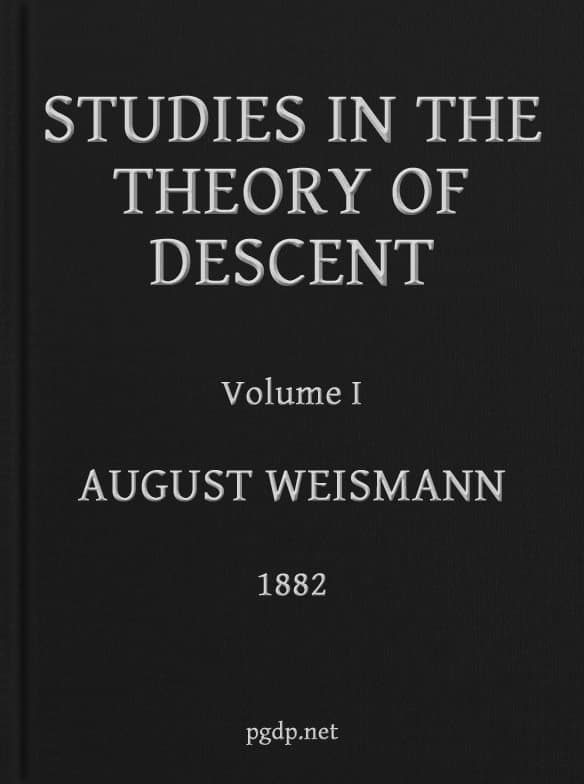
The Evolution Theory, Vol. 1 of 2
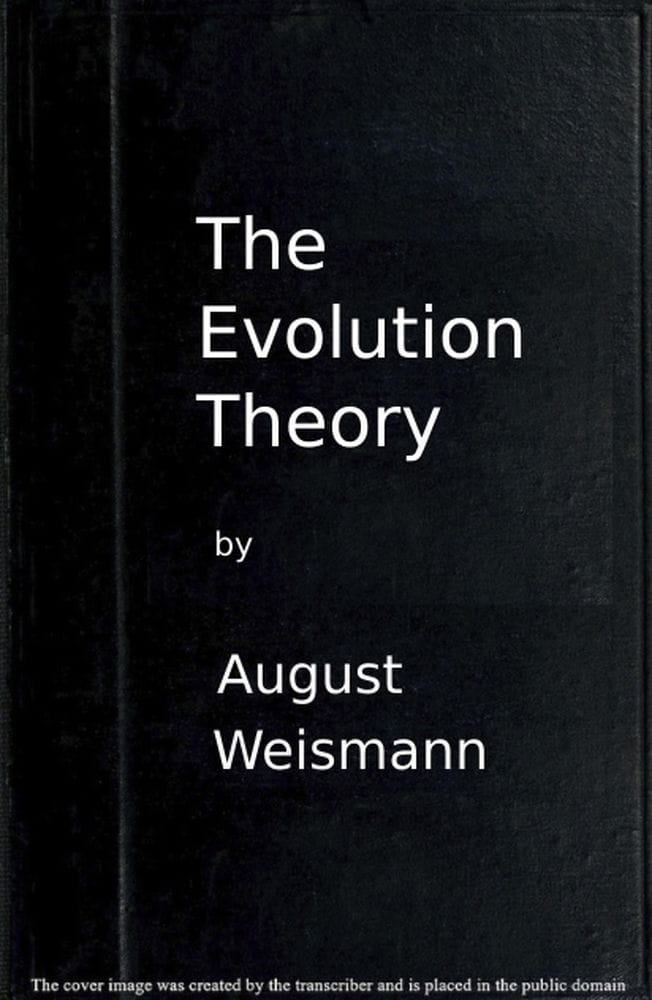
August Weismann's landmark treatise laid the groundwork for modern evolutionary biology by proposing that inheritance flows exclusively through germ cells, not the body itself. This radical idea, now known as the germ plasm theory, rejected the prevailing belief that traits acquired during a lifetime could be passed to offspring. The work systematically builds upon Darwin's theory while addressing its most vocal critics, weaving together evidence from embryology, cytology, and breeding experiments into a unified argument for natural selection as the engine of evolution. Weismann tackles fundamental questions that Darwin could not fully answer: how does variation arise in populations, how are traits preserved across generations, and what mechanisms actually govern the transformation of species? With meticulous attention to experimental evidence, he challenges readers to reconsider deeply held assumptions about heredity. The text concludes with a profound meditation on death and immortality at the cellular level, suggesting that the individual body is merely the temporary vessel for the immortal germ line.
Editions
Link to this book
Add a free, dofollow link to Lex on your blog, forum, syllabus, or reading list.

<a href="https://lex-books.com/book/the-evolution-theory-vol-1-of-2-383f39e6-647e-4a5b-91a9-a0dd5b3db40c"><img src="https://lex-books.com/badges/read-on-lex.svg" alt="Read The Evolution Theory, Vol. 1 of 2 by August Weismann free on Lex" width="160" height="40"></a>[](https://lex-books.com/book/the-evolution-theory-vol-1-of-2-383f39e6-647e-4a5b-91a9-a0dd5b3db40c)[url=https://lex-books.com/book/the-evolution-theory-vol-1-of-2-383f39e6-647e-4a5b-91a9-a0dd5b3db40c][img]https://lex-books.com/badges/read-on-lex.svg[/img][/url]Read The Evolution Theory, Vol. 1 of 2 by August Weismann free on Lex: https://lex-books.com/book/the-evolution-theory-vol-1-of-2-383f39e6-647e-4a5b-91a9-a0dd5b3db40cCite this book
Reading this edition for a paper or guide? Copy a citation.
Weismann, August. The Evolution Theory, Vol. 1 of 2. Lex, lex-books.com/book/the-evolution-theory-vol-1-of-2-383f39e6-647e-4a5b-91a9-a0dd5b3db40c.Weismann, A. (n.d.). The Evolution Theory, Vol. 1 of 2. Lex. https://lex-books.com/book/the-evolution-theory-vol-1-of-2-383f39e6-647e-4a5b-91a9-a0dd5b3db40cWeismann, August. The Evolution Theory, Vol. 1 of 2. Lex. https://lex-books.com/book/the-evolution-theory-vol-1-of-2-383f39e6-647e-4a5b-91a9-a0dd5b3db40c.