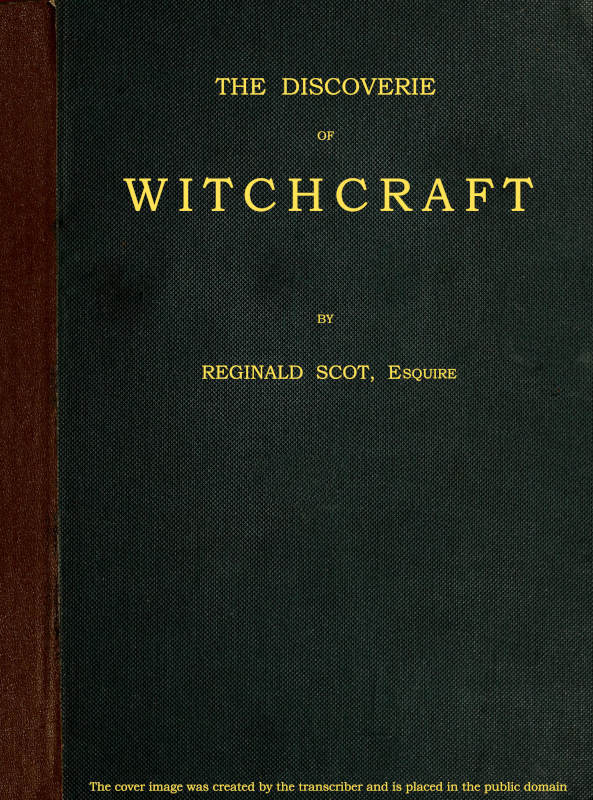
The Discoverie of Witchcraft
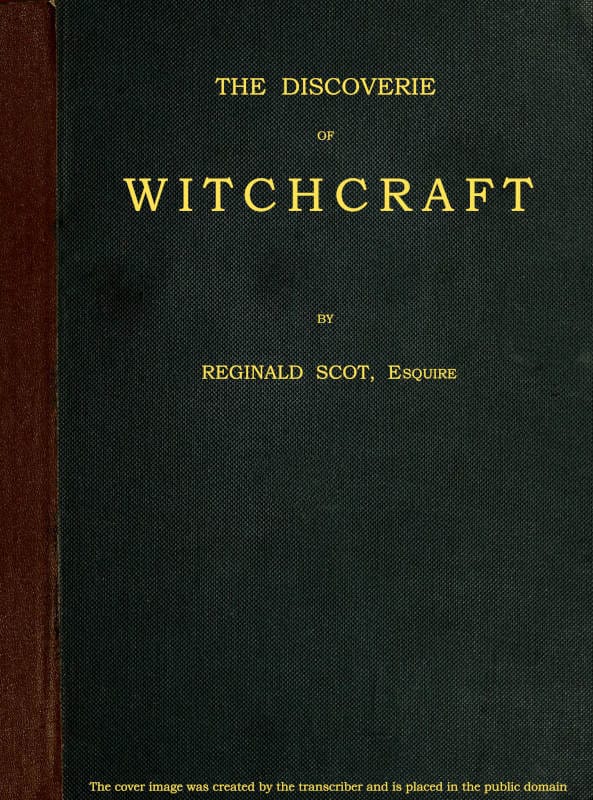
In 1584, when witch trials consumed England and the Church violently enforced belief in sabbaths, flying demons, and child-sacrificing covens, one man dared to publish proof that it was all impossible. Reginald Scot gathered the very trial records, inquisitorial texts, and theological arguments used to condemn thousands of women, then systematically dismantled them with cold logic: if witches truly commanded storms, ate children, and copulated with demons, why did none of their accusers ever produce evidence beyond confession extracted through torture? Scot went further, revealing how "miracles" and "curses" actually worked through trickery, sleight of hand, and the gullibility of the credulous. King James VI (later James I of England) found this so heretical that he ordered every copy burned. Yet the book survived precisely because it contained the most comprehensive collection of witchcraft accusations ever assembled, making it indispensable to scholars of early modern belief, persecution, and the thin line between magic and fraud. Its influence echoes in Shakespeare's Macbeth, which borrowed its most chilling imagery.
Editions
X-Ray
“they have so fraid us with bull beggers, spirits, witches, urchens, elves, hags, fairies, satyrs, pans, faunes, syrens, kit with the can'sticke, tritons, centaurs, dwarfes, giants, imps, calcars, conjurors, nymphes, changlings, incubus, Robin good fellow, the spoorne, the mare, the man in the oke, the hell waine, the fierdrake, the puckle, Tom thombe, hobgobblin, Tom tumbler, boneless, and such other bugs, that we are afraid of our own shadowes. In so much as some never feare the divell, but in a darke night; and then a polled sheepe is a perillous beast and manie times is taken for our father’s soule, speciallie in a churchyard where a right hardie man heretofore scant durst passe by night, but his haire would stand upright””
— Reginald Scot
Link to this book
Add a free, dofollow link to Lex on your blog, forum, syllabus, or reading list.

<a href="https://lex-books.com/book/the-discoverie-of-witchcraft-ccf469ab-27af-46e0-a671-a2f7fdb6455d"><img src="https://lex-books.com/badges/read-on-lex.svg" alt="Read The Discoverie of Witchcraft by Reginald Scot free on Lex" width="160" height="40"></a>[](https://lex-books.com/book/the-discoverie-of-witchcraft-ccf469ab-27af-46e0-a671-a2f7fdb6455d)[url=https://lex-books.com/book/the-discoverie-of-witchcraft-ccf469ab-27af-46e0-a671-a2f7fdb6455d][img]https://lex-books.com/badges/read-on-lex.svg[/img][/url]Read The Discoverie of Witchcraft by Reginald Scot free on Lex: https://lex-books.com/book/the-discoverie-of-witchcraft-ccf469ab-27af-46e0-a671-a2f7fdb6455dCite this book
Reading this edition for a paper or guide? Copy a citation.
Scot, Reginald. The Discoverie of Witchcraft. Lex, lex-books.com/book/the-discoverie-of-witchcraft-ccf469ab-27af-46e0-a671-a2f7fdb6455d.Scot, R. (n.d.). The Discoverie of Witchcraft. Lex. https://lex-books.com/book/the-discoverie-of-witchcraft-ccf469ab-27af-46e0-a671-a2f7fdb6455dScot, Reginald. The Discoverie of Witchcraft. Lex. https://lex-books.com/book/the-discoverie-of-witchcraft-ccf469ab-27af-46e0-a671-a2f7fdb6455d.