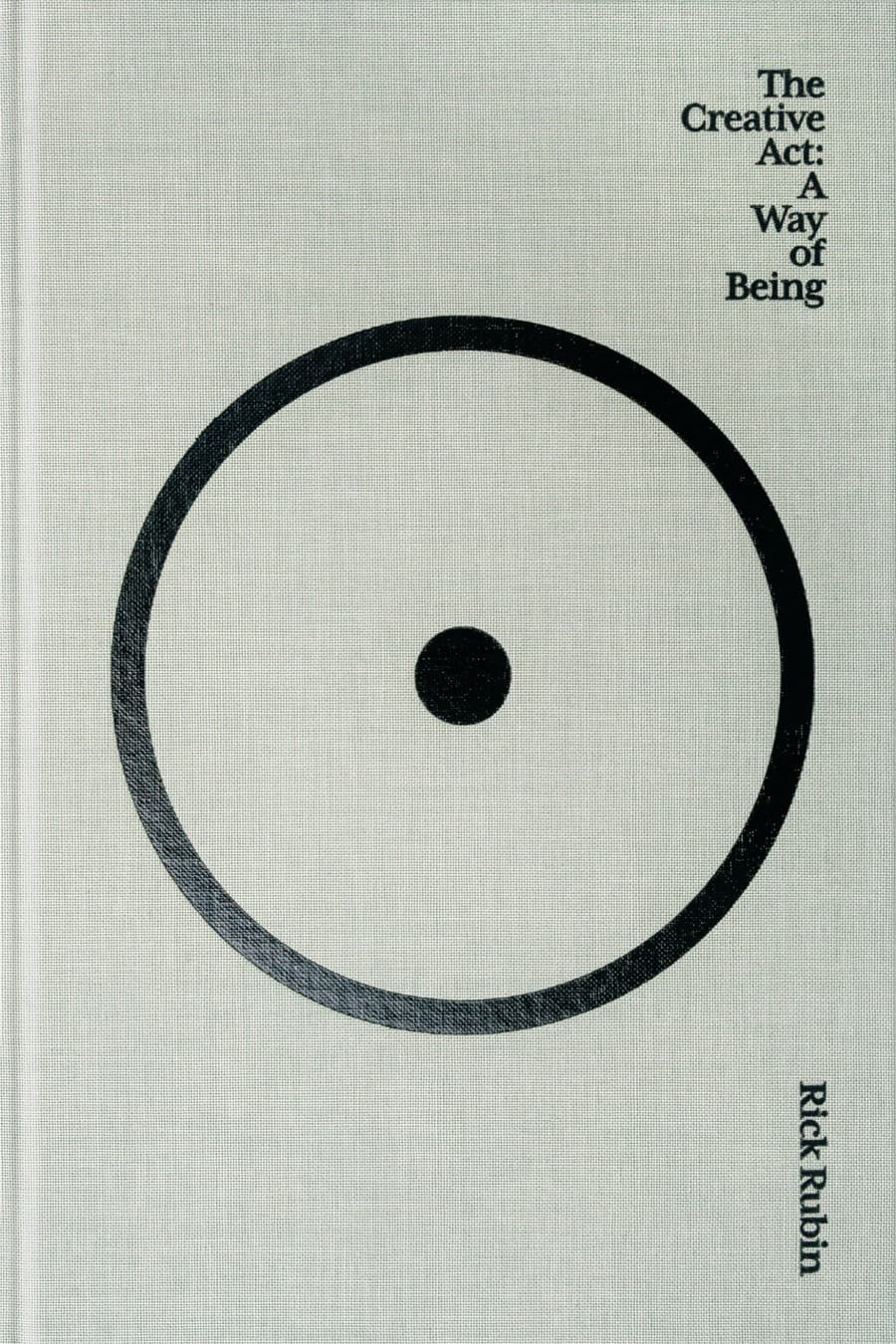
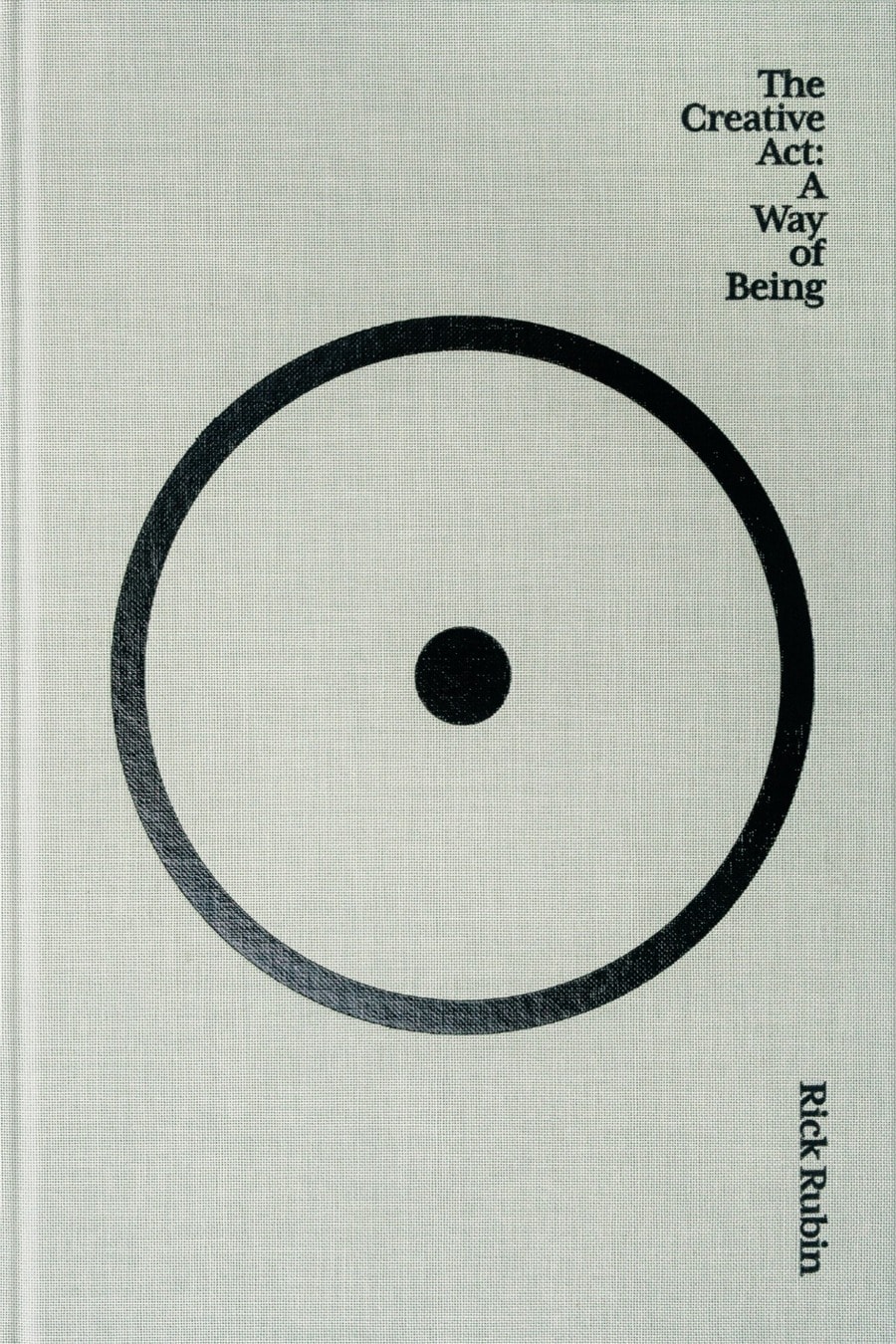
The Creative Act (Comprehensive Summary)
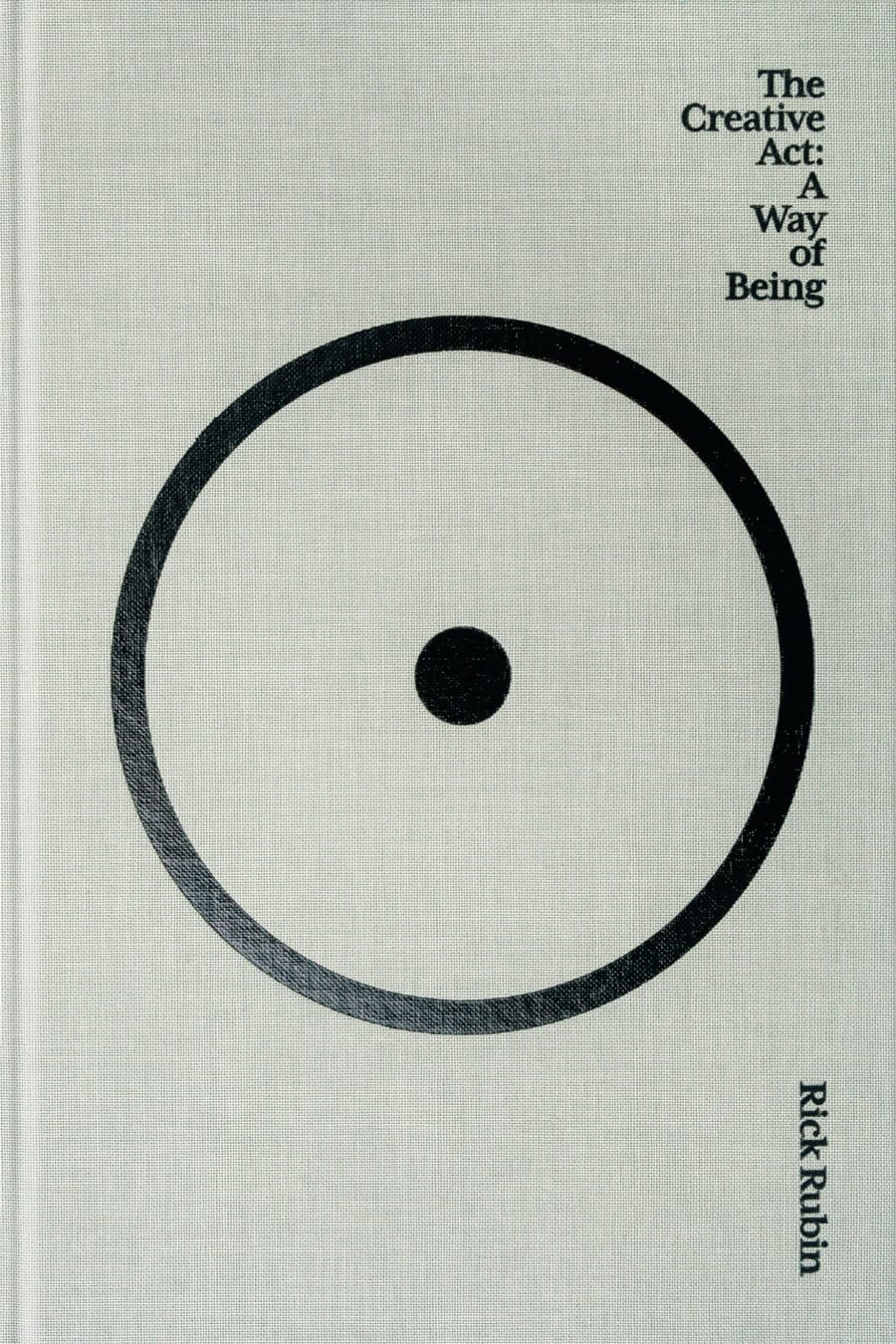
In 'The Creative Act: A Way of Being,' Rick Rubin explores the nature of creativity and its profound impact on the human experience. As a renowned music producer, Rubin draws from his extensive career to offer insights into the creative process, emphasizing the importance of authenticity, intuition, and the connection between art and life. This Lexicon distills the key ideas from Rubin's work, presenting them in original prose that highlights the significance of embracing creativity as a fundamental aspect of being.
Editions

X-Ray
Legendary music producer and author who serves as the book's sole voice and guide. He draws on decades of experience working with artists across genres to present a philosophy of creativity as a universal way of being, blending practical wisdom with spiritual and philosophical insights.
Iconic pop artist referenced multiple times as an example of unconventional creative approaches, from thriving in cacophonous environments to conceptualizing ideas while delegating physical execution, and for his Brillo Boxes that challenged definitions of art through context.
Pioneering artist referenced for his concept of 'readymades'—transforming everyday objects into art by designating them as such—which challenges traditional definitions of art and illustrates how framing and context determine artistic significance.
Beach Boys leader cited as an example of how mutual admiration between artists fosters creative elevation rather than competition, having been inspired by The Beatles' 'Rubber Soul' to create 'God Only Knows.'
About The Creative Act (Comprehensive Summary)
Chapter Summaries
- Tabla de contenidos
- Rick Rubin presents a comprehensive overview of the themes explored throughout the book, establishing that creativity is an inherent human capacity rather than a rare gift. He introduces key concepts including consciousness as a vessel and filter, the importance of tuning into the source of creativity, and common obstacles like self-doubt and distraction. The chapter emphasizes patience, beginner's mindset, play, and the cyclical nature of creative work as foundational principles.
- Chapter 2
- Rubin deepens his exploration of creativity as a universal capability linked to the human condition, arguing that engaging in creative processes leads to personal growth and self-discovery. He introduces the concept of 'creative flow'—a harmonious state where time dissolves and creation becomes joyful. The chapter emphasizes the importance of environment, play, and freedom from perfectionism in unlocking authentic artistic expression.
- Chapter 3
- Rubin explores the relationship between creativity and consciousness, introducing 'the invisible'—hidden thoughts and feelings that influence creative expression. He discusses collaboration, intention, patience, and the distinction between 'the experimenter and the finisher.' The chapter argues that self-examination can reveal creative blockages and that a flexible mindset balancing intention with openness is crucial for nurturing creativity.
Key Themes
- Universal Creativity as Birthright
- Rubin's foundational argument is that creativity is not a rare gift but an inherent aspect of being human, accessible to everyone through everyday acts of perception, decision-making, and expression. This democratization of creativity challenges elitist notions of artistic talent and invites all individuals to recognize themselves as creators.
- Openness and Receptivity
- Throughout the book, Rubin emphasizes that the creative process depends on maintaining an open, receptive state—free from judgment, rigid expectations, and the clutter of everyday distraction. This openness allows artists to receive inspiration from the Source, the natural world, and their own subconscious.
- Consciousness and Awareness
- Rubin treats consciousness as both the medium and the instrument of creativity, arguing that heightened awareness of both external phenomena and internal states is essential for artistic expression. He presents awareness as a practice that can be cultivated through meditation, ritual, and intentional attention.
Characters
- Rick Rubin(narrator)
- Legendary music producer and author who serves as the book's sole voice and guide. He draws on decades of experience working with artists across genres to present a philosophy of creativity as a universal way of being, blending practical wisdom with spiritual and philosophical insights.
- Andy Warhol(supporting)
- Iconic pop artist referenced multiple times as an example of unconventional creative approaches, from thriving in cacophonous environments to conceptualizing ideas while delegating physical execution, and for his Brillo Boxes that challenged definitions of art through context.
- Marcel Duchamp(supporting)
- Pioneering artist referenced for his concept of 'readymades'—transforming everyday objects into art by designating them as such—which challenges traditional definitions of art and illustrates how framing and context determine artistic significance.
- Brian Wilson(supporting)
- Beach Boys leader cited as an example of how mutual admiration between artists fosters creative elevation rather than competition, having been inspired by The Beatles' 'Rubber Soul' to create 'God Only Knows.'
- Paul McCartney(supporting)
- Beatles member referenced for his profound emotional response to Brian Wilson's 'Pet Sounds,' illustrating the reciprocal creative dialogue between artists that led to 'Sgt. Pepper's Lonely Hearts Club Band.'
- Carl Jung(supporting)
- Psychologist and philosopher referenced for his concept of circularity in life and creation, which Rubin uses to frame the cyclical nature of the creative process—completion leading to regeneration and new beginnings.
Link to this book
Add a free, dofollow link to Lex on your blog, forum, syllabus, or reading list.

<a href="https://lex-books.com/book/the-creative-act-comprehensive-summary-8faef600-bbc5-5906-ac52-de610710ce87"><img src="https://lex-books.com/badges/read-on-lex.svg" alt="Read The Creative Act (Comprehensive Summary) by Rick Rubin free on Lex" width="160" height="40"></a>[](https://lex-books.com/book/the-creative-act-comprehensive-summary-8faef600-bbc5-5906-ac52-de610710ce87)[url=https://lex-books.com/book/the-creative-act-comprehensive-summary-8faef600-bbc5-5906-ac52-de610710ce87][img]https://lex-books.com/badges/read-on-lex.svg[/img][/url]Read The Creative Act (Comprehensive Summary) by Rick Rubin free on Lex: https://lex-books.com/book/the-creative-act-comprehensive-summary-8faef600-bbc5-5906-ac52-de610710ce87Cite this book
Reading this edition for a paper or guide? Copy a citation.
Rubin, Rick. The Creative Act (Comprehensive Summary). Lex, lex-books.com/book/the-creative-act-comprehensive-summary-8faef600-bbc5-5906-ac52-de610710ce87.Rubin, R. (n.d.). The Creative Act (Comprehensive Summary). Lex. https://lex-books.com/book/the-creative-act-comprehensive-summary-8faef600-bbc5-5906-ac52-de610710ce87Rubin, Rick. The Creative Act (Comprehensive Summary). Lex. https://lex-books.com/book/the-creative-act-comprehensive-summary-8faef600-bbc5-5906-ac52-de610710ce87.