Tales of Terror
1899
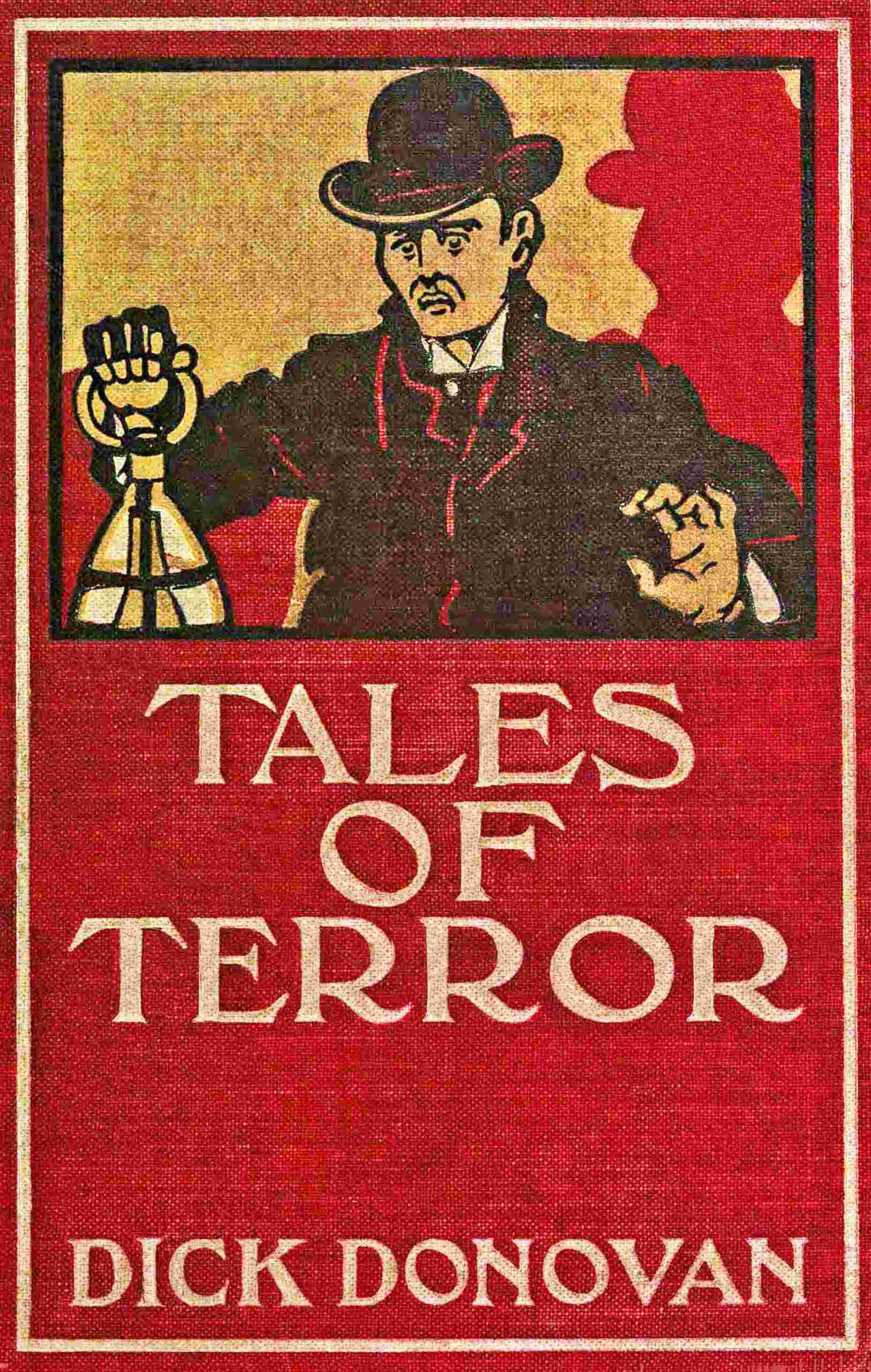
Tales of Terror, published in 1899 by Dick Donovan, is a collection of horror short stories that intertwine crime, the uncanny, and psychological dread. The opening story follows Dr. Peter Haslar as he attempts to save his friend Jack Redcar from Annette, a vampire-like woman whose mesmerizing presence leads to tragic consequences. This anthology features vivid narrators and explores themes of obsession and mortality, making it a notable contribution to late 19th-century horror literature.
Editions
X-Ray
“It is well if you go in for revenge to make it as complete as possible.("The Vengeance Of The Dead")””
— Dick Donovan
“It always is Christmas Eve, in a ghost story.””
— Dick Donovan
“He had been walking for a long time, ever since dark in fact, and dark falls soon in December.("The Old House In Vauxhall Walk")””
— Dick Donovan
“How different this world to the one about which I used to read, and in which I used to live! This is one peopled by demons, phantoms, vampires, ghouls, boggarts, and nixies. Names of things of which I knew nothing are now so familiar that the creatures themselves appear to have real existence. The Arabian Nights are not more fantastic than our gospels; and Lempriere would have found ours a more marvelous world to catalog than the classical mythical to which he devoted his learning. Ours is a world of luprachaun and clurichaune, deev and cloolie, and through the maze of mystery I have to thread my painful way, now learning how to distinguish oufe from pooka, and nis from pixy; study long screeds upon the doings of effreets and dwergers, or decipher the dwaul of delirious monks who have made homunculi from refuse. Waking or sleeping, the image of some uncouth form is always present to me. What would I not give for a volume by the once despised 'A. L. O. E' or prosy Emma Worboise? Talk of the troubles of Winifred Bertram or Jane Eyre, what are they to mine? Talented authoresses do not seem to know that however terrible it may be to have as a neighbour a mad woman in a tower, it is much worse to have to live in a kitchen with a crocodile. This elementary fact has escaped the notice of writers of fiction; the re-statement of it has induced me to reconsider my decision as to the most longed-for book; my choice now is the Swiss Family Robinson. In it I have no doubt I should find how to make even the crocodile useful, or how to kill it, which would be still better.("Mysterious Maisie")””
— Dick Donovan
“After breakfast the host takes the young man into a corner, and explains to him that what he saw was the ghost of a lady who had been murdered in that very bed, or who had murdered somebody else there - it does not really matter which: you can be a ghost by murdering somebody else or by being murdered yourself, whichever you prefer. The murdered ghost is, perhaps, the more popular; but, on the other hand, you can frighten people better if you are the murdered one, because then you can show your wounds and do groans.("Introduction" to TOLD AFTER SUPPER)””
— Dick Donovan
“He does love prophesying a misfortune, does the average British ghost. Send him out to prognosticate trouble to somebody, and he is happy. Let him force his way into a peaceful home, and turn the whole house upside down by foretelling a funeral, or predicting a bankruptcy, or hinting at a coming disgrace, or some other terrible disaster, about which nobody in their senses would want to know sooner than they could possible help, and the prior knowledge of which can serve no useful purpose whatsoever, and he feels that he is combining duty with pleasure. He would never forgive himself if anybody in his family had a trouble and he had not been there for a couple of months beforehand, doing silly tricks on the lawn or balancing himself on somebody's bedrail.("Introduction" to TOLD AFTER SUPPER)””
— Dick Donovan
“It was a bad night to be about with such a feeling in one's heart. The rain was cold, pitiless and increasing. A damp, keen wind blew down the cross streets leading from the river. The fumes of the gas works seemed to fall with the rain. The roadway was muddy; the pavement greasy; the lamps burned dimly; and that dreary district of London looked its very gloomiest and worst.("The Old House In Vauxhall Road")””
— Dick Donovan
“A long light robe, sulphur-coloured, clung to the sleeper from low throat to ankle; bands of narrow nolana-blue ribbon crossed her breast and were brought together in a loose cincture about her waist; her white, smooth feet were sandalled; one arm was curved beneath her lustrous head; the other lay relaxed and drooping. Chrysoberyls, the sea-virgins of stones, sparkled in her hair and lay in the bosom of her gown like dewdrops in an evening primrose.("The Accursed Cordonnier")””
— Dick Donovan
“Rose was patently a degenerate. Nature, in scheduling his characteristics, had pruned all superlatives. The rude armour of the flesh, under which the spiritual, like a hide-bound chrysalis, should develop secret and self-contained, was perished in his case, as it were, to a semi-opaque suit, through which his soul gazed dimly and fearfully on its monstrous arbitrary surroundings. Not the mantle of the poet, philosopher, or artist fallen upon such, can still its shiverings, or give the comfort that Nature denies.Yet he was a little bit of each - poet, philosopher, and artist; a nerveless and self-deprecatory stalker of ideals, in the pursuit of which he would wear patent leather shoes and all the apologetic graces. The grandson of a 'three-bottle' J.P., who had upheld the dignity of the State constitution while abusing his own in the best spirit of squirearchy; the son of a petulant dyspeptic, who alternated seizures of long moroseness with fits of abject moral helplessnes, Amos found his inheritance in the reversion of a dissipated constitution, and an imagination as sensitive as an exposed nerve. Before he was thirty he was a neurasthenic so practised, as to have learned a sense of luxury in the very consciousness of his own suffering. It was a negative evolution from the instinct of self-protection - self-protection, as designed in this case, against the attacks of the unspeakable.("The Accursed Cordonnier")””
— Dick Donovan
Link to this book
Add a free, dofollow link to Lex on your blog, forum, syllabus, or reading list.

<a href="https://lex-books.com/book/tales-of-terror-ba2fba92-033a-4d4d-a327-beb77cb15cf9"><img src="https://lex-books.com/badges/read-on-lex.svg" alt="Read Tales of Terror by Dick Donovan free on Lex" width="160" height="40"></a>[](https://lex-books.com/book/tales-of-terror-ba2fba92-033a-4d4d-a327-beb77cb15cf9)[url=https://lex-books.com/book/tales-of-terror-ba2fba92-033a-4d4d-a327-beb77cb15cf9][img]https://lex-books.com/badges/read-on-lex.svg[/img][/url]Read Tales of Terror by Dick Donovan free on Lex: https://lex-books.com/book/tales-of-terror-ba2fba92-033a-4d4d-a327-beb77cb15cf9Cite this book
Reading this edition for a paper or guide? Copy a citation.
Donovan, Dick. Tales of Terror. Lex, lex-books.com/book/tales-of-terror-ba2fba92-033a-4d4d-a327-beb77cb15cf9.Donovan, D. (1899). Tales of Terror. Lex. https://lex-books.com/book/tales-of-terror-ba2fba92-033a-4d4d-a327-beb77cb15cf9Donovan, Dick. Tales of Terror. Lex. https://lex-books.com/book/tales-of-terror-ba2fba92-033a-4d4d-a327-beb77cb15cf9.